


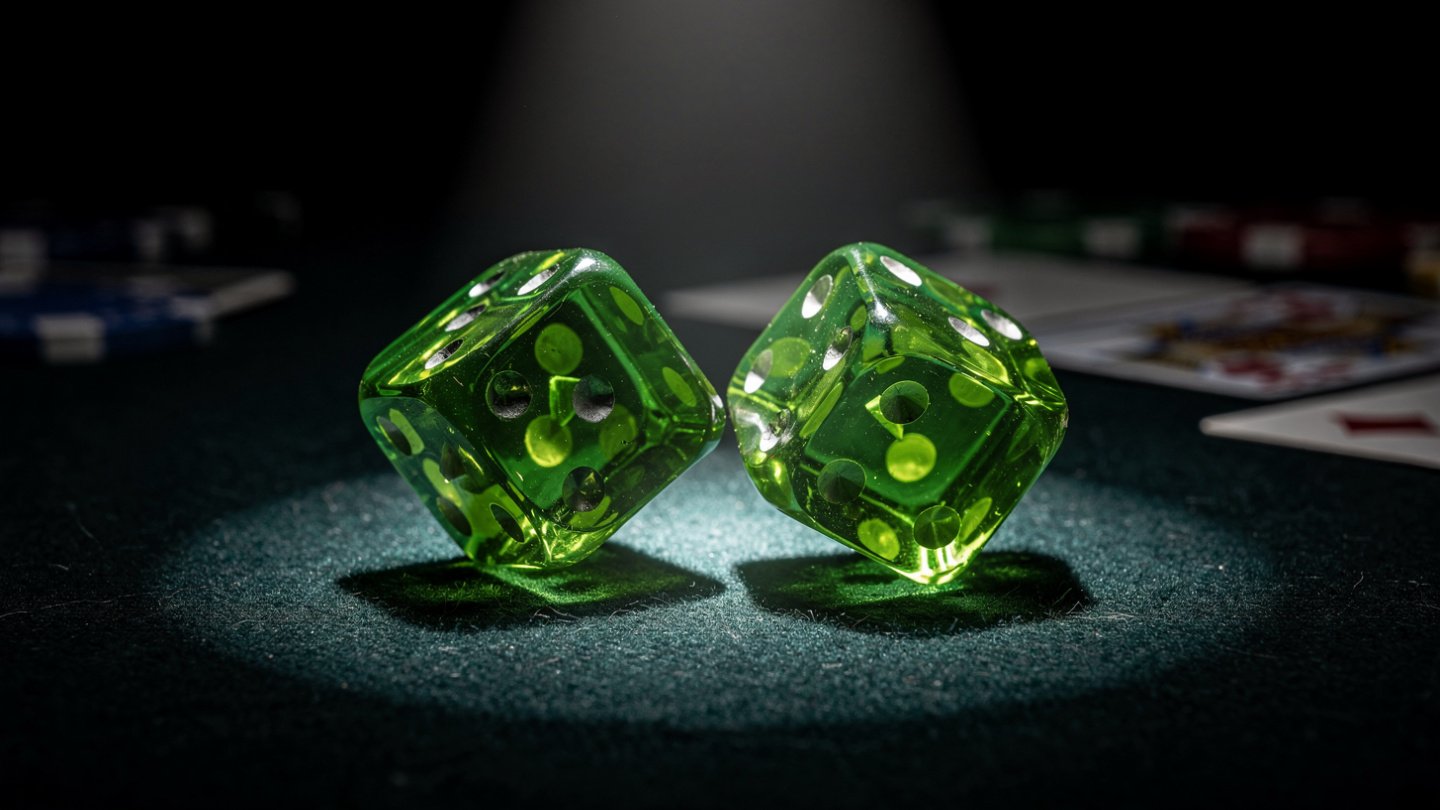
Most people picture a small cube with dots when they think of a dice. It sits in board game boxes, rolls across tabletops during family game nights, and sparks both excitement and laughter in equal measure.
But here is a question that sounds simple yet opens up a surprisingly fascinating world: how many sides does a dice have?
The short answer is six. But the full answer is much more interesting than that.
Let us explore everything about dice sides, shapes, types, and the rich world of dice-based games in a way that is fun, educational, and easy to follow.
The Standard Dice and Its Six Sides
A traditional dice has six sides. Each side is a flat, square face displaying a number from one to six, usually represented by dots called pips. This six-sided version is the most common type you will find in everyday board games, educational tools, and family activities.
The six-sided dice is technically called a d6 in gaming terminology. The “d” stands for dice and the number tells you how many sides it has. Simple, right?
Each face of a standard dice carries a unique number, and no number repeats. The total of all six faces adds up to 21, which is a fun little math fact to share at your next game night.
The Opposite Sides Rule
Here is something fascinating that many people never notice. On a properly manufactured standard dice, opposite faces always add up to seven.
One is always opposite six. Two is always opposite five. Three is always opposite four.
This rule has been consistent across dice manufacturing for centuries. It is not just a coincidence. It is a deliberate design standard that helps ensure balance and fairness during gameplay. The next time you pick up a dice, flip it around and check. You will find this rule holds true every time.
Why Six Sides Became the Standard
You might wonder why dice settled on six sides specifically. Why not five or eight?
The answer comes down to a combination of history, geometry, and practicality.
A cube with six equal square faces is one of the most stable and easy-to-produce three-dimensional shapes. It rolls well, lands flat, and each face has an equal chance of landing face-up when the dice is balanced correctly. This gives each number a roughly equal probability of appearing, which makes gameplay fair.
Historians believe ancient civilizations independently discovered that the cube shape worked best for chance-based gameplay. Archaeological evidence from Mesopotamia, ancient Egypt, and the Indus Valley civilization all shows six-sided dice dating back thousands of years. According to the Oriental Institute at the University of Chicago, cube-shaped dice have been found in digs dating as far back as 3000 BCE.
That kind of staying power tells you everything about how well the six-sided design works.
Other Types of Dice and Their Sides
While the six-sided dice is the most recognized, it is far from the only type. Especially in role-playing games, educational settings, and specialty board games, dice come in many different shapes and side counts.
Here is a breakdown of the most common types.
The Four-Sided Dice (d4)
A four-sided dice looks like a pyramid. It has four triangular faces, and reading the result is slightly different because it does not land with a flat face on top. Instead, the number at the bottom edges or the apex indicates the result, depending on the design.
The d4 is popular in role-playing games for determining damage from smaller weapons or outcomes in low-range scenarios.
The Eight-Sided Dice (d8)
The eight-sided dice has eight triangular faces arranged in two pyramid shapes joined at the base. It rolls smoothly and is easy to read because the top face clearly shows the result.
Players often use the d8 in games that require outcomes between one and eight, giving a wider range of possibilities than the standard six-sided version.
The Ten-Sided Dice (d10)
This one looks a bit like a rounded kite shape with ten faces. Some sets include two d10 dice, one numbered zero to nine and another representing tens, so players can generate numbers from one to one hundred when rolled together.
The ten-sided dice is widely used in role-playing games and educational probability activities.
The Twelve-Sided Dice (d12)
The twelve-sided dice features twelve pentagonal faces and looks similar to a rounded gemstone. It gives a broader range of outcomes and appears frequently in advanced board games and role-playing settings.
The Twenty-Sided Dice (d20)
Perhaps the most famous specialty dice is the twenty-sided version, popularly known as the d20. It features twenty triangular faces and is most commonly associated with Dungeons and Dragons, the beloved tabletop role-playing game.
Rolling a d20 often determines major outcomes in storytelling games, such as whether a character successfully completes a heroic action. Rolling the highest number on a d20 is known as a “natural twenty” and is celebrated by players worldwide.
Specialty and Custom Dice
Beyond these standard types, game designers and educators have created dice with letters, colors, symbols, images, and even custom numbers. Word dice appear in games like Boggle. Color dice help young children learn colors through play. Blank dice allow players and teachers to write their own values for customized activities.
The variety is genuinely impressive, and each type serves a distinct purpose in education and entertainment.
Understanding Probability with Dice
One of the most valuable things dice teach us is probability, which is the mathematical study of how likely something is to happen.
When you roll a standard six-sided dice, each number has a one-in-six chance of appearing. That means the probability of rolling any specific number is approximately 16.7 percent.
When you roll two dice and add the results together, the probabilities shift. The number seven becomes the most likely total because it has the highest number of combinations that produce it. You can get seven by rolling one plus six, two plus five, or three plus four. That gives you six possible combinations out of thirty-six total, making seven appear more often than any other sum.
This concept of probability through dice rolling is taught in mathematics classrooms around the world. Research published by the National Council of Teachers of Mathematics supports the use of dice-based activities as an effective method for teaching statistical reasoning to students at various grade levels.
Understanding probability through hands-on dice rolling makes abstract math concepts tangible and memorable.
How Dice Are Made
Modern dice go through a careful manufacturing process to ensure fairness and accuracy.
Most standard dice are made from a plastic material called cellulose acetate. Manufacturers pour the material into molds shaped like cubes, pyramids, or other geometric forms depending on the type of dice being produced.
After shaping, the faces are smoothed to ensure consistent roll behavior. The dots or numbers are then added by drilling small holes into the surface and filling them with contrasting paint. Precision matters here because even small variations in weight can affect how often certain numbers land face-up.
High-quality dice manufacturers use a tumbling process where dice are polished inside a rotating drum to remove sharp edges and ensure each face is equally smooth.
Precision casino-grade dice, often used in professional settings, are cut to exact tolerances measured in thousandths of an inch. These dice are inspected carefully to ensure they are as close to perfectly balanced as possible. While these are typically used in professional settings, the same principle of fairness applies to educational and recreational dice too.
Fun Facts About Dice That Will Surprise You
Dice are full of surprising history and trivia. Here are some facts worth knowing.
The word “dice” is technically the plural of “die,” though many people use “dice” even when referring to a single one. Both uses are now widely accepted in everyday English.
Ancient Roman dice made over two thousand years ago look remarkably similar to modern ones. Some recovered examples are nearly identical in proportion and design to dice you can buy today.
The largest collection of unique dice ever recorded, according to Guinness World Records, contains thousands of pieces gathered from around the world. Dice collecting, known as “dicecollecting” or “dicehoarding,” is a real and recognized hobby.
Japan has a long tradition of uniquely crafted dice used in traditional games, many of which feature artistic designs specific to regional game styles.
Some historical dice were deliberately weighted to favor certain outcomes, a practice known as “loading.” Modern manufacturing standards and quality checks exist specifically to prevent this and ensure fair gameplay.
How Dice Are Used in Education
Beyond entertainment, dice serve as powerful educational tools across many subjects and age groups.
In early childhood education, dice help children learn number recognition, counting, and basic addition in a playful and low-pressure setting. Rolling two dice and adding the results gives young learners a concrete way to practice arithmetic without the anxiety that sometimes comes with worksheets.
In older grade levels, dice introduce concepts like probability, statistical thinking, and data collection. Students can roll dice hundreds of times, record results, and start to understand patterns in outcomes. This kind of hands-on experimentation makes abstract math accessible.
In language learning classrooms, word dice and letter dice encourage vocabulary building and storytelling. Teachers use them to prompt creative writing exercises or oral language practice in a dynamic and engaging format.
Even in social-emotional learning, dice games help children practice patience, turn-taking, graceful winning, and accepting loss with good sportsmanship.
Choosing the Right Dice for Your Activity
Not all dice suit every purpose. Here are some practical tips for choosing the right type.
For family board games and general use, stick with standard six-sided dice. They are easy to find, affordable, and familiar to players of all ages.
For role-playing games like Dungeons and Dragons or Pathfinder, invest in a complete polyhedral dice set that includes d4, d6, d8, d10, d12, and d20 versions. These sets are widely available at hobby stores and online retailers.
For classroom use, consider foam dice for younger children to prevent noise and injury during active games. Large-print dice with clear numbers also work well for students who need visual support.
For travel and portability, mini dice sets fit easily into small pouches and work perfectly for on-the-go entertainment without taking up space.
For custom learning activities, blank dice offer complete flexibility. Teachers and parents can write letters, math problems, or vocabulary words directly on the faces.
The Lasting Appeal of Dice Through the Ages
There is something almost magical about the act of rolling a dice. You hold a small object in your hand, toss it, and in a split second, fate delivers a number. That brief moment of anticipation before the dice settles is universal across cultures and generations.
Dice connect people. They level the playing field because no amount of skill can fully control a roll. They teach us to accept uncertainty, adapt to results, and respond with strategy rather than frustration. These are life lessons wrapped in a small cube.
From ancient Mesopotamian clay cubes to precision-crafted modern polyhedral sets, dice have evolved while keeping their core appeal intact. They remain one of the most enduring and beloved tools in human play and learning history.
Whether you are a curious learner, a dedicated gamer, a parent looking for screen-free activities, or a teacher searching for engaging classroom tools, dice offer something genuinely valuable for everyone.
So the next time someone asks how many sides a dice has, you can smile and say, “Well, that depends on which dice you are talking about.” Then watch their eyes widen as you explain the wonderful world beyond the classic six.
If you found this article helpful or interesting, please share it with a friend, family member, or teacher who loves learning through games. And if you have a favorite type of dice or a dice game you enjoy, drop it in the comments below. We would love to hear your experiences and recommendations.
Note: This article is for informational and entertainment purposes only. It does not promote or encourage real-money gambling.


