


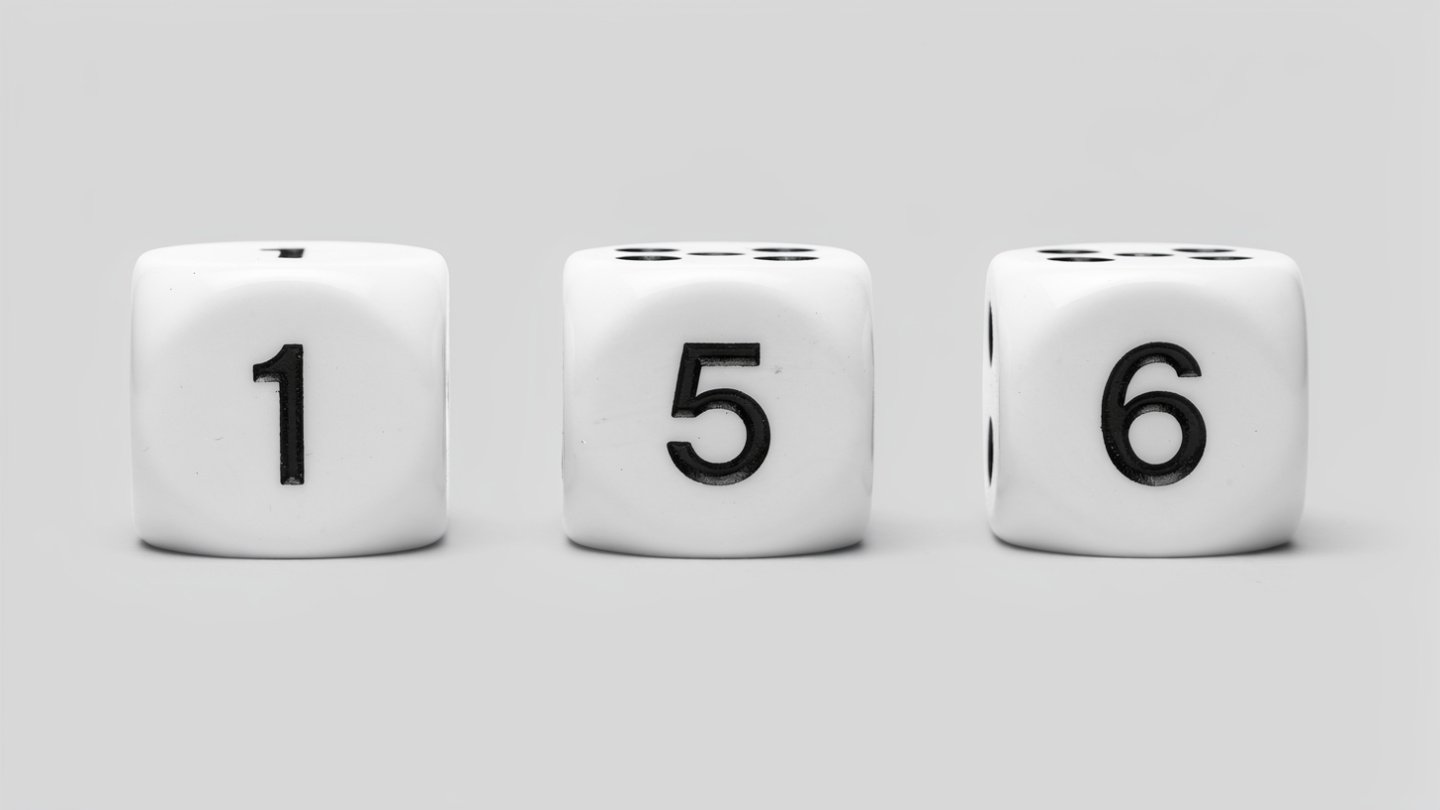
Pick up a standard dice and look at it carefully. Six faces, six numbers, six little dot arrangements staring back at you. Simple, right? But those numbers carry more meaning, history, mathematics, and cultural significance than most people ever stop to consider.
Understanding dice number meanings enriches your appreciation of games, mathematics, probability, and human history all at once. Whether you are a curious learner, a game enthusiast, a teacher looking for classroom connections, or simply someone who enjoys knowing the story behind everyday objects, this article delivers a thorough and engaging exploration of what dice numbers actually mean and why they matter.
From the physical arrangement of dots to their mathematical properties, cultural interpretations, gaming applications, and educational value, every number on a dice has a story worth telling.
The Basic Structure of Dice Numbers
A standard six-sided dice displays numbers from one to six, each represented by a specific arrangement of dots called pips. These pip patterns follow a globally recognized layout that has remained remarkably consistent across centuries and cultures.
The arrangement of pips on each face follows a design convention that maximizes clarity and balance. Manufacturers place pips in patterns that allow quick visual recognition without counting each dot individually. This design philosophy mirrors how humans naturally perceive small quantities through a mental process that psychologists call subitizing, the ability to recognize small numbers of objects instantly without conscious counting.
Research published by the journal Developmental Psychology confirms that humans develop subitizing ability for quantities up to about five or six by early childhood. Dice pip arrangements take direct advantage of this natural cognitive ability, making number recognition fast and intuitive during gameplay.
The total of all six faces adds up to twenty-one, which is a mathematically elegant property that results directly from the opposite-faces rule where each pair of opposite faces sums to seven.
The Opposite Faces Rule and Why It Matters
Before exploring individual number meanings, understanding the opposite faces rule provides essential context. On any properly manufactured standard dice, opposite faces always add up to seven.
One sits directly opposite six. Two sits directly opposite five. Three sits directly opposite four.
This arrangement is not accidental. It reflects a deliberate design standard that dates back thousands of years and appears consistently across dice from ancient civilizations to modern manufacturing facilities. The British Museum holds ancient dice artifacts showing this same opposite-faces convention, demonstrating its extraordinary staying power across human history.
The mathematical elegance of this arrangement means that knowing one face of a dice tells you exactly what sits on the opposite side. If you see a three facing upward, you know a four faces downward without looking. This property helps players verify dice authenticity and manufacturing quality at a glance.
From a probability perspective, this balanced arrangement ensures that no single value dominates the physical structure of the dice, contributing to the overall fairness of outcomes.
What the Number One Means on a Dice
The number one holds a special position in dice culture and gameplay. It represents the minimum possible outcome on a standard six-sided dice and carries distinct meanings across different gaming contexts.
In many chance-based gameplay systems, rolling a one triggers specific consequences. Some games treat a one as a miss, a lost turn, or a penalty condition. Others assign it special bonus status or unique actions. The specific meaning depends entirely on the game rules, but the number one consistently carries a distinct identity separate from other results.
Physically, a single pip sits at the center of the face. This centered placement is universal across virtually all standard dice designs. The single centered dot creates a visually simple, immediately recognizable face that experienced players identify instantly without conscious thought.
In probability terms, rolling a one on a single six-sided dice carries exactly a one-in-six chance, approximately 16.7 percent. This probability applies equally to every other number on the dice, making no outcome inherently more or less likely than another on a fair and balanced dice.
Culturally, the number one carries associations with beginnings, uniqueness, and simplicity. In educational settings, the one-pip face often serves as the starting point for teaching children number recognition and basic counting concepts.
What the Number Two Means on a Dice
Two pips appear diagonally across opposite corners of the face, creating a clean visual pattern that players recognize immediately. The number two represents the second-lowest outcome on a standard dice and carries its own set of gameplay meanings.
In scoring-based dice games, a two often represents a modest but reliable point value. Games like Yahtzee create scoring categories where multiple twos rolled together build toward specific combinations that earn points. Two of a kind, for example, contributes to combinations in many dice scoring formats.
The diagonal arrangement of two pips creates perfect visual balance on the face. This placement allows quick recognition from any angle, which matters during active gameplay when dice may land in various orientations relative to different players around the table.
Mathematically, two represents the smallest prime number, a fact that makes it significant in educational discussions about number theory that can emerge naturally from dice-based classroom activities.
What the Number Three Means on a Dice
Three pips arrange diagonally across the face from one corner to the opposite corner, creating a line through the center that includes the middle point. This arrangement builds on the two-pip diagonal pattern by adding the central pip.
The number three occupies the middle-low range of possible outcomes on a standard dice. In many dice games, three appears as a neutral outcome, neither triggering special bonuses nor penalties in most standard gaming frameworks. Its meaning shifts dramatically based on the specific game context.
In educational probability activities, three holds special interest because it sits at exactly half of six, making comparisons between lower and higher outcomes straightforward. Teachers often use three as the threshold point in probability discussions, asking students to compare how often dice land on three or below versus four or above.
Three pips in the diagonal arrangement also create a visually satisfying pattern that children typically find easy to recognize and count during early number learning activities.
What the Number Four Means on a Dice
Four pips occupy the four corners of the face in a square arrangement. This symmetrical layout creates one of the most visually distinctive faces on a standard dice and allows instant recognition at a glance.
The number four marks the entry into the upper half of possible outcomes on a six-sided dice. In many chance-based gameplay systems, rolling four or above begins to feel like a favorable result, though the specific meaning always depends on game rules.
The four-pip arrangement demonstrates perfect rotational symmetry, meaning the pattern looks identical from all four rotational positions. This symmetry is not merely aesthetic. It helps players read the dice accurately regardless of how it lands relative to their viewing angle.
In mathematical contexts, four represents the first perfect square after one, making it notable in arithmetic discussions. Educational dice activities involving multiplication, squares, and geometric patterns frequently reference the number four as a natural example.
What the Number Five Means on a Dice
Five pips arrange in the same four-corner pattern as the four face, with an additional pip placed at the center. This center addition creates the distinctive cross-like pattern that makes the five-pip face immediately recognizable.
The number five represents the second-highest outcome on a standard six-sided dice and carries positive connotations in most gaming contexts. Many dice games assign higher point values to fives compared to lower numbers, making them desirable outcomes during scoring phases.
In Farkle, one of the most popular family dice games, the number five on a single dice scores fifty points, making it a welcome result during gameplay. In combination scoring systems, multiple fives frequently contribute to valuable point opportunities.
Five also appears at the intersection of two different recognition strategies. Below five, humans typically subitize quantities instantly. At five, some people begin counting rather than immediately recognizing the quantity, making it a natural cognitive boundary that researchers in numerical cognition find interesting.
The five-pip face also serves as an excellent teaching tool for helping children connect the dice arrangement to the physical five fingers on one hand, creating a memorable and tangible reference point for the number five.
What the Number Six Means on a Dice
Six pips arrange in two vertical columns of three dots each, creating a rectangular pattern that fills the face more completely than any other number. This arrangement provides the highest possible outcome on a standard dice and carries significant meaning across virtually every dice game context.
Rolling a six represents the maximum result on a standard dice, and game designers frequently assign special status to this outcome. In many movement-based board games, rolling a six grants an extra turn, a bonus action, or accelerated progress. In scoring games, sixes often contribute to the highest-value combinations.
The six-pip arrangement also demonstrates the relationship between multiplication and dice faces naturally. Six pips arranged in two groups of three visually represent the equation two times three equals six, creating an educational moment within a simple gaming object.
Culturally, rolling a six carries associations with luck and fortunate outcomes in popular imagination. This association stems from centuries of dice gaming tradition where the highest face value represented the most advantageous result in most gameplay contexts.
The consistency of the six-pip layout across virtually all standard dice worldwide reflects how deeply established this design has become in global gaming culture.
The Mathematical Relationships Between Dice Numbers
Individual number meanings gain additional depth when you examine the mathematical relationships between different faces on a standard dice.
The sum of all six faces equals twenty-one. This total results from the sequential numbers one through six and creates predictable mathematical properties that game designers and educators use deliberately.
When rolling two standard dice together, the combined outcomes range from two to twelve. The sum of seven appears most frequently because more combinations produce it than any other total. You can roll a seven by combining one and six, two and five, or three and four. These six combinations give seven the highest probability of any single sum when rolling two dice.
Understanding these mathematical relationships helps players make informed strategic decisions during chance-based gameplay. Knowing that seven appears most frequently when rolling two dice, for example, informs strategic thinking in games where predicting totals matters.
The National Council of Teachers of Mathematics consistently highlights these dice-based probability concepts as effective entry points for teaching statistical reasoning and mathematical prediction skills to students across elementary and middle school grade levels.
Cultural and Historical Meanings of Dice Numbers
Beyond mathematics and gameplay, dice numbers carry cultural meanings that vary across traditions and historical periods.
In Chinese culture, specific numbers carry strong symbolic associations. The number six sounds similar to the Chinese word for smooth or flowing, making it a traditionally favorable number. Four, however, sounds similar to the word for death in several Chinese dialects, leading some Chinese dice players to view a roll of four with mild superstition.
In Western traditions, the number seven holds special cultural significance partly because of its mathematical prominence when rolling two dice. This cultural weight has reinforced the mathematical reality through centuries of observation and storytelling.
Ancient Romans associated different dice numbers with different deities and fortune meanings, embedding chance-based gameplay within a broader spiritual and cultural framework. Archaeological evidence from Roman sites shows how deeply dice outcomes integrated into daily cultural life.
Japanese gaming traditions similarly developed cultural associations with specific dice numbers that influenced game design and player preferences throughout history.
These cultural layers demonstrate that dice numbers are not purely mathematical symbols. They carry centuries of human meaning, belief, and interpretation that enrich their role in global entertainment and social tradition.
Dice Numbers in Educational Settings
Teachers across grade levels use dice numbers strategically to build mathematical understanding in engaging and accessible ways.
In early childhood classrooms, dice faces help children connect numerical symbols with physical quantities. Matching the written numeral to the pip arrangement on each face builds number sense through hands-on interaction rather than abstract instruction.
In elementary mathematics, rolling dice and recording outcomes teaches data collection, frequency analysis, and basic probability concepts. Students quickly observe that each number appears roughly equally often over many rolls, building intuitive understanding of uniform probability distributions.
In middle school, dice activities extend into algebraic thinking when students calculate expected outcomes, compare theoretical probability to experimental results, and explore concepts like variance and distribution.
Research from the Harvard Graduate School of Education supports using physical manipulatives like dice for mathematical concept development, noting that tactile engagement strengthens conceptual understanding and long-term retention compared to purely abstract instruction.
How Game Designers Assign Meaning to Dice Numbers
Professional game designers spend considerable time deciding what each dice number means within their specific game systems. These decisions shape player experience profoundly and distinguish memorable games from forgettable ones.
Some designers create symmetrical scoring systems where each number has equal value but different applications. Others create asymmetrical systems where certain numbers trigger special events, granting the game exciting moments of surprise and drama.
Movement-based games typically treat higher numbers as more favorable because they advance players further toward the goal. Scoring games often create interesting decisions by making different numbers valuable in different combinations, encouraging strategic thinking about which outcomes to pursue.
Risk-reward game structures sometimes make lower numbers temporarily useful as components in certain combinations, preventing any single number from being universally undesirable. This design philosophy keeps all dice outcomes feeling potentially meaningful rather than simply good or bad.
Understanding how game designers assign meaning to dice numbers helps players appreciate the craft behind their favorite games and recognize the thoughtful decisions that create engaging, balanced gameplay experiences.
Tips for Using Dice Numbers in Learning Activities
Whether you are a teacher, parent, or homeschooling family, here are practical ways to use dice number meanings as educational tools.
Create a number recognition activity where young children match dice faces to printed numerals on cards. Start with one through three, then gradually introduce higher numbers as confidence grows.
Use two dice to practice addition by rolling and summing the results. Record totals over twenty or thirty rolls and discuss which sums appeared most frequently. This simple activity introduces probability concepts through direct experience.
Challenge older students to calculate the probability of specific outcomes before rolling and then test their predictions with repeated trials. Comparing predicted results to actual outcomes builds statistical reasoning skills naturally.
Design multiplication activities where players roll two dice and multiply the results instead of adding them. This small change extends the mathematical complexity significantly while keeping the engaging random element.
Create custom recording sheets where students track which individual numbers appear most often over a series of rolls. Analyzing the resulting data connects dice gameplay to graph reading and data interpretation skills.
Bringing the Numbers Together
Every number on a standard dice carries layers of meaning that extend far beyond a simple count of dots. Mathematical properties, game design applications, cultural associations, educational uses, and historical connections all contribute to the rich significance of numbers one through six.
Understanding these meanings transforms a familiar gaming object into a window into mathematics, history, and human creativity. The next time you pick up a dice and roll it across a table, you carry with you centuries of accumulated human understanding embedded in those small numbered faces.
Whether you roll a one, a six, or anything in between, that tiny cube connects you to ancient civilizations, mathematical discoveries, classroom learning traditions, and countless shared moments of entertainment across human history.
If you found this exploration of dice number meanings interesting and educational, please share this article with teachers, game enthusiasts, parents, and curious learners in your community. Do you have a favorite dice game where specific numbers carry special meaning? Share your experience in the comments below and let us know how dice numbers create memorable moments in your gaming sessions.
Note: This article is for informational and entertainment purposes only. It does not promote or encourage real-money gambling.


