


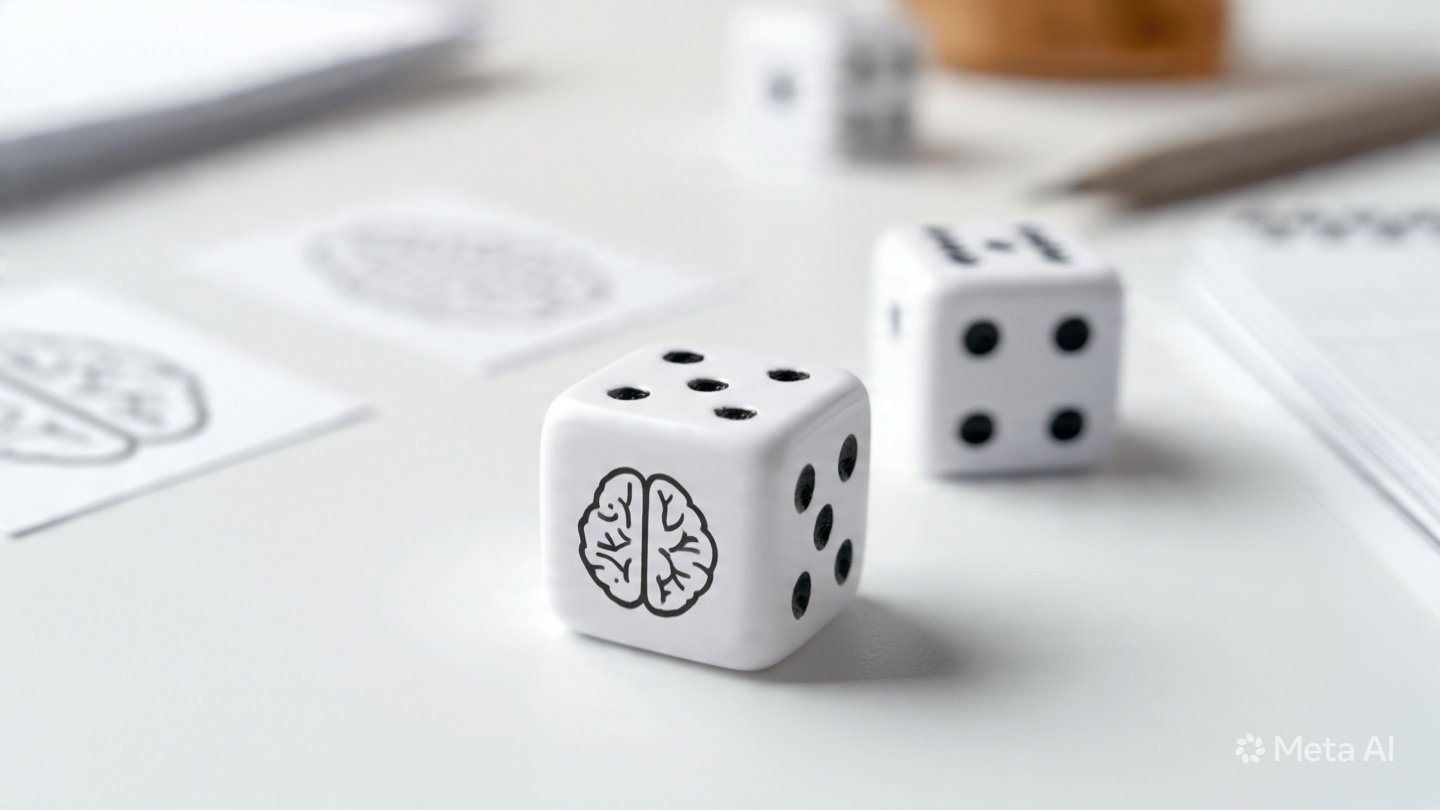
Permainan dadu untuk meningkatkan memori adalah kegiatan sederhana yang membantu pemain berlatih perhatian, ingat, pengenalan pola, dan konsentrasi. Permainan ini tidak perlu bahan mahal atau aturan yang rumit. Beberapa dadu, kertas, pensil, dan latihan singkat sudah cukup.
Kenangan berdasarkan dadu permainan dapat digunakan oleh anak-anak, siswa, dewasa, warga negara senior, keluarga, guru, dan pemimpin aktivitas. Mereka berguna di rumah, di ruang kelas, sesi les, pusat senior, pelajaran rumah, dan kegiatan kelompok.
Tujuannya bukan pengobatan medis atau jaminan peningkatan ingatan. Tujuannya adalah menggunakan permainan dadu sebagai latihan mental yang menyenangkan yang mendorong pemain untuk mengamati dengan cermat, mengingat detail, pola pengulangan, dan tetap fokus.
Mengapa Dice Games Bantuan Dengan Praktek Memori
Permainan dadu berguna untuk praktek memori karena setiap roll menciptakan tantangan kecil. Pemain mungkin perlu mengingat angka, total, pola, urutan, atau hasil sebelumnya.
| Skill Memori | Bagaimana Dece Games Bantuan |
|---|---|
| Memori jangka pendek | Pemain ingat nomor dadu selama beberapa detik |
| Memori kerja | Players terus nomor dalam pikiran ketika menambahkan atau membandingkan |
| Memori visual | Pemain ingat pola dadu dan posisi |
| Perhatian | Pemain fokus pada dadu sebelum mereka ditutupi |
| Pengenalan Pola | Pemain melihat nomor berulang atau urutan |
| Recall | Pemutar nomor pengulangan, total, atau aksi |
| Konsentrasi | Pemain tetap terlibat untuk putaran singkat |
Kegiatan ini yang terbaik ketika mereka pendek, santai, dan diulang secara teratur.
Bahan Diperlukan
| Materi | Gunakan |
|---|---|
| 1 mati | Permainan ingat dan pola sederhana |
| 2 dadu | Total ingat dan perbandingan game |
| 3 sampai 5 dadu | Permainan tantangan memori |
| Kertas | Menulis jawaban dan pelacakan putaran |
| Pensil | Nomor rekaman dan skor |
| Piala atau kertas | Menutupi dadu setelah melihat cepat |
| Baki dadu | Menjaga dadu di satu tempat |
| Penghitung | Tambahkan tantangan memori pendek |
Untuk anak-anak muda atau senior, menggunakan dadu yang lebih besar sehingga angka-angka lebih mudah untuk melihat.
Quick Memory Dice Game Picker
| Permainan | Terbaik Untuk | Dice Diperlukan | Skill Utama |
|---|---|---|---|
| Ingat Gulungan | Anak-anak, orang dewasa, senior | 3 | Memori jangka pendek |
| Cover dan Recall | Grup kecil | 3–5 | Recall visual |
| Dice Urutan Nomor | Siswa | 1 | Memori Sequential |
| Total Recall | Praktek Matematika | 2–3 | Memori kerja |
| Spotter Pola | Anak-anak dan senior | 1–3 | Pengenalan Pola |
| Cocok dengan Gulungan Sebelumnya | Keluarga | 2 | Perhatian dan ingat |
| Kisi Memori Dice | Anak yang lebih tua | 4 | Memori visual |
| Dice Recall Story | ESL / mahasiswa | 1 | Memori bahasa |
| Dice Memori Aksi | Anak muda | 1 | Recall pergerakan |
| Tantangan Memori Tim | Grup | 3–5 | Recall kolaboratif |
1.
Ingat Roll adalah salah satu permainan dadu termudah untuk perbaikan memori.
Terbaik untuk: Ages 6 and up
Players: 1 atau lebih
Dice dibutuhkan: 3 dadu
Waktu: 5 menit
Keahlian utama: Memori jangka pendek
Cara bermain
- Gulung 3 dadu.
- Biarkan pemain melihat mereka selama 5 detik.
- Menutupi dadu dengan cangkir atau kertas.
- Pemain mengatakan atau menulis angka yang mereka ingat.
- Periksa jawabannya.
- Ulangi untuk 5 putaran.
Contoh penuh
| Round | Dice Shown | Jawaban Pemutar | Benar? |
|---|---|---|---|
| 1 | 2, 4, 6 | 2, 4, 6 | Ya |
| 2 | 1, 3, 5 | 1, 5, 3 | Ya |
| 3 | 2, 2, 6 | 2, 6, 2 | Ya |
| 4 | 4, 5, 6 | 4, 6, 3 | Tidak |
| 5 | 1, 1, 5 | 1, 1, 5 | Ya |
Versi mudah: Gunakan 2 dadu.
Versi lebih keras: Gunakan 5 dadu.
Tutupi dan tarik kembali
Permainan ini mirip dengan Ingat Roll, tapi pemain harus ingat kedua nomor dan posisi mereka.
Terbaik untuk: Ages 7 and up
Players: 1 atau lebih
Dice dibutuhkan: 4 dadu
Waktu: 5 sampai 10 menit
Keahlian utama: Memori visual
Cara bermain
- Tempatkan 4 dadu berturut-turut.
- Biarkan pemain mencari selama 5 detik.
- Tutup dadunya.
- Pemain menulis angka dalam urutan yang sama.
- Periksa jawabannya.
Contoh
| Posisi Dice | Nomor Shown |
|---|---|
| 1 | 3 |
| 2 | 6 |
| 3 | 2 |
| 4 | 5 |
Jawaban yang benar: 3, 6, 2, 5
Versi lebih keras:
Tempatkan dadu dalam bentuk persegi bukan garis dan meminta pemain untuk mengingat posisi.
3.
Nomor Sequence Dice membantu pemain mengingat urutan yang tumbuh.
Terbaik untuk: Anak-anak dan siswa
Players: 1 atau lebih
Dice dibutuhkan: 1 mati
Waktu: 5 menit
Keahlian utama: Memori Sequential
Cara bermain
- Roll satu mati.
- Katakan nomornya dengan keras.
- Putar lagi dan ulangi angka pertama ditambah angka baru.
- Terus tambahkan satu angka setiap ronde.
- Permainan terus sampai seseorang lupa urutan.
Contoh penuh
| Round | Gulungan Baru | Player Must Say |
|---|---|---|
| 1 | 4 | 4 |
| 2 | 2 | 4, 2 |
| 3 | 6 | 4, 2, 6 |
| 4 | 1 | 4, 2, 6, 1 |
| 5 | 5 | 4, 2, 6, 1, 5 |
Tip:
Permainan ini baik untuk kelompok kecil karena setiap pemain dapat menambahkan satu roll ke urutan.
4.
Total Recall menggabungkan memori dengan matematika sederhana.
Terbaik untuk: Ages 7 and up
Players: 1 atau lebih
Dice dibutuhkan: 2 atau 3 dadu
Waktu: 5 sampai 10 menit
Keahlian utama: Bekerja memori dan tambahan
Cara bermain
- Gulung 2 dadu.
- Biarkan pemain mencari selama 3 detik.
- Tutup dadunya.
- Pemain mengatakan angka dan total.
- Periksa jawabannya.
Contoh penuh
| Round | Dice Shown | Kata Pemutar | Benar Total |
|---|---|---|---|
| 1 | 3 dan 5 | 3 + 5 = 8 | 8 |
| 2 | 6 dan 2 | 6 + 2 = 8 | 8 |
| 3 | 4 dan 1 | 4 + 1 = 5 | 5 |
| 4 | 2 dan 2 | 2 + 2 = 4 | 4 |
Versi lebih keras:
Gunakan 3 dadu dan meminta total setelah menutupi mereka.
Pattern Spotter 5
Pattern Spotter membantu pemain melihat nomor berulang dan pola sederhana.
Terbaik untuk: Anak-anak, siswa, dan senior
Players: 1 atau lebih
Dice dibutuhkan: 1 mati
Waktu: 5 menit
Keahlian utama: Pengenalan Pola
Cara bermain
- Roll satu mati 6 kali.
- Tulis hasilnya.
- Tanyakan nomor mana yang sering muncul.
- Tanyakan apakah ada pola apapun.
Contoh penuh
| Urutan Gulung | Nomor Rolled |
|---|---|
| 1 | 2 |
| 2 | 5 |
| 3 | 2 |
| 4 | 6 |
| 5 | 2 |
| 6 | 4 |
Pertanyaan: Nomor mana yang sering muncul?
Jawaban: 2 muncul tiga kali.
Versi lebih keras:
Mintalah pemain untuk mengingat urutan tanpa melihat koran.
6 Pertandingan Gulungan Sebelumnya
Permainan ini menarik perhatian karena pemain harus ingat gulungan terakhir.
Terbaik untuk: Keluarga dan kelompok kecil
Players: 2 atau lebih
Dice dibutuhkan: 2 dadu
Waktu: 5 sampai 10 menit
Keahlian utama: Perhatian dan ingat
Cara bermain
- Pemain 1 gulungan dua dadu.
- Semua orang ingat total.
- Pemain 2 gulungan dua dadu.
- Jika Player 2 mendapat total yang sama, mereka mencetak 2 poin.
- Jika mereka mendapatkan dalam 1 titik, mereka mencetak 1 poin.
- Lanjutkan untuk beberapa putaran.
Contoh
| Putar | Pemutar | Dice Total | Hasil |
|---|---|---|---|
| 1 | Sara | 8 | Gulungan pertama |
| 2 | Ali | 7 | Dalam 1 titik |
| 3 | Lina | 8 | Cocok |
| 4 | Omar | 10 | Tidak ada skor |
Tantangan memori:
Pemain harus ingat total sebelumnya sebelum roll berikutnya.
7.
Dece Memory Grid adalah permainan memori visual untuk anak-anak yang lebih tua dan orang dewasa.
Terbaik untuk: Ages 8 and up
Players: 1 atau lebih
Dice dibutuhkan: 4 dadu
Waktu: 10 menit
Keahlian utama: Recall memori dan posisi visual
Cara bermain
- Gambar 2 x 2 grid di atas kertas.
- Tempatkan satu mati di setiap kotak.
- Biarkan pemain melihat grid selama 5 detik.
- Lepaskan atau tutupi dadunya.
- Pemain mengisi dalam jumlah dari memori.
Grid contoh
| 3 | 6 |
|---|---|
| 1 | 5 |
Lembar jawaban
| Posisi | Nomor Yang Diingat |
|---|---|
| Kiri atas | 3 |
| Kanan atas | 6 |
| Kiri bawah | 1 |
| Kanan bawah | 5 |
Versi lebih keras:
Gunakan 3 x 3 grid dengan dadu lebih banyak.
Nomor 8.
Permainan ini membantu memori melalui bercerita.
Terbaik untuk: Siswa, pelajar ESL, keluarga
Players: 1 atau lebih
Dice dibutuhkan: 1 mati
Waktu: 10 menit
Keahlian utama: Memori dan ingatan bahasa
Cara bermain
- Gulung dadu untuk memilih cerita cepat.
- Buat cerita singkat dalam 3 kalimat.
- Setelah satu menit, pemain lain mengulangi rincian utama.
| Dice Roll | Prompt Cerita |
|---|---|
| 1 | Anak anjing yang hilang |
| 2 | Hari hujan |
| 3 | Sebuah kunci tersembunyi |
| 4 | Sebuah robot lucu |
| 5 | Sebuah perjalanan sekolah |
| 6 | Hadiah kejutan. |
Contoh
Roll: 4
Cerita: "Sebuah robot lucu memasuki dapur. Dia mencoba membuat sup tapi menambahkan terlalu banyak garam. Semua orang tertawa dan membantu robot memperbaikinya".
Pertanyaan ingat:
Apa karakternya? Apa yang dia coba lakukan? Masalah apa yang terjadi?
9 Aksi Dice Memory
Dice Memori Aksi baik untuk anak-anak muda karena menggabungkan gerakan dan ingat.
Terbaik untuk: Umur 4 sampai 7
Players: 1 atau lebih
Dice dibutuhkan: 1 mati
Waktu: 5 menit
Keahlian utama: Memori pergerakan
| Dice Roll | Aksi |
|---|---|
| 1 | Bertepuk |
| 2 | Maret |
| 3 | Stretch |
| 4 | Sentuh jari kaki |
| 5 | Berputar dengan lembut |
| 6 | Keseimbangan |
Cara bermain
- Roll satu mati.
- Lakukan aksi yang cocok.
- Gulung lagi.
- Ulangi aksi pertama dan tambahkan aksi baru.
- Lanjutkan membangun sebuah urutan aksi.
Contoh
| Round | Gulung | Urutan Aksi |
|---|---|---|
| 1 | 1 | Bertepuk |
| 2 | 3 | Tepuk tangan, rentangkan |
| 3 | 2 | Tepuk tangan, peregangan, berbaris |
| 4 | 6 | Tepuk tangan, peregangan, berbaris, keseimbangan |
Tip keselamatan:
Tetap bertindak lembut dan bermain di ruang yang jelas.
10.
Permainan grup ini mendorong ingatan bersama.
Terbaik untuk: Kelas, kelompok keluarga, pusat senior
Players: Tim 2- 5
Dice dibutuhkan: 3 sampai 5 dadu
Waktu: 10 menit
Keahlian utama: Memori tim dan komunikasi
Cara bermain
- Gulung 4 dadu.
- Tim mencari selama 5 detik.
- Tutup dadunya.
- Tim menulis angka yang mereka ingat.
- Berikan 1 poin untuk setiap nomor yang benar.
- Berikan 1 titik bonus jika pesanan benar.
Contoh penuh
| Round | Dice Shown | Jawaban Tim | Titik |
|---|---|---|---|
| 1 | 2, 5, 6, 1 | 2, 5, 6, 1 | 5 |
| 2 | 3, 3, 4, 6 | 3, 4, 3, 6 | 4 |
| 3 | 1, 2, 2, 5 | 1, 2, 2, 4 | 3 |
Keuntungan tim:
Pemain berlatih komunikasi dan berbagi fokus.
Best Memory Dice Games by Age Group
| Grup Umur | Pertandingan Terbaik |
|---|---|
| Umur 4-6 | Dice Memori Aksi, Ingat Gulungan |
| Umur 6-8 | Total Recall, Pola Spotter |
| Ages 8-12 | Kisi Memori Dice, Nomor Sekuence Dice |
| Remaja | Tim Memory Challenge, Kisah Recall Dice |
| Dewasa | Cover and Recall, Total Recall |
| Senior | Ingat Roll, Pattern Spotter, Story Recall Dice |
Bagaimana membuat Memory Dice Games Mudah
| Masalah | Perbaiki Mudah |
|---|---|
| Terlalu banyak dadu sulit untuk diingat | Gunakan dadu lebih sedikit |
| Pemutar merasa tertekan | Hapus nilai |
| Angka sulit untuk dilihat | Gunakan dadu yang lebih besar |
| Pemain lupa dengan cepat | Meningkatkan waktu melihat |
| Permainan terasa terlalu cepat | Hapus timer |
| Urutan terlalu panjang | Berhenti setelah 3 putaran |
Bagaimana membuat Memory Dice Games lebih keras
| Pemutar Siap Untuk Lebih | Tambah Tantangan ini |
|---|---|
| Kembali 2 dadu mudah | Gunakan 3 atau 4 dadu |
| Nomor anggota kembali baik | Tambah ulang urutan |
| Tambahkan total dengan mudah | Tanyakan total setelah meliputi |
| Mengenali pola | Tanyakan untuk nomor yang paling berulang |
| Bermain percaya diri | Tambahkan batas waktu |
| Bekerja dengan baik sendirian | Cobalah kompetisi tim |
Tips untuk Orangtua, Guru, dan Pemimpin Aktivitas
- Menjaga permainan pendek.
- Gunakan dadu besar ketika dibutuhkan.
- Mulailah dengan 2 atau 3 dadu.
- Berikan pemain waktu untuk melihat dengan teliti.
- Hindari tekanan atau rasa malu.
- Pujilah usaha dan fokus.
- Biarkan pemain mencoba lagi.
- Gunakan tim bermain untuk pemain pemalu.
- Berhenti sebelum aktivitas menjadi melelahkan.
- Ulangi permainan favorit secara teratur.
Kesalahan Umum untuk Hindari
| Kesalahan | Pilihan yang lebih baik |
|---|---|
| Dimulai dengan terlalu banyak dadu | Dimulai dengan 2 atau 3 |
| Membuatnya terlalu kompetitif | Tetap santai |
| Menggunakan dadu kecil | Gunakan besar, jelas dadu |
| Bermain terlalu lama | Gunakan putaran pendek |
| ♪ Correting hardly ♪ | Keberanian mencoba lagi |
| Tidak ada contoh bulat | Tunjukkan dulu |
| Permainan yang sama setiap kali | Putar aktivitas |
FAQs About Dice Games for Memory Improvement
Dapatkah permainan dadu membantu dengan praktek memori?
Ya. Permainan dadu dapat mendukung praktek memori dengan mendorong pemain untuk mengingat angka, pola, urutan, posisi, dan total.
Apa permainan memori dadu termudah?
Ingat Roll adalah salah satu yang termudah. Pemain melihat dadu selama beberapa detik, kemudian mengingat angka-angka setelah mereka ditutupi.
Apakah permainan memori dadu baik untuk anak-anak?
Ya. Anak-anak dapat menggunakan dadu memori game untuk berlatih perhatian, ingat, menghitung, dan pengenalan pola dengan cara bermain.
Apakah permainan dadu baik untuk senior?
Permainan memori dadu sederhana dapat menyenangkan bagi para senior karena mereka mendukung aktivitas mental, percakapan, dan fokus tanpa aturan yang rumit.
Berapa dadu yang harus kugunakan?
Mulailah dengan 2 atau 3 dadu. Tambahkan dadu lagi ketika pemain siap untuk tantangan yang lebih besar.
Berapa lama permainan dadu memori terakhir?
Kebanyakan permainan dadu memori bekerja dengan baik dalam sesi singkat 5 sampai 10 menit.
Bisakah game ini meningkatkan memori secara permanen?
Permainan ini bisa mendukung latihan memori dan perhatian, tapi mereka tidak boleh diperlakukan sebagai pengobatan medis atau jaminan untuk meningkatkan memori. Mereka lebih baik digunakan sebagai latihan mental yang menyenangkan.
Pikiran Akhir
Permainan dadu untuk meningkatkan memori sederhana, fleksibel, dan menyenangkan. Mereka membantu pemain berlatih fokus, ingat, urutan memori, memori visual, dan pengenalan pola melalui aktivitas pendek.
Mulailah dengan Ingat Roll atau Total Recall untuk praktek memori mudah. Coba Dice Memory Grid untuk ingatan visual, Kisah Reket Diice untuk memori bahasa, dan Tim Memory Challenge untuk grup yang menyenangkan.
Dengan hanya beberapa dadu dan aturan sederhana, praktek memori dapat menjadi menyenangkan, sosial, dan mudah untuk diulang.
Catatan: Artikel ini hanya untuk pendidikan dan hiburan saja. Ini bukan saran medis dan tidak mempromosikan taruhan, kecurangan, kasino bermain, dadu dimuat, atau real-uang perjudian.


