


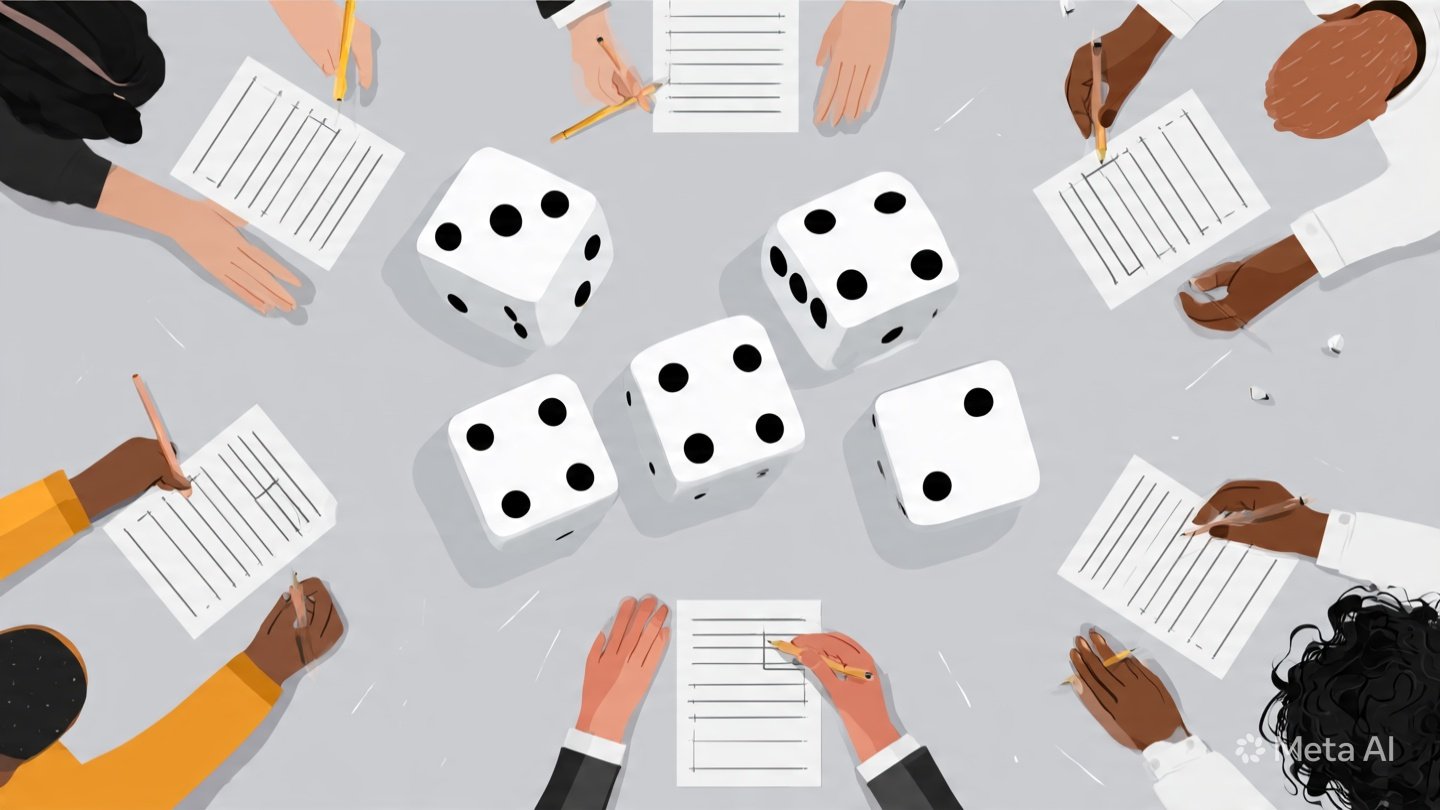
Permainan dadu untuk membangun tim adalah kegiatan sederhana yang membantu kelompok berkomunikasi, bekerja sama, dan memecahkan masalah bersama-sama. Mereka mudah diatur, murah, dan cocok untuk kantor, ruang kelas, workshop, sesi pelatihan, kelompok pemuda, dan acara komunitas.
Membangun tim tidak selalu membutuhkan bahan mahal atau kegiatan panjang. Beberapa dadu, kertas, pensil, dan aturan yang jelas dapat menciptakan permainan yang mendorong kerja sama tim, mendengarkan, berpikir kreatif, kepemimpinan, dan persaingan ramah.
Pemandu ini berbagi permainan dadu untuk membangun tim. Setiap aktivitas mencakup tujuan, materi, aturan, keuntungan tim, dan variasi sederhana.
Mengapa Dice Games bekerja untuk Tim Building
Permainan dadu bekerja dengan baik karena mereka cepat, acak, dan mudah untuk memahami. Roll acak menciptakan tantangan bersama, dan tim harus memutuskan bagaimana menanggapi.
| Tim Building Beneffit | Bagaimana Dece Games Bantuan |
|---|---|
| Komunikasi | Pemain menjelaskan ide-ide dan mendiskusikan pilihan |
| Kolaborasi | Tim bekerja menuju tujuan bersama |
| Kepercayaan | Pemain bergantung pada keputusan rekan setim ' |
| Masalah-pemecahan | Tim menanggapi hasil acak |
| Pemimpin | Pemain yang berbeda dapat memimpin putaran |
| Sertaan | Aturan sederhana membantu semua orang bergabung |
| Energi | Dice menciptakan kejutan dan kegembiraan |
| Tekanan rendah | Permainan terasa santai dan informal |
Permainan dadu sangat berguna ketika Anda memerlukan aktivitas pendek sebelum pertemuan, selama istirahat kerja, atau sebagai bagian dari sesi pengembangan tim.
Bahan Diperlukan
| Materi | Gunakan |
|---|---|
| 1 mati | Icebreaker, berbicara mendorong, tantangan cepat |
| 2 dadu | Nilai ras dan tugas tim |
| 3-6 dadu | Strategi dan kelompok keputusan game |
| Kertas | Nilai lembar dan catatan refleksi |
| Pensil | Menulis skor atau ide |
| Penghitung | Tantangan tim pendek |
| Papan tulis | Tim skor dan instruksi |
| nampan dadu atau cangkir | Terus bergulir dikendalikan |
Quick Team Building Dice Game Picker
| Gol Tim | Permainan Dice Terbaik |
|---|---|
| Pemutus es | Gulung dan Berbagi |
| Komunikasi | Dice Pertanyaan Tim |
| Masalah-pemecahan | Tantangan Nomor Target |
| Kolaborasi | Race Skor Bersama |
| Kreativitas | Roll a Team Story |
| Pemimpin | Ketua Tim Roll |
| Kepercayaan | Dice Pilihan Buta |
| Keputusan | Resiko atau Bank |
| Daya dorong | Tantangan Dice Aksi |
| Refleksi | Gulungan Refleksi Tim |
1. Roll and Share Icebreaker
Ini adalah pemecah es dadu sederhana untuk tim baru atau kelompok lokakarya.
Terbaik untuk: Pertemuan, sesi pelatihan, kelompok baru
Players: Ukuran grup apapun
Dice dibutuhkan: 1 mati
Waktu: 5 sampai 10 menit
Gol tim: Pengantar dan kenyamanan
Cara bermain
- Tulis enam prote sederhana di papan.
- Setiap orang menggulung satu mati.
- Mereka menjawab prompt yang cocok.
- Lanjutkan sampai semua orang telah berbagi.
| Dice Roll | Icebreaker Prompt |
|---|---|
| 1 | Berbagi nama dan peran |
| 2 | Berbagi satu keterampilan yang Anda bawa ke tim |
| 3 | Berbagi cara favorit Anda untuk bekerja |
| 4 | Berbagi satu hal yang ingin Anda pelajari |
| 5 | Berbagi satu tim nilai yang Anda suka |
| 6 | Berbagi fakta yang menyenangkan tentang diri Anda |
Keuntungan tim:
Hal ini membantu orang berbicara dengan rendah tekanan dan belajar lebih banyak tentang satu sama lain.
Dice Tim Pertanyaan
Permainan ini mendorong komunikasi dan mendengarkan.
Terbaik untuk: Kantor tim, kelas, kelompok pelatihan
Players: Kelompok kecil 3-6
Dice dibutuhkan: 1 mati
Waktu: 10 menit
Gol tim: Komunikasi
| Dice Roll | Pertanyaan Tim |
|---|---|
| 1 | Apa yang membantu tim bekerja dengan baik? |
| 2 | Apa yang membuat komunikasi sulit? |
| 3 | Bagaimana bisa anggota tim saling mendukung? |
| 4 | Apa yang harus dilakukan pemimpin yang baik? |
| 5 | Bagaimana seharusnya tim menangani kesalahan? |
| 6 | Apa salah satu cara untuk membangun kepercayaan? |
Cara bermain
- Bagi pemain menjadi kelompok kecil.
- Seorang pemain melempar dadu.
- Kelompok membahas pertanyaan yang cocok.
- Satu orang berbagi jawaban kelompok.
- Ulangi untuk 3 sampai 5 putaran.
Tip fasilitator:
Berikan setiap kelompok hanya 1 menit per pertanyaan untuk menjaga aktivitas fokus.
3.
Shared Skor Race adalah permainan kooperatif di mana tim bekerja sama untuk mencapai skor target.
Terbaik untuk: Aktivitas kerja tim cepat
Players: Tim 3-5
Dice dibutuhkan: 2 dadu per tim
Waktu: 10 sampai 15 menit
Gol tim: Kolaborasi dan perencanaan bersama
Cara bermain
- Setiap tim dimulai pada 0.
- Pemain bergantian bergulir dua dadu.
- Tambahkan total dadu untuk skor tim.
- Tim pertama yang mencapai 100 menang.
- Setiap tim harus memutuskan siapa berikutnya dan kapan untuk menggunakan aturan bonus.
Aturan bonus
Jika tim roll ganda, mereka mendapatkan satu tambahan roll.
Contoh skor penuh
| Round | Nilai A Tim | Skor Tim B |
|---|---|---|
| 1 | 9 | 7 |
| 2 | 17 | 19 |
| 3 | 28 | 25 |
| 4 | 39 | 36 |
| 5 | 51 | 48 |
Keuntungan tim:
Pemain berlatih kemajuan bersama, dorongan, dan fokus kelompok.
Tantangan Nomor Target
Ini adalah masalah menyelesaikan permainan dadu untuk tim.
Terbaik untuk: Workshop, kelas, pelatihan tim
Players: Tim 2- 5
Dice dibutuhkan: 3 atau 4 dadu per tim
Waktu: 10 sampai 15 menit
Gol tim: Penyelesaian masalah dan kolaborasi
Cara bermain
- Pilih nomor target, seperti 24.
- Setiap tim melempar 4 dadu.
- Tim menggunakan angka untuk menciptakan persamaan.
- Mereka dapat menggunakan penambahan, pengurangan, perkalian, atau pembagian.
- Tim terdekat dengan target memenangkan ronde.
Contoh
Nomor target: 24
Dice digulung: 6, 3, 2, 1
Persamaan yang memungkinkan:
6 × 3 + 2 + 1 = 21
Pilihan lain:
6 × 3 + 2 × 1 = 20
Versi lebih keras:
Tim harus menggunakan semua dadu persis sekali.
Keuntungan tim:
Ini membangun penalaran kelompok dan mendorong berbagai ide solusi.
Gulung Tim Story
Ini adalah tim kreatif membangun permainan dadu. Tim membuat cerita pendek berdasarkan dadu gulungan.
Terbaik untuk: Tim kreatif, ruang kelas, lokakarya
Players: Tim 3-6
Dice dibutuhkan: 1 mati
Waktu: 15 menit
Gol tim: Kreativitas dan kolaborasi
| Gulung | Karakter | Tempat | Tantangan |
|---|---|---|---|
| 1 | Seorang karyawan baru | Sebuah kantor | Kehilangan tenggat waktu |
| 2 | Manajer projek | Sebuah ruang pertemuan | Kehilangan rencana |
| 3 | Seorang desainer | Panggilan klien | Butuh ide baru |
| 4 | Seorang guru | Kelas A | Kelas bingung |
| 5 | Seorang pemimpin tim | Sebuah workshop | Tim tidak setuju |
| 6 | Seorang sukarelawan | Sebuah acara | Persediaan hilang |
Cara bermain
- Roll sekali untuk karakter.
- Roll sekali untuk tempat.
- Roll sekali untuk tantangan.
- Tim membuat cerita singkat.
- Cerita harus termasuk bagaimana tim memecahkan masalah.
- Setiap tim menyajikan cerita dalam 1 menit.
Contoh penuh
| Elemen Cerita | Dice Roll | Hasil |
|---|---|---|
| Karakter | 5 | Seorang pemimpin tim |
| Tempat | 2 | Sebuah ruang pertemuan |
| Tantangan | 6 | Persediaan hilang |
Ide cerita contoh:
Seorang pemimpin tim memasuki ruang pertemuan dan mengetahui persediaan workshop yang hilang. Tim dengan cepat membagi tugas, dukungan kontak, dan menciptakan rencana cadangan menggunakan alat digital.
Keuntungan tim:
Hal ini mendorong pemikiran kreatif, berbagi peran, dan kolaborasi cepat.
Resiko atau Tim Bank Game
Permainan ini mengajarkan keputusan-membuat dan manajemen risiko.
Terbaik untuk: Sesi strategi tim
Players: Tim 2- 5
Dice dibutuhkan: 1 mati per tim
Waktu: 10 sampai 15 menit
Gol tim: Keputusan grup-pembuatan
Cara bermain
- Setiap tim bergantian satu mati.
- Setiap gulungan menambah skor putaran tim.
- Tim dapat memilih untuk roll lagi atau titik bank.
- Jika tim berputar 1, mereka kehilangan poin dari belokan itu.
- Tim pertama sampai 50 menang.
Pergantian contoh
| Gulung | Hasil | Ubah Nilai | Keputusan Tim |
|---|---|---|---|
| 1 | 5 | 5 | Gulung lagi |
| 2 | 4 | 9 | Gulung lagi |
| 3 | 6 | 15 | Poin bank |
Pertanyaan diskusi:
Mengapa tim Anda memutuskan untuk berhenti atau melanjutkan?
Keuntungan tim:
Tim belajar untuk membahas risiko, mendengarkan pendapat yang berbeda, dan membuat keputusan bersama.
Tim Pemimpin Roll.
Kegiatan ini berputar peran kepemimpinan dengan cara yang menyenangkan.
Terbaik untuk: Pelatihan kepemimpinan, kelompok pemuda, kelas
Players: Tim 4-6
Dice dibutuhkan: 1 mati
Waktu: 10 menit
Gol tim: Pemimpin dan peran fleksibel
| Dice Roll | Tugas Pemimpin |
|---|---|
| 1 | Jelaskan langkah selanjutnya |
| 2 | Pilih pembicara tim |
| 3 | Mintalah ide semua orang |
| 4 | Rangkulkan keputusan tim |
| 5 | Beranikan tim yang tenang |
| 6 | Sarankan strategi baru |
Cara bermain
- Anggota tim melempar dadu.
- Mereka menyelesaikan tugas kepemimpinan yang cocok.
- Pemain berikutnya siap untuk tugas berikutnya.
- Lanjutkan untuk beberapa putaran.
Keuntungan tim:
Hal ini membantu orang-orang yang berbeda mempraktikkan kepemimpinan dengan cara yang mudah dikelola.
Pilihan Buta Dice
Blind Choice Dice membangun kepercayaan dan komunikasi.
Terbaik untuk: Aktivitas gedung Trust-
Players: Tim 3-5
Dice dibutuhkan: 2 dadu
Waktu: 10 menit
Gol tim: Kepercayaan dan komunikasi
Cara bermain
- Satu pemain melempar dua dadu tapi tidak terlihat.
- Rekan-rekan melihat roll.
- Rekan-rekan memberikan saran tanpa mengatakan angka secara langsung.
- Pemain memutuskan apakah akan menyimpan skor atau reroll.
- Diskusikan bagaimana tim berkomunikasi.
Saran contoh
Alih-alih mengatakan "Anda berguling 10", rekan tim mungkin mengatakan:
- "Itu adalah hasil yang kuat".
- "Aku akan menyimpannya".
- "Ini di atas rata-rata".
Keuntungan tim:
Ini membangun kepercayaan, kata-kata hati-hati, dan keterampilan mendengarkan.
Tantangan Dice Action
Ini adalah energi cepat untuk sesi tim.
Terbaik untuk: Breaks, lokakarya, kelas
Players: Ukuran grup apapun
Dice dibutuhkan: 1 mati
Waktu: 5 menit
Gol tim: Energi dan keterlibatan
| Dice Roll | Aksi Tim |
|---|---|
| 1 | Berikan satu pujian pada rekan satu tim. |
| 2 | Berbagi satu tim sukses |
| 3 | Nama satu tujuan tim |
| 4 | Apakah 4 tepuk tangan bersama-sama |
| 5 | Berbagi satu ide untuk perbaikan |
| 6 | Membuat tim bersorak |
Keuntungan tim:
Ini menyegarkan energi dan menciptakan interaksi kelompok positif.
10 Tim Reflection Roll
Gunakan aktivitas ini di akhir pertemuan, kelas, atau workshop.
Terbaik untuk: Sesi penutupan dan refleksi
Players: Ukuran grup apapun
Dice dibutuhkan: 1 mati
Waktu: 5 sampai 10 menit
Gol tim: Refleksi dan umpan balik
| Dice Roll | Prompt Refleksi |
|---|---|
| 1 | Apa yang kita lakukan dengan baik? |
| 2 | Apa yang menantang? |
| 3 | Apa yang kita pelajari? |
| 4 | Apa yang harus kita perbaiki? |
| 5 | Siapa yang membantu tim hari ini? |
| 6 | Apa langkah kita selanjutnya? |
Cara bermain
- Setiap tim berputar satu mati.
- Mereka mendiskusikan refleksi yang cocok.
- Satu orang berbagi jawabannya.
- Fasilitas menulis titik kunci di papan.
Keuntungan tim:
Hal ini membantu tim menutup kegiatan dengan belajar dan membersihkan langkah berikutnya.
Best Dice Games by Team Building Goal
| Gol Tim | Permainan Yang Disarankan |
|---|---|
| Pemutus es | Gulung dan Berbagi |
| Komunikasi | Dice Pertanyaan Tim |
| Kolaborasi | Race Skor Bersama |
| Masalah-pemecahan | Tantangan Nomor Target |
| Kreativitas | Roll a Team Story |
| Pemimpin | Ketua Tim Roll |
| Kepercayaan | Dice Pilihan Buta |
| Daya dorong | Tantangan Dice Aksi |
| Refleksi | Gulungan Refleksi Tim |
| Manajemen resiko | Resiko atau Tim Bank Game |
Bagaimana menjalankan fungsi Gedung Dice Team
Sebuah kegiatan membangun tim yang baik membutuhkan instruksi yang jelas dan waktu yang singkat.
| Langkah | Aksi Fasilitas |
|---|---|
| 1 | Jelaskan tujuannya. |
| 2 | Tampilkan dadu dan bahan |
| 3 | Tunjukkan satu putaran |
| 4 | Membagi orang menjadi tim |
| 5 | Atur batas waktu |
| 6 | Biarkan tim bermain |
| 7 | Ajukan pertanyaan refleksi |
| 8 | Hubungkan aktivitas ke kerja tim nyata |
Pertanyaan Refleksi Setelah Games
Setelah membangun tim permainan dadu, mengajukan pertanyaan sederhana:
- Bagaimana tim Anda membuat keputusan?
- Apakah semua orang mendapatkan kesempatan untuk berbicara?
- Komunikasi apa yang membantu tim?
- Apa yang memperlambat tim?
- Siapa yang membantu memecahkan masalah?
- Bagaimana tim menangani risiko?
- Apa yang bisa kita gunakan dari kegiatan ini di tempat kerja atau sekolah?
Tips for Better Team Building Dice Games
- Menjaga permainan pendek dan fokus.
- Gunakan tim 3 sampai 6 orang.
- Jelaskan satu contoh sebelum dimulai.
- Pastikan semua orang mendapat giliran.
- Hindari kegiatan terlalu kompetitif.
- Fokus pada kerja tim, tidak hanya menang.
- Gunakan refleksi setelah aktivitas.
- Cocokkan permainan dengan tujuan tim Anda.
- Jauhkan skor terlihat jika scoring digunakan.
- Keberanian lebih tenang pemain untuk berpartisipasi.
Kesalahan Umum untuk Hindari
| Kesalahan | Pilihan yang lebih baik |
|---|---|
| Membuat aturan terlalu kompleks | Gunakan aturan sederhana |
| Tidak ada tujuan yang jelas | Jelaskan keterampilan tim pertama |
| Terlalu banyak kompetisi | Fokus pada kolaborasi |
| Satu orang mendominasi | Putar peran |
| Tanpa refleksi | Ajukan pertanyaan penutupan |
| Tim terlalu besar | Gunakan grup dari 3-6 |
| Aktivitas terlalu panjang | Tetap di bawah 15 menit |
| Tidak ada contoh bulat | Tunjukkan dulu |
Dice Team Building for Different Groups
| Jenis Kelompok | Aktivitas Terbaik |
|---|---|
| Kantor tim | Dice Tim, Resiko atau Bank |
| Siswa | Tantangan Nomor Target |
| Grup baru | Gulung dan Berbagi |
| Tim Kreatif | Roll a Team Story |
| Kelompok kepemimpinan | Ketua Tim Roll |
| Tim remote | Tim Refleksi Roll dengan dadu digital |
| Kelompok pemuda | Tantangan Dice Aksi |
| workshop Pelatihan | Dice Pilihan Buta |
Dapatkah Permainan ini Bekerja untuk Tim Remote?
Ya. Permainan dadu dapat bekerja online jika Anda menggunakan roller dadu digital atau meminta satu orang untuk roll dadu fisik pada kamera.
Pilihan jauh-bersahabat termasuk:
- Gulung dan Berbagi
- Dice Pertanyaan Tim
- Gulungan Refleksi Tim
- Topik diskusi dadu
- Tantangan Nomor Target
- Resiko atau Tim Bank Game
Untuk sesi remote, jaga aturan sangat sederhana dan gunakan kamar pelarian untuk diskusi kelompok kecil.
FAQ Tentang Permainan Dice untuk Tim Building
Apakah permainan dadu baik untuk membangun tim?
Ya. Permainan dadu bisa mendukung komunikasi, kolaborasi, kepercayaan, kepemimpinan, keputusan, dan masalah kelompok.
Apa permainan membangun tim dadu termudah?
Roll dan Share adalah salah satu yang termudah. Setiap orang menggulung mati dan jawaban yang cocok prompt pemecah es.
Dapatkah permainan dadu digunakan dalam pertemuan kantor?
Ya. Kegiatan dadu pendek dapat digunakan sebagai pemecah es, energi, latihan refleksi, atau aktivitas komunikasi dalam pertemuan.
Berapa lama tim harus membangun permainan dadu terakhir?
Kebanyakan tim membuat game dadu bekerja terbaik dalam 5 sampai 15 menit. Sesi lebih lama bisa termasuk refleksi dan diskusi.
Apakah tim membangun permainan dadu membutuhkan hadiah?
Tidak. Harga adalah opsional. Tujuan utamanya adalah kerja tim, komunikasi, dan belajar bersama.
Dapatkah game dadu membantu keterampilan kepemimpinan?
Ya. Permainan seperti Ketua Tim Roll membantu peserta mempraktekkan aksi kepemimpinan kecil seperti meringkas, meminta ide, dan mendorong orang lain.
Apakah permainan dadu cocok untuk tim remote?
Ya. Tim remote dapat menggunakan roda dadu online atau dadu fisik pada kamera. Menjaga kegiatan pendek dan pembicaraan-berbasis.
Pikiran Akhir
Permainan dadu untuk membangun tim sederhana, terjangkau, dan berguna bagi banyak pengaturan kelompok. Mereka membantu tim berkomunikasi, membuat keputusan, memecahkan masalah, dan merefleksikan bersama tanpa perlu material yang rumit.
Mulailah dengan Roll dan Share untuk pemecah es cepat. Gunakan Target Nomor Tantangan untuk memecahkan masalah. Cobalah Risk atau Tim Bank Game untuk keputusan-membuat. Gunakan Gulungan Refleksi Tim pada akhir sesi untuk mengubah aktivitas menjadi pembelajaran.
Dengan hanya beberapa dadu dan dorongan jelas, Anda dapat membuat kegiatan membangun tim berarti yang menyenangkan, praktis, dan mudah untuk diulang.
Catatan: Artikel ini hanya untuk pendidikan, tempat kerja, dan tujuan hiburan saja. Ini tidak mempromosikan taruhan, kecurangan, kasino bermain, dadu dimuat, atau real-uang perjudian.


