


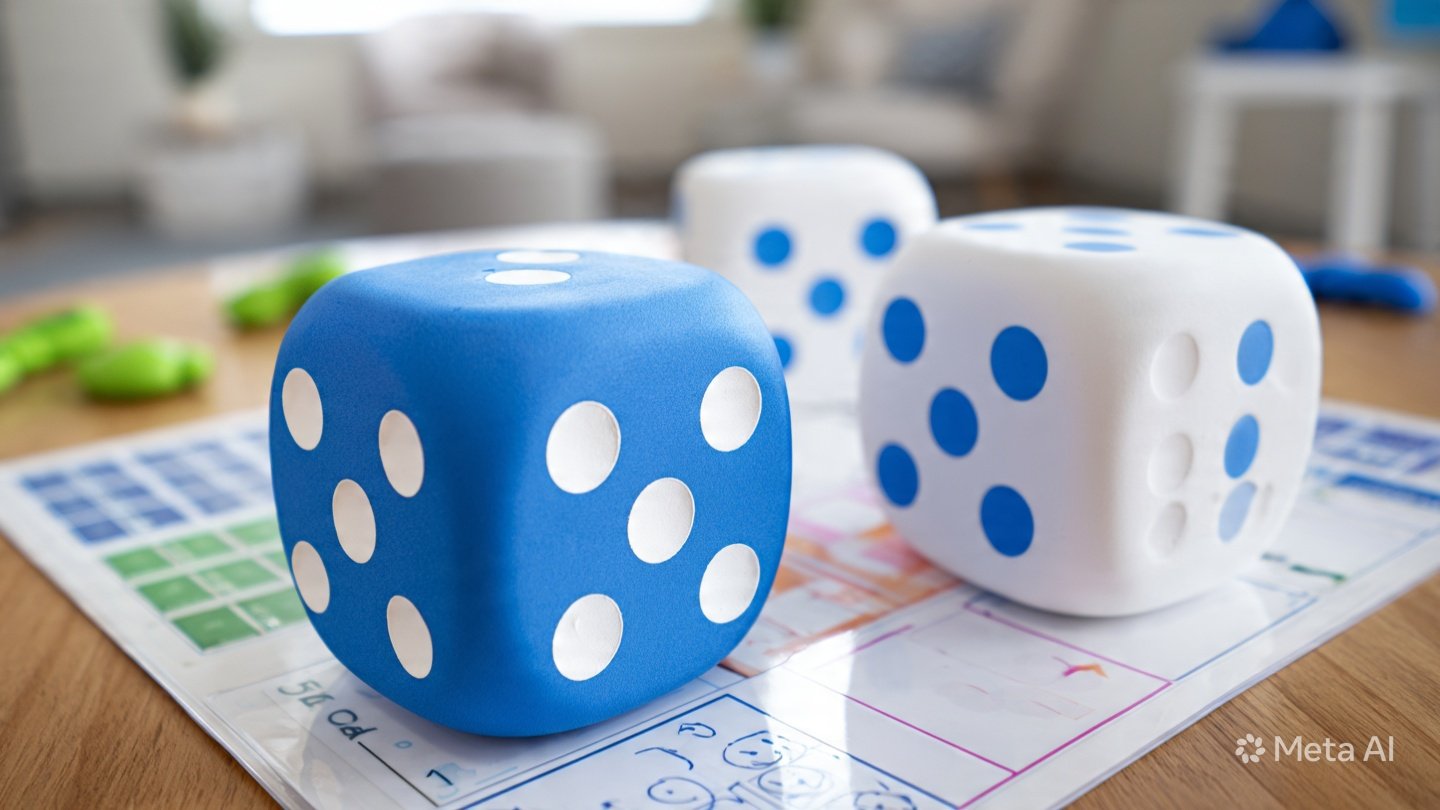
Permainan dadu untuk kebutuhan khusus siswa dapat membuat belajar lebih menyenangkan, fleksibel, dan dapat diakses. Sebuah die sederhana dapat mendukung menghitung, komunikasi, mengambil, bergerak, memori, keterampilan sosial, dan partisipasi kelas. Bagian terbaiknya adalah permainan dadu dapat dengan mudah beradaptasi dengan kemampuan berbeda, tingkat perhatian, kebutuhan sensorik, dan tujuan belajar.
Permainan ini dapat digunakan di kelas pendidikan khusus, kelas inklusif, sesi belajar bergaya terapi, pelajaran homeschool, kelompok kecil, dan satu-satu dukungan. Tujuannya bukan untuk membuat setiap siswa bermain dengan cara yang sama. Tujuannya adalah untuk menyesuaikan aktivitas sehingga setiap siswa dapat berpartisipasi dengan nyaman dan sukses.
Pemandu ini berbagi permainan dadu adaptif untuk kebutuhan khusus siswa, termasuk permainan matematika sederhana, permainan komunikasi, kegiatan sensory- ramah, permainan gerakan, keterampilan sosial, dan ide belajar visual.
Mengapa Dice Games bekerja dengan baik untuk Mahasiswa yang membutuhkan khusus
Permainan dadu berguna karena mereka sederhana, visual, dan fleksibel. Siswa bisa menggulung, menghitung, titik, memilih, mencocokkan, bergerak, berbicara, menggambar, atau menggunakan kartu gambar tergantung pada tingkat kemampuan mereka.
| Learning Benefit | Bagaimana Dece Games Bantuan |
|---|---|
| Menghitung latihan | Siswa menghitung titik, obyek, atau gerakan |
| Pembelajaran visual | Dice tampilkan angka dengan cara visual yang jelas |
| Turn- mengambil | Siswa berlatih menunggu dan berbagi ternyata |
| Komunikasi | Prote jawaban siswa atau membuat pilihan |
| Baik keterampilan motorik | Rolling dice and moving counters support hand use |
| Perhatian | Putaran pendek membantu siswa tetap terlibat |
| Keterampilan sosial | Permainan mendorong interaksi dengan peer |
| Partisi Fleksibel | Aturan dapat disesuaikan untuk setiap siswa |
Permainan dadu harus rendah tekanan. Siswa harus merasa aman, didukung, dan didorong.
Catatan Penting untuk Guru dan Orang Tua
Siswa kebutuhan khusus mungkin memiliki gaya komunikasi yang berbeda, kebutuhan sensorik, kemampuan fisik, dan bentangan perhatian. Selalu beradaptasi permainan berdasarkan siswa, bukan sebaliknya.
| Kebutuhan Mahasiswa | Adaptasi Bantuan |
|---|---|
| Visi rendah | Gunakan dadu besar dengan angka tebal |
| Kesulitan motorik Fine | Gunakan busa dadu, cangkir dadu, atau dadu digital |
| Sensors sensitivitas | Gunakan dadu lembut dan diam bergulir permukaan |
| Pidato terbatas | Gunakan menunjuk, kartu gambar, atau ya / tidak respon |
| Rentang perhatian singkat | Gunakan putaran 3 menit |
| Kesulitan menunggu | Gunakan solo atau pasangan giliran pertama |
| Kesulitan Matematika | Gunakan obyek, penghitung, atau bagan angka |
| Kecemasan dengan kompetisi | Gunakan permainan kooperatif daripada pemenang |
Bahan Diperlukan
| Materi | Gunakan |
|---|---|
| Besar busa dadu | Easy to see, hold, and roll |
| standar dadu | Permainan kelompok kecil dan siswa yang lebih tua |
| Cangkir dadu atau baki | Membantu siswa roll dengan kontrol |
| Counter atau blocks | Menghitung dan mencocokkan |
| Kartu foto | Komunikasi dan pilihan-membuat |
| Nomor kartu | Pengenalan angka |
| Kartu aturan visual | Membantu siswa mengikuti langkah-langkah |
| Penghitung | Menjaga aktivitas pendek |
| Kertas dan krayon | Menggambar, mencocokkan, dan mencetak lembar |
Dadu busa besar sering pilihan terbaik karena mereka tenang, lembut, dan mudah untuk menangani.
Quick Game Picker for Special Needs
| Gol Belajar | Permainan Dice Terbaik | Dukungan Terbaik |
|---|---|---|
| Menghitung | Putar dan Cacah Obyek | Counter atau blocks |
| Pengenalan angka | Cocokkan Nomor | Nomor kartu |
| Komunikasi | Gulung dan Pilih | Kartu foto |
| Keterampilan sosial | Turn- Mengambil Dice | Kartu putar visual |
| Gerakan | Dice Aksi Lembut | Ruang pergerakan aman |
| Baik latihan motor | Gulung dan Tempat | Penghitung Besar |
| Memori | Lihat dan Tutup Dice | Waktu melihat pendek |
| Aktivitas tenang | Dice Napas | Ruang tenang |
| Kerja tim | Bangun Dice Bersama | Permainan koperatif |
| Kreativitas | Gulung dan Gambar | Crayon dan kertas |
1.
Ini adalah salah satu permainan dadu adaptif termudah. Ini membantu siswa menghubungkan nomor dadu dengan objek nyata.
Terbaik untuk: Menghitung dan pengenalan angka
Players: 1 atau lebih
Dice dibutuhkan: 1 besar mati
Waktu: 3 sampai 5 menit
Dukungan: Counters, blok, atau mainan kecil
Cara bermain
- Siswa gulung satu mati besar.
- Hitung titik-titik bersama-sama.
- Siswa memilih jumlah objek yang sama.
- Hitung benda dengan keras.
- Ulangi untuk beberapa putaran.
Contoh penuh
| Dice Roll | Koleksi Mahasiswa |
|---|---|
| 1 | 1 blok |
| 2 | 2 blok |
| 3 | 3 blok |
| 4 | 4 blok |
| 5 | 5 blok |
| 6 | 6 blok |
Adaptasi:
Jika siswa tidak berbicara, mereka dapat menunjuk, menyentuh, atau menempatkan benda bukannya mengatakan nomor tersebut.
2.
Permainan ini membantu siswa mencocokkan titik dadu dengan angka tertulis.
Terbaik untuk: Pengenalan angka
Players: 1 atau lebih
Dice dibutuhkan: 1 mati
Waktu: 5 menit
Dukungan: Nomor kartu 1 sampai 6
Cara bermain
- Tempatkan nomor kartu 1 sampai 6 di atas meja.
- Pelajar sudah mati.
- Hitung titik-titik.
- Siswa menunjuk ke atau memilih kartu nomor yang cocok.
- Berikan pujian untuk usaha.
Contoh
| Dice Roll | Kartu Pencocokan |
|---|---|
| 1 | Nomor 1 |
| 2 | Nomor 2 |
| 3 | Nomor 3 |
| 4 | Nomor 4 |
| 5 | Nomor 5 |
| 6 | Nomor 6 |
Tip dukungan visual:
Gunakan kartu dengan kedua angka dan titik untuk membuat pencocokan lebih mudah.
3.
Permainan dadu ini mendukung komunikasi dan pilihan.
Terbaik untuk: Praktek komunikasi
Players: 1 atau lebih
Dice dibutuhkan: 1 mati
Waktu: 5 sampai 10 menit
Dukungan: Kartu foto atau papan pilihan
| Dice Roll | Prompt Pilihan |
|---|---|
| 1 | Pilih warna |
| 2 | Pilih binatang |
| 3 | Pilih makanan |
| 4 | Pilih sebuah aksi |
| 5 | Pilih mainan |
| 6 | Pilih perasaan |
Cara bermain
- Pelajar sudah mati.
- Gulungan memilih prompt.
- Siswa menjawab dengan berbicara, menunjuk, menandatangani, menulis, atau memilih gambar.
- Guru atau orang tua mengulangi jawabannya dengan jelas.
Contoh:
Jika siswa gulungan 3, mereka memilih gambar makanan seperti apel, beras, roti, atau pisang.
Adaptasi:
Untuk siswa non-verbal, gunakan kartu gambar atau papan pilihan bergaya AAC-.
4.
Turn- Mengambil Dice membantu siswa berlatih menunggu, berbagi, dan berikut rutinitas sosial sederhana.
Terbaik untuk: Keterampilan sosial
Players: 2 sampai 4
Dice dibutuhkan: 1 mati
Waktu: 5 menit
Dukungan: "My Turn / Your Turn" kartu visual
Cara bermain
- Pemain 1 gulung dadu.
- Semua orang menghitung nomornya.
- Pemain 1 melewati dadu ke Pemain 2.
- Pemain 2 gulungan.
- Lanjutkan untuk beberapa putaran.
Grafik putar visual
| Langkah | Aksi |
|---|---|
| 1 | Giliranku |
| 2 | Roll dice |
| 3 | Cacah |
| 4 | Pass dadu |
| 5 | Giliranmu |
Tips guru:
Gunakan frasa pendek seperti "roll", "count", dan "pass" untuk menjaga instruksi yang jelas.
Dice Aksi Lembut
Permainan ini mendukung gerakan tanpa siswa yang luar biasa.
Terbaik untuk: Gerakan dan kesadaran tubuh
Players: 1 atau lebih
Dice dibutuhkan: 1 busa besar mati
Waktu: 3 sampai 5 menit
Dukungan: Bersihkan bagan aksi ruang dan visual
| Dice Roll | Aksi Lembut |
|---|---|
| 1 | Bertepuk 1 waktu |
| 2 | Tap lutut 2 kali |
| 3 | Rentangkan lengan 3 kali |
| 4 | 4 Maret langkah |
| 5 | Ambil 5 napas lambat |
| 6 | Keseimbangan selama 6 detik |
Cara bermain
- Gulung dadu.
- Tampilkan aksi yang cocok.
- Siswa menyelesaikan tindakan.
- Ulangi untuk 3 sampai 5 gulungan.
Tip yang ramah.
Hindari tepuk tangan keras jika siswa sensitif terhadap kebisingan. Gunakan keran tenang sebagai gantinya.
Jalan-jalan.
Roll dan Place adalah aktivitas motor yang baik menggunakan dadu dan counter.
Terbaik untuk: Baik keterampilan motorik dan menghitung
Players: 1 atau lebih
Dice dibutuhkan: 1 mati
Waktu: 5 menit
Dukungan: Counter, buttons, blocks, or large manik-manik
Cara bermain
- Siswa satu orang meninggal.
- Hitung titik-titik.
- Siswa menempatkan banyak counter di atas tikar.
- Ulangi sampai tikar diisi.
Contoh penuh
| Round | Dice Roll | Counters Placed |
|---|---|---|
| 1 | 2 | 2 |
| 2 | 4 | 4 |
| 3 | 1 | 1 |
| 4 | 3 | 3 |
Adaptasi:
Gunakan counter lebih besar untuk siswa yang membutuhkan dukungan grip lebih mudah.
7.
Ini adalah permainan kooperatif di mana siswa membangun satu menara bersama.
Terbaik untuk: Kerja tim dan menghitung
Players: 2 sampai 4
Dice dibutuhkan: 1 mati
Waktu: 5 sampai 10 menit
Dukungan: Blok atau cangkir tumpukan
Cara bermain
- Siswa duduk di sekitar blok.
- Satu siswa melempar dadu.
- Kelompok menambahkan bahwa banyak blok ke menara bersama.
- Berikutnya gulungan mahasiswa.
- Tujuannya adalah untuk membangun sebuah menara bersama-sama tanpa jatuh.
Contoh penuh
| Putar | Dice Roll | Blok Ditambahkan | Tower Total |
|---|---|---|---|
| 1 | 3 | 3 | 3 |
| 2 | 2 | 2 | 5 |
| 3 | 4 | 4 | 9 |
| 4 | 1 | 1 | 10 |
Mengapa itu bekerja:
Tidak ada pemenang tunggal, sehingga aktivitas merasa mendukung dan kooperatif.
Lihat dan lindungi Dice.
Permainan memori ini sederhana dan dapat beradaptasi dengan mudah.
Terbaik untuk: Perhatian dan memori
Players: 1 atau lebih
Dice dibutuhkan: 2 sampai 3 dadu
Waktu: 3 sampai 5 menit
Dukungan: Cup atau kertas untuk menutupi dadu
Cara bermain
- Gulung 2 dadu.
- Biarkan siswa mencari selama 3 sampai 5 detik.
- Tutup dadunya.
- Siswa mengatakan, poin untuk, atau menulis nomor mereka ingat.
- Periksa bersama.
Contoh penuh
| Round | Dice Shown | Jawaban Mahasiswa | Benar? |
|---|---|---|---|
| 1 | 2, 5 | 2, 5 | Ya |
| 2 | 3, 4 | 3, 4 | Ya |
| 3 | 1, 6 | 1, 5 | Tidak |
| 4 | 2, 2 | 2, 2 | Ya |
Adaptasi:
Gunakan satu mati pertama jika dua dadu terlalu sulit.
9.
Dece Breathing adalah aktivitas tenang untuk transisi atau istirahat sensorik.
Terbaik untuk: Calm-down time and self-regulation
Players: Masing-masing atau kelompok
Dice dibutuhkan: 1 mati
Waktu: 2 sampai 3 menit
Dukungan: Ruang tenang
| Dice Roll | Tugas Tenang |
|---|---|
| 1 | Ambil 1 napas lambat |
| 2 | Ambil 2 napas lambat |
| 3 | Hitung sampai 3 perlahan |
| 4 | Hembuskan napas untuk 4 jumlah |
| 5 | Duduk tenang selama 5 detik |
| 6 | Gulung bahu 6 kali |
Cara bermain
- Gulung dadu.
- Selesaikan tugas yang tenang.
- Ulangi 2 atau 3 kali.
- Kembali belajar.
Penggunaan terbaik:
Gunakan ini sebelum transisi, setelah drama aktif, atau ketika siswa membutuhkan reset tenang.
10.
Roll and Draw mendukung kreativitas, keterampilan motorik yang baik, dan mengikuti arah.
Terbaik untuk: Ekspresi kreatif
Players: 1 atau lebih
Dice dibutuhkan: 1 mati
Waktu: 5 sampai 10 menit
Dukungan: Kertas dan krayon
| Dice Roll | Gambar Ini |
|---|---|
| 1 | Lingkaran |
| 2 | Mata |
| 3 | Hidung |
| 4 | Mulut |
| 5 | Rambut |
| 6 | Topi |
Cara bermain
- Pelajar sudah mati.
- Siswa menarik item yang cocok.
- Lanjutkan sampai gambar selesai.
- Biarkan siswa menjelaskan atau menunjuk ke gambar.
Adaptasi:
Siswa yang sulit menggambar dapat memilih stiker atau kartu foto sebagai gantinya.
Best Dice Games by Student Need
| Kebutuhan Mahasiswa | Permainan Dice Terbaik |
|---|---|
| Menghitung dukungan | Putar dan Cacah Obyek |
| Dukungan komunikasi | Gulung dan Pilih |
| Keterampilan sosial | Turn- Mengambil Dice |
| Baik latihan motor | Gulung dan Tempat |
| Gerakan istirahat | Dice Aksi Lembut |
| Calm-down dukungan | Dice Napas |
| Praktek memori | Lihat dan Tutup Dice |
| Kreativitas | Gulung dan Gambar |
| Kerja tim | Bangun Dice Bersama |
| Pengenalan angka | Cocokkan Nomor |
Bagaimana membuat Permainan Dice Lebih Akses
| Tantangan | Adaptasi |
|---|---|
| Dice sulit untuk terus | Gunakan dadu busa yang lebih besar |
| Rolling sulit | Gunakan cangkir dadu atau roller dadu digital |
| Angka sulit untuk dilihat | Gunakan dadu terlalu besar dengan titik tebal |
| Siswa akan kewalahan | Gunakan satu mati dan sedikit giliran |
| Waiting is hard | Gunakan siklus putar pendek |
| Berbicara adalah sulit | Ijinkan penandaan atau pilihan gambar |
| Menulis itu sulit. | Gunakan counter daripada score |
| Suara bising membuat stres. | Gunakan dadu lembut dan permukaan tenang |
Templat Kartu Aturan Visual
Gunakan kartu aturan sederhana ini untuk setiap permainan dadu.
| Langkah | Apa yang harus dilakukan |
|---|---|
| 1 | Gulung |
| 2 | Lihat |
| 3 | Cacah |
| 4 | Pilih atau pindahkan |
| 5 | Pass |
Jenis dukungan visual ini dapat membantu siswa memahami rutinitas tanpa instruksi lisan panjang.
Tips untuk Guru, Orang tua, dan Staf Dukungan
- Mulailah dengan satu permainan sederhana.
- Gunakan putaran pendek.
- Tunjukkan sebelum meminta siswa untuk bermain.
- Gunakan dukungan visual.
- Berikan pilihan kapan mungkin.
- Pujilah usaha dan partisipasi.
- Hindari memaksa bicara.
- Izinkan waktu pemrosesan tambahan.
- Kurangi kebisingan dan kekacauan.
- Gunakan permainan kooperatif untuk siswa yang gelisah.
- Jauhkan instruksi konsisten.
- Ulangi game favorit untuk membangun kepercayaan diri.
Kesalahan Umum untuk Hindari
| Kesalahan | Pilihan yang lebih baik |
|---|---|
| Aturan terlalu panjang | Gunakan 2- 3 langkah sederhana |
| Aturan yang sama untuk setiap siswa | Adat berdasarkan kebutuhan |
| Terlalu banyak kompetisi | Gunakan permainan kooperatif |
| Tidak ada dukungan visual | Gunakan kartu atau grafik |
| Instruksi cepat | Berikan waktu untuk memproses |
| Dadu kecil sulit untuk digunakan | Gunakan dadu besar |
| Mengkoreksi kesalahan | Keberanian dan panduan dengan lembut |
| Sesi panjang | Menjaga aktivitas pendek |
Keselamatan dan Kenyamanan Tips
- Gunakan dadu lembut bila memungkinkan.
- Hindari dadu kecil untuk siswa yang mungkin mulut objek.
- Jaga ruang tenang dan tak berantakan.
- Gunakan gerakan lembut saja.
- Jangan memaksa siswa untuk berpartisipasi secara lisan.
- Biarkan siswa istirahat.
- Hindari bersorak keras jika kebisingan sulit.
- Pilih permainan yang sesuai dengan tingkat kenyamanan siswa.
FAQ Tentang Permainan Dice untuk Kebutuhan Mahasiswa Khusus
Apakah permainan dadu baik untuk siswa kebutuhan khusus?
Ya. Permainan dadu dapat mendukung menghitung, komunikasi, berputar, keterampilan motorik, interaksi sosial, memori, dan perhatian ketika beradaptasi dengan benar.
Dadu apa yang terbaik?
Dadu busa besar sering terbaik karena mereka mudah untuk melihat, mudah untuk memegang, tenang, dan aman bagi banyak siswa.
Bisakah siswa non-verbal memainkan permainan dadu?
Ya. Siswa non-verbal dapat berpartisipasi dengan menunjuk, memilih kartu gambar, menempatkan counter, menggunakan gerak tubuh, atau menggunakan dukungan komunikasi bergaya AAC.
Berapa lama pertandingan akan berlangsung?
Putaran pendek dari 3 sampai 10 menit biasanya bekerja terbaik. Waktu dapat disesuaikan berdasarkan rentang perhatian dan tingkat kenyamanan.
Apakah pertandingan dadu yang kompetitif cocok?
Kadang-kadang, tapi permainan kooperatif sering lebih baik untuk siswa yang merasa cemas, frustrasi, atau kewalahan oleh kompetisi.
Dapatkah permainan dadu digunakan untuk istirahat sensorik?
Ya. Dece Breathing, Dice Action Lembut, dan permainan bergulir tenang dapat digunakan sebagai sensory- pendek istirahat ramah.
Bagaimana aku bisa membuat permainan dadu lebih mudah?
Gunakan satu langkah mati, sedikit langkah, kartu visual, dadu besar, hitung, dan tambahan waktu. Anda juga dapat menghapus skor dan hanya fokus pada partisipasi.
Pikiran Akhir
Permainan dadu untuk kebutuhan khusus siswa fleksibel, inklusif, dan mudah untuk beradaptasi. Mereka dapat mendukung pembelajaran, komunikasi, pergerakan, memori, keterampilan sosial, dan kepercayaan diri dengan cara yang menyenangkan.
Mulailah dengan kegiatan sederhana seperti Roll dan Count Objects, Cocokkan Nomor, atau Turn- Mengambil Dice. Gunakan 'Breathing Dice' untuk saat-saat tenang, Buat 'Together Dice' bersama untuk kerjasama, Dan Roll and Choose for communications practice.
Aturan yang paling penting adalah beradaptasi dengan kebutuhan siswa. Ketika aktivitas ini jelas, tenang, dan mendukung, permainan dadu dapat menjadi alat yang membantu untuk pembelajaran inklusif dan partisipasi menyenangkan.
Catatan: This article is for educational and recreational purposes only. It is not medical, therapeutic, or professional special education advice. It does not promote betting, cheating, casino play, loaded dice, or real-money gambling.


