


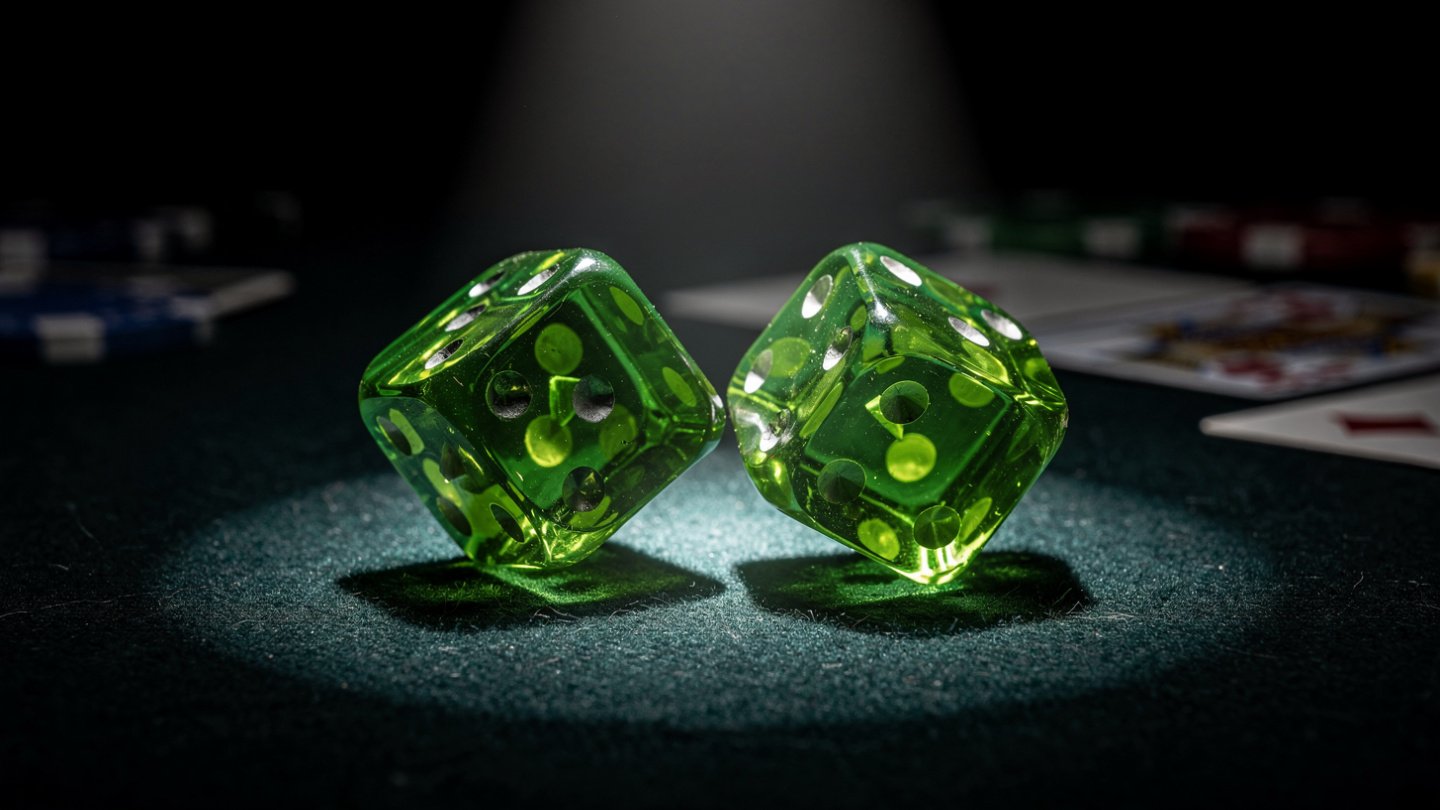
Kebanyakan orang membayangkan sebuah kubus kecil dengan titik-titik ketika mereka memikirkan dadu. Ia duduk di kotak permainan papan, berguling di meja selama pertandingan keluarga malam, dan percikan baik kegembiraan dan tawa dalam ukuran yang sama.
Namun inilah pertanyaan yang terdengar sederhana namun membuka dunia yang menakjubkan: berapa banyak sisi yang dimiliki dadu?
Jawaban singkatnya adalah enam. Tapi jawaban lengkapnya jauh lebih menarik dari itu.
Mari kita menjelajahi segala sesuatu tentang sisi dadu, bentuk, jenis, dan dunia yang kaya dari Dice- berbasis permainan dengan cara yang menyenangkan, pendidikan, dan mudah untuk mengikuti.
The Standard Dice and Its Six Sides
Dadu tradisional memiliki enam sisi. Setiap sisi adalah datar, persegi wajah menampilkan nomor dari satu sampai enam, biasanya diwakili oleh titik-titik yang disebut pips. Versi six-sided ini adalah tipe yang paling umum yang akan Anda temukan dalam permainan papan harian, alat pendidikan, dan kegiatan keluarga.
Dadu six-sided secara teknis disebut d6 dalam terminologi game. The "d" singkatan dari dadu dan nomor memberitahu Anda berapa banyak sisi yang memiliki. Sederhana, kan?
Setiap wajah dadu standar membawa nomor unik, dan tidak ada nomor berulang. Total dari semua enam wajah menambahkan hingga 21, yang merupakan fakta matematika kecil yang menyenangkan untuk berbagi pada malam pertandingan berikutnya.
Aturan Sisi Berlawanan
Berikut adalah sesuatu yang menarik bahwa banyak orang tidak pernah melihat. Pada dadu standar yang diproduksi dengan benar, wajah yang berlawanan selalu menambahkan hingga tujuh.
Satu selalu berlawanan enam. Dua selalu berlawanan lima. Tiga selalu berlawanan dengan empat.
Aturan ini telah konsisten di pabrik dadu selama berabad-abad. Ini bukan hanya kebetulan. Ini adalah standar desain yang disengaja yang membantu memastikan keseimbangan dan keadilan selama permainan. Lain kali Anda mengambil dadu, flip sekitar dan cek. Anda akan menemukan aturan ini berlaku setiap saat.
Mengapa Enam Sisi Menjadi Standar
Anda mungkin bertanya-tanya mengapa dadu menetap di enam sisi khusus. Mengapa tidak lima atau delapan?
Jawabannya adalah kombinasi sejarah, geometri, dan kepraktisan.
Sebuah kubus dengan enam wajah persegi yang sama adalah salah satu yang paling stabil dan mudah menghasilkan tiga bentuk dimensi. Ini menggulung dengan baik, tanah datar, dan setiap wajah memiliki kesempatan yang sama mendarat wajah-up ketika dadu seimbang dengan benar. Hal ini memberikan setiap angka kemungkinan yang kira-kira sama muncul, yang membuat permainan adil.
Sejarawan percaya peradaban kuno secara independen menemukan bahwa bentuk kubus bekerja terbaik untuk kemungkinan berbasis gameplay. Bukti arkeologi dari Mesopotamia, Mesir kuno, dan peradaban Lembah Indus semua menunjukkan dadu six-side dating kembali ribuan tahun. Menurut Institut Oriental di Universitas Chicago, dadu berbentuk cube telah ditemukan dalam menggali kencan sejauh 3000 BCE.
Daya tahan seperti itu memberitahu Anda segalanya tentang seberapa baik desain six-sided bekerja.
Jenis Dice dan Sisi Mereka
Sementara dadu six-sided adalah yang paling dikenal, itu jauh dari tipe satu-satunya. Terutama dalam permainan role- bermain game, pengaturan pendidikan, dan khusus permainan papan, dadu datang dalam berbagai bentuk dan sisi menghitung.
Berikut adalah rincian dari jenis yang paling umum.
The Four- Sided Dice (d4)
Dadu empat sisi terlihat seperti piramida. Ia memiliki empat wajah segitiga, dan membaca hasilnya sedikit berbeda karena tidak mendarat dengan wajah datar di atasnya. Sebaliknya, angka di tepi bawah atau puncak menunjukkan hasil, tergantung pada desain.
D4 populer dalam game-game yang diputar untuk menentukan kerusakan dari senjata kecil atau hasil dalam skenario jarak rendah.
The Eight- Sided Dice (d8)
Dadu delapan sisi memiliki delapan segitiga wajah diatur dalam dua bentuk piramida bergabung di dasar. Berjalan lancar dan mudah dibaca karena wajah atas jelas menunjukkan hasilnya.
Pemain sering menggunakan d8 dalam game yang memerlukan hasil antara satu dan delapan, memberikan kisaran yang lebih luas kemungkinan daripada versi standar sixeside.
Dice Sisi Sepuluh (d10)
This one looks a bit like a rounded kite shape with ten faces. Some sets include two d10 dice, one numbered zero to nine and another representing tens, so players can generate numbers from one to one hundred when rolled together.
The ten-sided dice is widely used in role-playing games and educational probability activities.
The Twelve-Sided Dice (d12)
The twelve-sided dice features twelve pentagonal faces and looks similar to a rounded gemstone. It gives a broader range of outcomes and appears frequently in advanced board games and role-playing settings.
The Twenty-Sided Dice (d20)
Perhaps the most famous specialty dice is the twenty-sided version, popularly known as the d20. It features twenty triangular faces and is most commonly associated with Dungeons and Dragons, the beloved tabletop role-playing game.
Rolling a d20 often determines major outcomes in storytelling games, such as whether a character successfully completes a heroic action. Rolling the highest number on a d20 is known as a “natural twenty” and is celebrated by players worldwide.
Specialty and Custom Dice
Beyond these standard types, game designers and educators have created dice with letters, colors, symbols, images, and even custom numbers. Word dice appear in games like Boggle. Color dice help young children learn colors through play. Blank dice allow players and teachers to write their own values for customized activities.
The variety is genuinely impressive, and each type serves a distinct purpose in education and entertainment.
Understanding Probability with Dice
One of the most valuable things dice teach us is probability, which is the mathematical study of how likely something is to happen.
When you roll a standard six-sided dice, each number has a one-in-six chance of appearing. That means the probability of rolling any specific number is approximately 16.7 percent.
When you roll two dice and add the results together, the probabilities shift. The number seven becomes the most likely total because it has the highest number of combinations that produce it. You can get seven by rolling one plus six, two plus five, or three plus four. That gives you six possible combinations out of thirty-six total, making seven appear more often than any other sum.
This concept of probability through dice rolling is taught in mathematics classrooms around the world. Research published by the National Council of Teachers of Mathematics supports the use of dice-based activities as an effective method for teaching statistical reasoning to students at various grade levels.
Understanding probability through hands-on dice rolling makes abstract math concepts tangible and memorable.
¶ How Dice Are Made 
Modern dice go through a careful manufacturing process to ensure fairness and accuracy.
Most standard dice are made from a plastic material called cellulose acetate. Manufacturers pour the material into molds shaped like cubes, pyramids, or other geometric forms depending on the type of dice being produced.
After shaping, the faces are smoothed to ensure consistent roll behavior. The dots or numbers are then added by drilling small holes into the surface and filling them with contrasting paint. Precision matters here because even small variations in weight can affect how often certain numbers land face-up.
High-quality dice manufacturers use a tumbling process where dice are polished inside a rotating drum to remove sharp edges and ensure each face is equally smooth.
Precision casino-grade dice, often used in professional settings, are cut to exact tolerances measured in thousandths of an inch. These dice are inspected carefully to ensure they are as close to perfectly balanced as possible. While these are typically used in professional settings, the same principle of fairness applies to educational and recreational dice too.
Fun Facts About Dice That Will Surprise You
Dice are full of surprising history and trivia. Here are some facts worth knowing.
The word “dice” is technically the plural of “die,” though many people use “dice” even when referring to a single one. Both uses are now widely accepted in everyday English.
Ancient Roman dice made over two thousand years ago look remarkably similar to modern ones. Some recovered examples are nearly identical in proportion and design to dice you can buy today.
The largest collection of unique dice ever recorded, according to Guinness World Records, contains thousands of pieces gathered from around the world. Dice collecting, known as “dicecollecting” or “dicehoarding,” is a real and recognized hobby.
Japan has a long tradition of uniquely crafted dice used in traditional games, many of which feature artistic designs specific to regional game styles.
Some historical dice were deliberately weighted to favor certain outcomes, a practice known as “loading.” Modern manufacturing standards and quality checks exist specifically to prevent this and ensure fair gameplay.
How Dice Are Used in Education
Beyond entertainment, dice serve as powerful educational tools across many subjects and age groups.
In early childhood education, dice help children learn number recognition, counting, and basic addition in a playful and low-pressure setting. Rolling two dice and adding the results gives young learners a concrete way to practice arithmetic without the anxiety that sometimes comes with worksheets.
In older grade levels, dice introduce concepts like probability, statistical thinking, and data collection. Students can roll dice hundreds of times, record results, and start to understand patterns in outcomes. This kind of hands-on experimentation makes abstract math accessible.
In language learning classrooms, word dice and letter dice encourage vocabulary building and storytelling. Teachers use them to prompt creative writing exercises or oral language practice in a dynamic and engaging format.
Even in social-emotional learning, dice games help children practice patience, turn-taking, graceful winning, and accepting loss with good sportsmanship.
Choosing the Right Dice for Your Activity
Not all dice suit every purpose. Here are some practical tips for choosing the right type.
For family board games and general use, stick with standard six-sided dice. They are easy to find, affordable, and familiar to players of all ages.
For role-playing games like Dungeons and Dragons or Pathfinder, invest in a complete polyhedral dice set that includes d4, d6, d8, d10, d12, and d20 versions. These sets are widely available at hobby stores and online retailers.
For classroom use, consider foam dice for younger children to prevent noise and injury during active games. Large-print dice with clear numbers also work well for students who need visual support.
For travel and portability, mini dice sets fit easily into small pouches and work perfectly for on-the-go entertainment without taking up space.
For custom learning activities, blank dice offer complete flexibility. Teachers and parents can write letters, math problems, or vocabulary words directly on the faces.
The Lasting Appeal of Dice Through the Ages
There is something almost magical about the act of rolling a dice. You hold a small object in your hand, toss it, and in a split second, fate delivers a number. That brief moment of anticipation before the dice settles is universal across cultures and generations.
Dice connect people. They level the playing field because no amount of skill can fully control a roll. They teach us to accept uncertainty, adapt to results, and respond with strategy rather than frustration. These are life lessons wrapped in a small cube.
From ancient Mesopotamian clay cubes to precision-crafted modern polyhedral sets, dice have evolved while keeping their core appeal intact. They remain one of the most enduring and beloved tools in human play and learning history.
Whether you are a curious learner, a dedicated gamer, a parent looking for screen-free activities, or a teacher searching for engaging classroom tools, dice offer something genuinely valuable for everyone.
So the next time someone asks how many sides a dice has, you can smile and say, “Well, that depends on which dice you are talking about.” Then watch their eyes widen as you explain the wonderful world beyond the classic six.
If you found this article helpful or interesting, please share it with a friend, family member, or teacher who loves learning through games. And if you have a favorite type of dice or a dice game you enjoy, drop it in the comments below. We would love to hear your experiences and recommendations.
Catatan: Artikel ini hanya untuk informasi dan tujuan hiburan saja. Ini tidak mempromosikan atau mendorong perjudian uang.


