


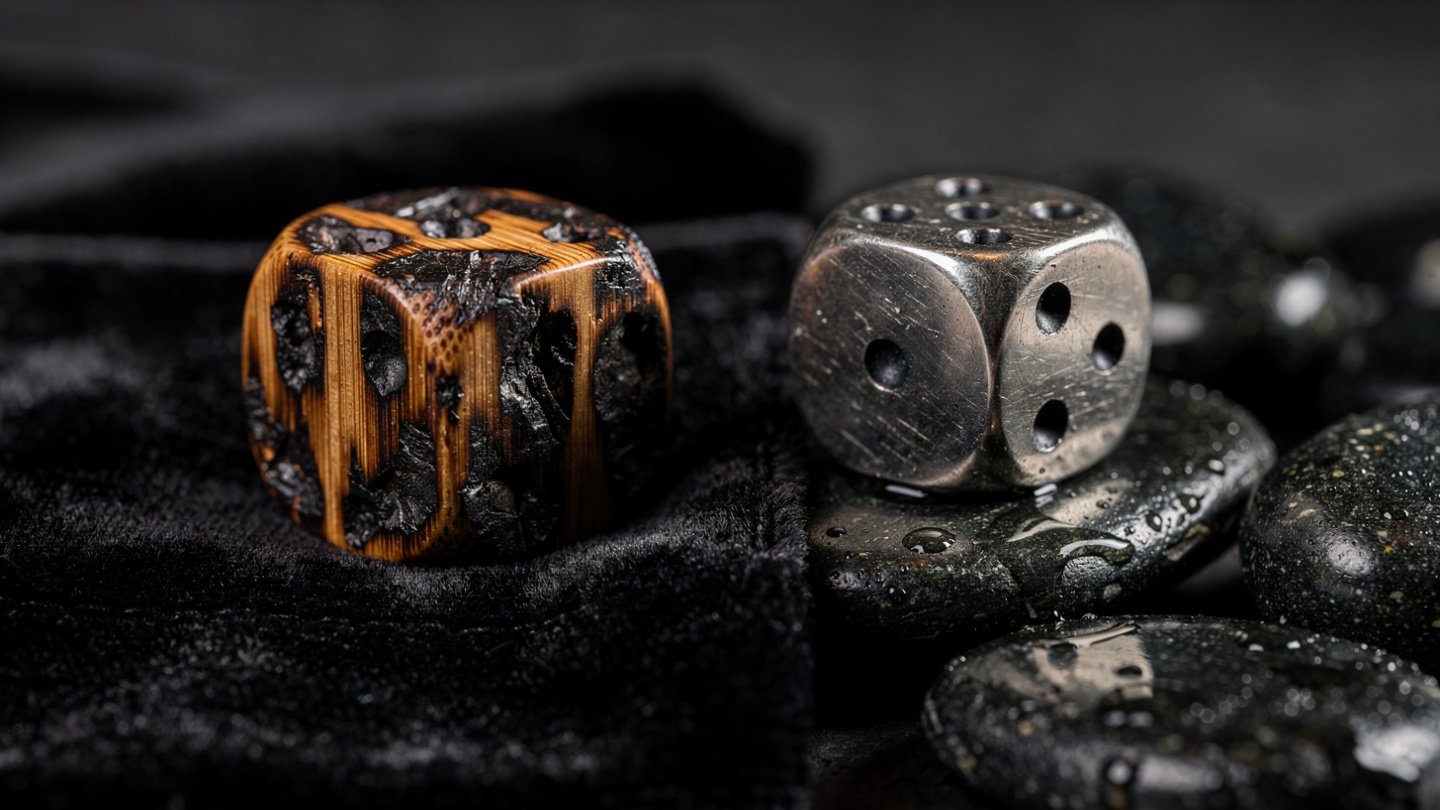
Simple 2 player dice games do something magical. They turn a quiet table into a mini adventure using nothing but a few dice, a pencil, and two people who are willing to laugh at the number one.
These games work for couples, siblings, friends, parents and kids, and even coworkers on a lunch break. You can teach most of them in under five minutes. You can also stop anytime without needing to pack up a mountain of pieces.
This guide shares a practical list of easy two player dice games, how they work, and why people keep coming back to them. Everything stays family-friendly and educational, with a focus on scoring points, probability, and good old-fashioned fun.
A quick look at dice history in plain English
Humans have rolled dice for thousands of years. Archaeologists have found early dice made from bones and other materials across ancient cultures. Today we mostly use six-sided dice, but the idea stays the same: roll, read the result, and make a decision.
If you like digging deeper, two reliable starting points are Encyclopaedia Britannica’s overview of dice and museum collections that document ancient gaming objects, such as the British Museum’s curated artifacts and research pages.
Sources
Encyclopaedia Britannica, Dice https://www.britannica.com/topic/dice
The British Museum, collections and research on games and playing pieces.
Why two player dice games work so well
Two player games feel personal. You do not wait long for your turn. You get constant feedback and quick momentum.
They also teach useful skills without feeling like homework.
What you practice while playing
- Mental math like addition and quick totals
- Decision-making under uncertainty
- Pattern recognition
- Sportsmanship and emotional control when luck gets silly
And yes, they also help you learn one important life skill: how to smile when the dice disagree with your plans.
What you need to get started
Most simple two player dice games use common items.
Basic supplies
- One to six standard six-sided dice
- Paper and pen or a notes app for scoring
- A flat surface
- Optional dice tray or a shallow bowl to keep dice from escaping
Quick tip for calmer rolling
Roll into a box lid or a felt-lined tray. Your table stays quieter and your dice stop exploring the floor like tiny tourists.
The key idea behind most dice games
Most games follow one of these structures:
- Push your luck: keep rolling for a higher score, but a bad roll ends your turn
- Race: reach a target score first
- Accuracy and efficiency: score well using smart choices and number combinations
- Bluff and deduction: read probabilities and your opponent’s behavior
You will see these styles repeated below.
Game 1 Pig the classic one die duel
Pig is one of the best simple 2 player dice games because it teaches decision-making with minimal rules.
What you need
- 1 die
- Paper for score
Goal
Be the first to reach 100 points.
Rules step by step
- Player A rolls the die.
- If the roll shows 2 to 6, add it to a turn total and choose:
- Roll again
- Hold and add the turn total to your overall score
- If the roll shows 1, your turn ends and you score 0 for that turn.
- Switch turns.
- First player to 100 wins.
Example turn
You roll 5, then 4. Your turn total is 9.
If you hold, you bank 9 points.
If you roll again and get 1, you lose the 9.
Why people love it
It feels dramatic with just one die. It also rewards calm thinking more than loud confidence, which is great news for the quiet strategists.
Game 2 Two Dice Pig for faster scoring
If you want Pig with more math and quicker swings, use two dice.
What you need
- 2 dice
Goal
Reach 100 points first.
Rules step by step
- Roll both dice on your turn.
- If neither die shows 1, add the sum to your turn total.
- If one die shows 1, your turn ends and you lose your turn total.
- If both dice show 1, clear your entire overall score and end your turn.
- You may hold after any successful roll.
Tip
This version moves faster and creates bigger decisions. It also teaches how rare double ones feel until they suddenly appear at the worst moment.
Game 3 Sevens Out a quick race game
Sevens Out plays fast and feels great for a best-of-five series.
What you need
- 2 dice
Goal
Score the most points over a set number of rounds, or be the first to a target score like 100.
Rules step by step
- On your turn, roll two dice repeatedly.
- Add each roll total to your score, but stop when you roll a total of 7.
- When you roll 7, your turn ends immediately.
- Switch turns.
Optional twist
If you roll doubles, you can score double the sum for that roll only. For example, double 4 scores 16 instead of 8.
Why it works for two players
Turns stay short. The race stays tight. Nobody disappears for ten minutes doing complicated scoring.
Game 4 Going to Boston simple and satisfying
This game uses three dice and gives you a reliable rhythm. You roll, keep the best, and build a score.
What you need
- 3 dice
Goal
After a chosen number of rounds like 5 or 10, the higher total score wins.
Rules step by step
- Roll three dice.
- Keep the highest die. Set it aside.
- Roll the remaining two dice.
- Keep the highest die. Set it aside.
- Roll the last die and keep it.
- Add your three kept dice for your round score.
- Switch turns.
Example
Roll 2, 6, 3 keep 6
Roll 5, 1 keep 5
Roll last die 4
Round score is 6 + 5 + 4 = 15
Tip
Kids love this game because it feels like you always make progress, even when you roll low.
Game 5 Shut the Box head to head without the box
If you own a Shut the Box set, use it. If you do not, you can still play with paper numbers.
What you need
- 2 dice
- Paper with numbers 1 to 9 written down for each player
Goal
Close all numbers, or finish with the lowest remaining total.
Rules step by step
- Write numbers 1 through 9 on your paper.
- Roll two dice and add them.
- Cross out any combination of remaining numbers that equals the total.
- If you roll 8, you can cross out 8 or 5 and 3 or 6 and 2 and so on.
- Keep rolling until you cannot make a valid combination.
- Add the numbers you did not cross out. That is your round remainder score.
- Switch turns and compare. Lower remainder wins the round.
Why it feels smart
You make real choices. You can remove one big number or multiple smaller ones. That decision changes your future options.
Game 6 Ten Turn Sprint a structured points challenge
Some players love freedom. Others want a clean structure. Ten Turn Sprint gives you a neat container.
What you need
- 2 dice
- Score sheet with 10 rows per player
Goal
After 10 turns each, the higher total score wins.
Rules step by step
- Each player gets exactly 10 turns.
- On your turn, roll two dice once.
- Add the sum to your total.
- If you roll doubles, add a bonus of 5 points.
- After both players complete 10 turns, compare totals.
Why it is great for beginners
It removes the pressure of deciding when to stop rolling. Everyone gets the same number of turns, so it feels fair and relaxed.
Game 7 Highest of Three a tiny game with big laughter
This one works as a warm-up or a quick break between longer games.
What you need
- 1 die per player or share 1 die
Goal
Win the most rounds.
Rules step by step
- Each player rolls once.
- Higher number wins the round.
- Play best of 11 or best of 21 rounds.
Add a logic twist
If both players tie, re-roll, but the next round counts double.
This game stays simple, but it also shows how streaks can happen even when outcomes stay random.
Game 8 Dice Golf for two players
Dice Golf turns scoring into a mini puzzle. It also helps younger players practice addition.
What you need
- 2 dice
- Score sheet with 9 holes or 18 holes
Goal
Finish with the lowest total score.
Rules step by step
- Each hole, each player rolls two dice.
- Record the sum as your score for that hole.
- Optional skill rule: once per hole, you may reroll one die, but you must keep the new result.
- After 9 or 18 holes, add your scores. Lower total wins.
Why it is fun
It feels like a full game experience with a beginning, middle, and end, but it stays easy enough for kids and casual players.
Game 9 One Roll Yahtzee style mini categories
If you like classic combo scoring but want a short two player format, try mini categories with one roll only.
What you need
- 5 dice
- Paper with these categories for each player:
- Ones, Twos, Threes, Fours, Fives, Sixes
- Three of a kind
- Four of a kind
- Full house
- Small straight 4 in a row
- Large straight 5 in a row
- Five of a kind
- Chance total of all dice
Goal
Complete all categories with the highest score.
Rules step by step
- On your turn, roll all five dice once.
- Choose one category to fill with that roll.
- Mark 0 if the roll does not fit any open category you want.
- Switch turns until both players fill all categories.
- Add scores and compare.
Tip
One roll only keeps the game fast and removes analysis paralysis. It also makes every decision feel bold in a harmless way.
How to choose the right two player dice game
Pick based on time, age, and the vibe you want.
If you have 5 minutes
- Highest of Three
- Ten Turn Sprint
If you want light strategy
- Shut the Box on paper
- Pig
If you want structured rounds
- Going to Boston
- Dice Golf
If you like pattern scoring
- One Roll Yahtzee style mini categories
Simple probability tips that make you feel like a wizard
You do not need advanced math to play well, but a few facts help.
Two dice sums appear with different frequencies
A total of 7 has more combinations than any other total. You can roll it as 1 and 6, 2 and 5, 3 and 4, 4 and 3, 5 and 2, 6 and 1.
Totals like 2 and 12 have only one combination each.
This matters in games like Sevens Out and Shut the Box because 7 will show up more often than you think. Your brain will still act surprised every time. That is normal.
Fair play tips and family friendly house rules
Dice games feel better when everyone trusts the setup.
Keep rolls consistent
- Roll in the same area every time.
- If a die falls off the table, re-roll both dice.
Keep scoring simple
- Use clear tally marks.
- Confirm totals out loud. This helps kids learn and reduces mistakes.
Add gentle humor rules
- Winner teaches the next game.
- Loser picks the snack for the next round.
These rules keep competition friendly and stop the game from turning into a serious debate club.
FAQs about simple 2 player dice games
What is the easiest two player dice game for kids
Pig with one die usually wins. It teaches addition and decision-making with almost no setup.
How many dice do I need for most games
Two to five dice cover most options in this article. If you own six dice, you can play nearly everything here with room to spare.
How long do these games take
Many finish in 5 to 20 minutes. Structured games like Dice Golf or mini category scoring can take 20 to 40 minutes depending on pace.
Can these games help with learning
Yes. Dice games support mental math, number sense, and probability intuition. They also help kids practice turn-taking and patience.
Final thoughts
Simple 2 player dice games prove that you do not need fancy equipment to create memorable fun. A few dice can teach math, spark friendly rivalry, and fill awkward silence faster than any small-talk question.
Try two or three games from this list, then keep the winners in your personal rotation. You will build a reliable game-night toolkit that fits in a drawer, a backpack, or a jacket pocket.
Share this article with a friend who loves quick games, and comment which two player dice game you want to try first. If you already have a house rule that makes everyone laugh, share that too.
Note: This article is for informational and entertainment purposes only. It does not promote or encourage real-money gambling.


