


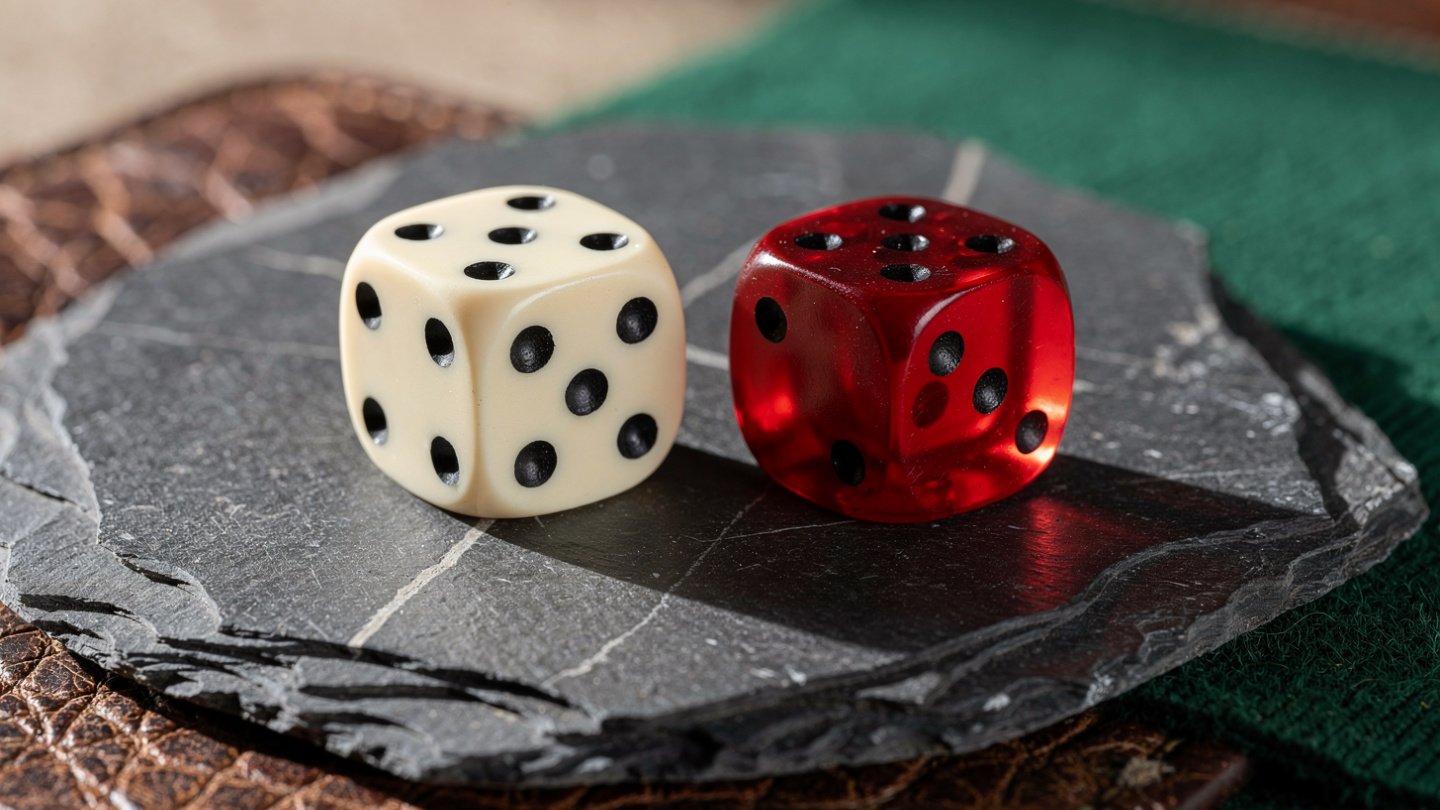
Dice games are some of the easiest games to play at home. You do not need a big board, expensive equipment, or a long setup. A few dice, paper, pencils, and a table are enough to create a fun activity for kids, teens, adults, or the whole family.
The best dice games to play at home are simple, flexible, and easy to adjust. Some games are perfect for quick 5-minute rounds. Some are better for full family game nights. Some help children practice counting and addition, while others give older players more strategy and decision-making.
This guide focuses on choosing the right dice game for your home situation. You will find games by room, time, player count, age group, and difficulty level. You will also get clear rules, example score sheets, setup tips, and safe home-play suggestions.
Why Dice Games Are Perfect for Home Play
Dice games work well at home because they are simple and flexible. You can play them at the kitchen table, on the living room floor, in a bedroom, during a rainy afternoon, or after dinner.
They also fit different family situations. A young child can enjoy counting dots, an older child can track scores, and adults can join without learning a complicated rulebook.
| Home Play Benefit | Why It Helps |
|---|---|
| Low cost | Most games need only standard dice and paper |
| Quick setup | You can start in a few minutes |
| Small space friendly | Works on a table, tray, or floor |
| Flexible age range | Rules can be made easier or harder |
| Screen-free fun | Gives families a break from devices |
| Short or long play | Games can last 5 minutes or 1 hour |
| Educational value | Supports counting, addition, memory, and strategy |
| Social connection | Encourages talking, turn-taking, and laughter |
Dice games also have strong replay value because every roll changes the situation. Even when the rules stay the same, each round feels different.
Best Dice Games by Home Situation
Use this quick guide to choose the right dice game for your home.
| Home Situation | Best Game | Why It Works |
|---|---|---|
| Before dinner | Going to Boston | Fast, simple, and easy to stop |
| Family game night | Farkle Style Game | Longer scoring and exciting choices |
| Rainy afternoon | Build a Tower | Keeps kids busy indoors |
| Quiet evening | Story Dice | Calm and creative |
| Small apartment | Roll and Add | Needs very little space |
| Bedroom wind-down | Dice Story Time | Low-noise activity |
| Living room floor | Action Dice | Adds gentle movement |
| Kitchen table | Yahtzee Style Challenge | Easy place for scorecards |
| Large family gathering | Team Score Race | Works well with groups |
| Solo play | Shut the Box Style Game | Good for independent practice |
Materials You Need for Home Dice Games
Most home dice games need only basic items.
| Material | Best Use |
|---|---|
| 1 standard die | Counting, movement, drawing, and simple games |
| 2 standard dice | Addition, score races, target games |
| 5 dice | Yahtzee-style pattern games |
| 6 dice | Farkle-style scoring games |
| Paper | Score sheets, story ideas, drawing games |
| Pencil or crayon | Writing scores or drawing results |
| Dice tray or bowl | Keeps dice from rolling away |
| Blocks or cups | Tower and building games |
| Timer | Short challenges and quick rounds |
If younger children are playing, use large foam dice when possible. Small dice can be a choking risk for toddlers.
Best Quick Dice Games to Play at Home
These games are good when you only have a few minutes. They are easy to explain and do not need much setup.
1. Going to Boston
Going to Boston is one of the easiest dice games to play at home. It is great for beginners because the rule is simple: roll, keep the highest die, and add your total.
Best for: Ages 6 and up
Players: 2 or more
Dice needed: 3 dice
Time: 5 to 10 minutes
Main skill: Addition and number comparison
How to play:
- Roll all three dice.
- Keep the highest die.
- Roll the remaining two dice.
- Keep the highest die again.
- Roll the last die.
- Add all three kept dice.
- The highest total wins the round.
Example round:
| Roll | Dice Result | Kept Die |
|---|---|---|
| First roll | 2, 6, 4 | 6 |
| Second roll | 5, 1 | 5 |
| Third roll | 3 | 3 |
| Final score | 6 + 5 + 3 | 14 |
Home tip:
Play 5 rounds and keep a simple score sheet. This makes the game feel complete without taking too long.
2. Roll and Add
Roll and Add is perfect for younger kids or quick math practice at home.
Best for: Ages 5 and up
Players: 2 or more
Dice needed: 1 or 2 dice
Time: 5 to 10 minutes
Main skill: Counting and addition
How to play:
- Each player starts at 0.
- Roll one die on your turn.
- Add the result to your score.
- First player to reach 20 wins.
Filled score example:
| Player | Round 1 | Round 2 | Round 3 | Round 4 | Total |
|---|---|---|---|---|---|
| Sara | 4 | 5 | 3 | 6 | 18 |
| Ali | 6 | 2 | 5 | 4 | 17 |
| Mom | 3 | 6 | 4 | 5 | 18 |
| Dad | 5 | 4 | 6 | 3 | 18 |
Easy version:
Use one die and a target score of 10.
Harder version:
Use two dice and a target score of 50.
3. Make 20
Make 20 is a simple target-score game that adds a little decision-making.
Best for: Ages 7 and up
Players: 2 to 6
Dice needed: 2 dice
Time: 10 minutes
Main skill: Addition and planning
How to play:
- Each player starts with 0 points.
- On your turn, roll two dice.
- Add the total to your score.
- Try to reach exactly 20.
- If you go over 20, your score goes back to 10.
- First player to land exactly on 20 wins.
Example:
A player has 15 points. They roll 3 and 1, making 4. Their new score is 19. On the next turn, they need exactly 1 to win.
Home variation:
For older players, change the target to 50 or 100.
Best Dice Games for Family Game Night
These games are better when everyone has more time and wants a full game-night activity.
4. Yahtzee Style Challenge
This game uses five dice and a scorecard. It is inspired by classic pattern-scoring dice games, but you can play a simple home version without buying anything.
Best for: Ages 8 and up
Players: 2 to 6
Dice needed: 5 dice
Time: 20 to 40 minutes
Main skill: Pattern recognition and scoring choices
How to play:
- Roll five dice.
- Keep any dice you want.
- Reroll the remaining dice up to two times.
- Choose one score category.
- Each category can be used once.
- Highest total score wins.
Simple home scorecard:
| Category | What to Roll | Example Score |
|---|---|---|
| Ones | Add all 1s | 3 |
| Twos | Add all 2s | 6 |
| Threes | Add all 3s | 9 |
| Four of a kind | Four matching dice | Total of all dice |
| Full house | Three of one number and two of another | 25 |
| Straight | Five numbers in order | 40 |
| Chance | Any roll | Total of all dice |
Example turn:
A player rolls 2, 2, 2, 5, 6. They keep the three 2s and reroll the 5 and 6. If they get another 2, they may use the four-of-a-kind category.
Home tip:
For younger players, remove harder categories and only use ones, twos, threes, pairs, and chance.
5. Farkle Style Game
Farkle-style games are exciting because players must decide whether to keep points or roll again.
Best for: Ages 8 and up
Players: 2 to 6
Dice needed: 6 dice
Time: 20 to 40 minutes
Main skill: Scoring, patience, and risk awareness
Simple scoring table:
| Dice Result | Points |
|---|---|
| Single 1 | 100 |
| Single 5 | 50 |
| Three 2s | 200 |
| Three 3s | 300 |
| Three 4s | 400 |
| Three 5s | 500 |
| Three 6s | 600 |
| Three 1s | 1000 |
How to play:
- Roll all six dice.
- Set aside at least one scoring die.
- Decide whether to bank your points or roll the remaining dice.
- If you roll and get no scoring dice, you lose the points from that turn.
- First player to reach 3,000 points wins.
Example turn:
A player rolls: 1, 5, 2, 2, 4, 6
They keep the 1 and 5 for 150 points.
They can bank 150 points or roll the remaining four dice.
Home tip:
Use 1,000 points for a short game or 5,000 points for a longer game night.
6. Team Score Race
Team Score Race is useful for larger families or gatherings at home.
Best for: Ages 6 and up
Players: 4 or more
Dice needed: 2 dice
Time: 15 to 25 minutes
Main skill: Addition and teamwork
How to play:
- Divide players into two teams.
- Choose one scorekeeper for each team.
- Each player rolls two dice on their turn.
- Add the roll to the team score.
- First team to reach 100 wins.
Filled team score example:
| Round | Team A Score | Team B Score |
|---|---|---|
| 1 | 8 | 10 |
| 2 | 19 | 16 |
| 3 | 27 | 25 |
| 4 | 38 | 34 |
| 5 | 49 | 46 |
Mixed-age rule:
Younger players can roll one die and receive a 2-point bonus. Older players can roll two dice with no bonus.
Best Creative Dice Games to Play at Home
Creative dice games are good for calm evenings, indoor play, and children who enjoy stories or drawing.
7. Story Dice
Story Dice turns dice rolls into story ideas. It is one of the best home dice games for imagination and speaking practice.
Best for: Ages 6 and up
Players: 2 or more
Dice needed: 1 die rolled three times
Time: 10 to 20 minutes
Main skill: Storytelling and creativity
| Roll | Character | Place | Problem |
|---|---|---|---|
| 1 | A lost puppy | A kitchen | Finds a secret note |
| 2 | A brave child | A forest | Needs to find a key |
| 3 | A funny robot | A school | Loses its memory |
| 4 | A tiny dragon | A garden | Cannot fly |
| 5 | A clever cat | A library | Finds a hidden door |
| 6 | A kind giant | A village | Breaks something by mistake |
How to play:
- Roll once for a character.
- Roll again for a place.
- Roll again for a problem.
- Tell or write a short story using all three results.
Filled example:
| Story Element | Dice Roll | Result |
|---|---|---|
| Character | 5 | A clever cat |
| Place | 2 | A forest |
| Problem | 6 | Breaks something by mistake |
Example story idea:
A clever cat walks through a forest and accidentally breaks a tiny bridge used by forest animals. The cat must find a way to repair it before sunset.
8. Roll and Draw
Roll and Draw is easy, quiet, and fun for kids who like art.
Best for: Ages 5 and up
Players: 2 or more
Dice needed: 1 die
Time: 10 to 15 minutes
Main skill: Creativity and following directions
| Dice Roll | Draw This |
|---|---|
| 1 | Head |
| 2 | Eyes |
| 3 | Nose |
| 4 | Mouth |
| 5 | Ears |
| 6 | Hair or hat |
How to play:
- Each player gets paper and a pencil.
- Roll the die.
- Draw the matching feature.
- Continue until the drawing is complete.
- Compare the funny results at the end.
Home variation:
Change the theme to robots, monsters, pets, houses, or superheroes.
9. Beetle Drawing Game
This is a classic drawing dice game that works well for children and family groups.
Best for: Ages 5 and up
Players: 2 to 8
Dice needed: 1 die
Time: 10 to 15 minutes
Main skill: Drawing, patience, and rule-following
| Dice Roll | Beetle Part |
|---|---|
| 1 | Tail |
| 2 | One leg |
| 3 | One antenna |
| 4 | One eye |
| 5 | Head |
| 6 | Body |
How to play:
- Each player starts with blank paper.
- Players take turns rolling one die.
- A player must roll 6 to draw the body first.
- After the body, they can add other parts.
- The first player to complete the beetle wins.
Home tip:
At the end, let everyone name their beetle. This makes the activity more fun for younger children.
Best Dice Games for Kids at Home
These games are simple, safe, and useful for younger children.
10. Roll and Match
Roll and Match helps young children connect numbers with real objects.
Best for: Ages 3 to 6
Players: 1 or more
Dice needed: 1 large die
Time: 5 minutes
Main skill: Counting and number recognition
How to play:
- Roll one large die.
- Count the dots.
- Pick the same number of objects, such as blocks, crayons, or toy cars.
- Count the objects aloud.
- Repeat for several rounds.
Example:
If the child rolls 4, they pick 4 blocks.
11. Build a Tower
Build a Tower is a hands-on home game that combines counting with building.
Best for: Ages 4 and up
Players: 1 to 4
Dice needed: 1 die
Time: 10 minutes
Main skill: Counting, patience, and hand control
How to play:
- Give each player blocks or cups.
- Roll one die.
- Add that many pieces to your tower.
- Play for 5 rounds.
- The tallest tower still standing wins.
Filled example:
| Player | Round 1 | Round 2 | Round 3 | Total Blocks |
|---|---|---|---|---|
| Sara | 4 | 3 | 5 | 12 |
| Ali | 2 | 6 | 1 | 9 |
| Mom | 5 | 2 | 4 | 11 |
| Dad | 3 | 4 | 6 | 13 |
Cooperative version:
Build one shared family tower. The family wins if the tower stays standing after 10 rolls.
Best Dice Games by Room at Home
Different rooms work better for different dice games.
| Room | Best Dice Game | Reason |
|---|---|---|
| Kitchen table | Yahtzee Style Challenge | Easy to use scorecards |
| Living room floor | Build a Tower | More space for blocks |
| Bedroom | Story Dice | Calm and quiet |
| Dining room | Team Score Race | Good for larger groups |
| Small apartment | Roll and Add | Needs very little space |
| Playroom | Action Dice | Allows gentle movement |
| Study room | Make 20 | Good for math practice |
| Balcony or patio | Going to Boston | Quick and simple |
Best Dice Games by Number of Players
| Players | Best Game Options |
|---|---|
| 1 player | Roll and Match, Build a Tower, Shut the Box Style Practice |
| 2 players | Going to Boston, Make 20, Roll and Add |
| 3–4 players | Story Dice, Roll and Draw, Yahtzee Style Challenge |
| 5–6 players | Farkle Style Game, Team Score Race |
| 7+ players | Team Score Race, Beetle Drawing Game |
Simple Shut the Box Style Practice
You can create a home version of Shut the Box with paper.
Best for: Ages 6 and up
Players: 1 or more
Dice needed: 2 dice
Time: 10 minutes
Main skill: Addition and number combinations
How to play:
- Write numbers 1 to 9 on paper.
- Roll two dice and add the total.
- Cross out one number or a combination of numbers that equals the total.
- Continue until no matching number combination is available.
- Add the numbers left uncrossed. A lower score is better.
Example:
If you roll 8, you can cross out 8, or 5 and 3, or 6 and 2, if those numbers are still available.
Home tip:
This is a good solo practice game for children who are learning addition combinations.
How to Choose the Best Dice Game for Your Home
Choose the game based on age, time, space, and energy level.
| Situation | Choose This Type |
|---|---|
| You have only 5 minutes | Going to Boston or Roll and Add |
| Kids are energetic | Build a Tower or Action Dice |
| You want a quiet activity | Story Dice or Roll and Draw |
| You want longer play | Farkle Style or Yahtzee Style |
| You want math practice | Make 20 or Shut the Box Style |
| You have many players | Team Score Race |
| You have mixed ages | Roll and Add with adjusted rules |
A good rule is to start with the simplest game first. Once everyone understands the rhythm, you can move to a longer or more strategic game.
Tips for a Better Home Dice Game Night
A few small changes can make home dice games smoother and more enjoyable.
- Keep dice, paper, and pencils in one small box.
- Use a tray or bowl so dice do not roll away.
- Start with a short game before trying a longer one.
- Let children help choose the game.
- Use team play when ages are very different.
- Keep score clearly to avoid arguments.
- Praise good choices and fair play.
- Change games if players become tired.
- Use large dice for younger children.
- End while everyone is still having fun.
A simple home rule can help:
“Roll gently, play fairly, and enjoy the moment.”
Common Mistakes to Avoid
| Mistake | Better Choice |
|---|---|
| Choosing a long game first | Start with a 5-minute game |
| Using small dice with toddlers | Use large foam dice and supervise |
| Making rules too complicated | Explain 2 or 3 simple rules |
| Focusing only on winning | Celebrate funny rolls and teamwork |
| Letting dice roll everywhere | Use a tray, cup, bowl, or box lid |
| Ignoring younger players | Give them easier rules or bonus points |
| Playing too long | Stop before everyone gets tired |
Printable Home Dice Game Score Sheet
You can copy this score sheet for Roll and Add, Going to Boston, Make 20, Team Score Race, or other score-based dice games.
| Player Name | Round 1 | Round 2 | Round 3 | Round 4 | Round 5 | Total |
|---|---|---|---|---|---|---|
| Sara | 6 | 8 | 5 | 9 | 7 | 35 |
| Ali | 4 | 10 | 6 | 8 | 5 | 33 |
| Mom | 9 | 5 | 7 | 6 | 8 | 35 |
| Dad | 8 | 6 | 9 | 4 | 10 | 37 |
FAQs About Dice Games to Play at Home
What are the best dice games to play at home?
The best dice games to play at home include Going to Boston, Roll and Add, Make 20, Story Dice, Roll and Draw, Build a Tower, Farkle Style Game, and Yahtzee Style Challenge. These games are simple, flexible, and easy to set up.
How many dice do I need for home dice games?
Many home dice games need only one or two dice. Pattern games may use five dice, while Farkle-style games usually use six dice.
What dice games are best for young children?
Roll and Match, Build a Tower, Action Dice, and Roll and Draw are good for young children. Use large dice and simple rules.
Can dice games be educational?
Yes. Dice games can support counting, addition, subtraction, probability, memory, storytelling, decision-making, and social skills.
What dice games are good for family game night?
For family game night, try Farkle Style Game, Yahtzee Style Challenge, Team Score Race, Story Dice, or Beetle Drawing Game. These games work well for groups and longer sessions.
What is a good dice game for only two players?
Going to Boston, Make 20, Roll and Add, and Shut the Box Style Practice are good two-player dice games.
How do I keep dice games organized at home?
Keep dice, paper, pencils, and score sheets in one small container. Use a tray or bowl for rolling so dice do not scatter around the room.
Final Thoughts
The best dice games to play at home are the ones that match your family’s time, space, and energy level. Some days you may want a quick game like Going to Boston. Other days you may want a longer game like Farkle Style or Yahtzee Style. For younger children, Roll and Match or Build a Tower can be simple and fun. For quiet evenings, Story Dice or Roll and Draw can create relaxed family time.
Dice games are easy to start, easy to adjust, and enjoyable for many ages. With only a few dice and simple materials, your home can become a place for learning, laughter, and screen-free entertainment.
Start with one easy game, keep the rules clear, and let each roll create a new moment of fun.
Note: This article is for educational and entertainment purposes only. It does not promote betting, casino play, or real-money gambling.


