


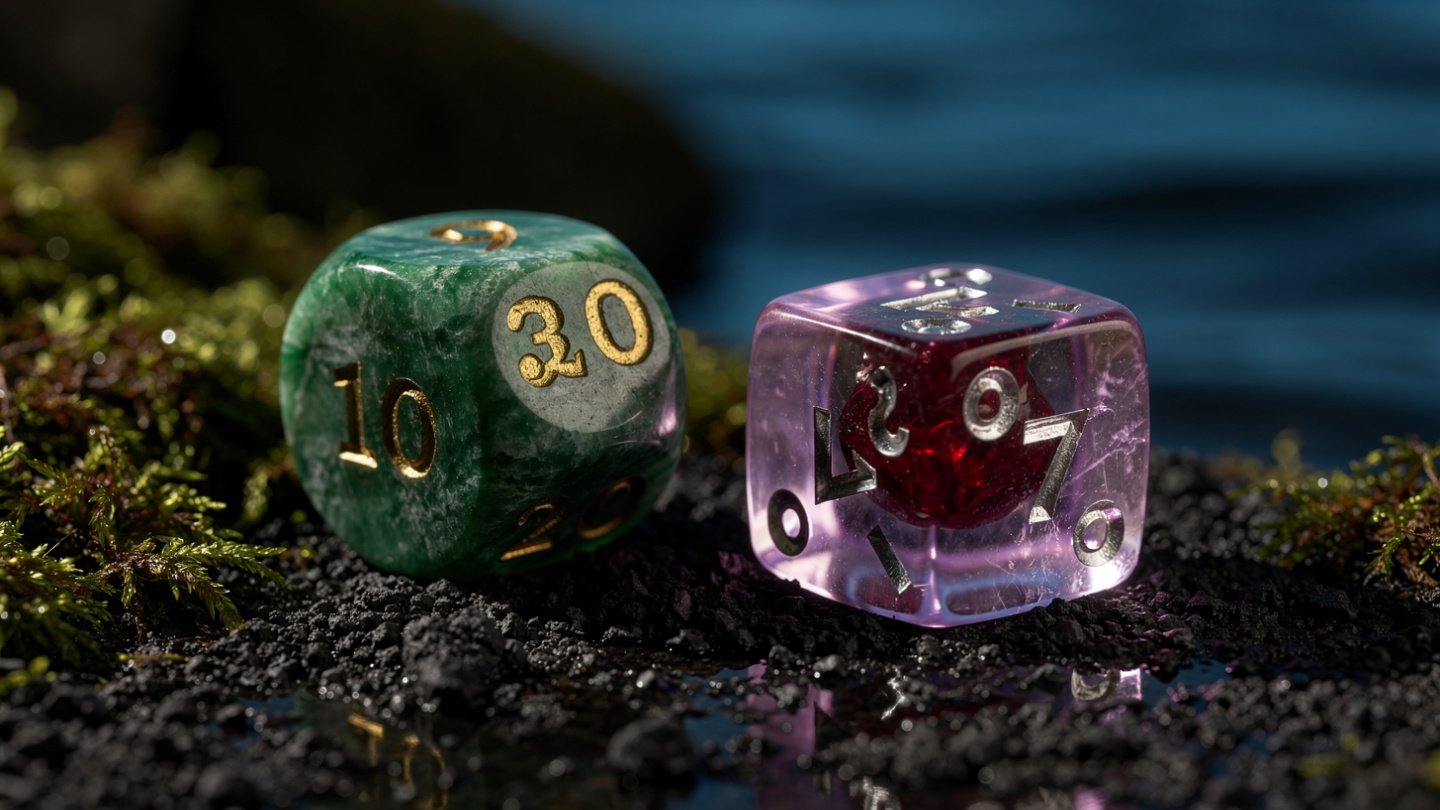
Creating your own dice game unleashes creativity and brings unique entertainment to any gathering. Whether you want educational activities for children, party games for friends, or family bonding experiences, custom dice games offer endless possibilities. You need only dice, imagination, and willingness to experiment with different mechanics and rules.
This comprehensive guide provides practical ideas, step-by-step instructions, and creative inspiration for designing your own dice games. You will discover how to craft rules that match your goals, balance gameplay for fairness, and create memorable experiences. From simple rolling games to complex strategy challenges, these ideas help you build something truly special.
Why Design Your Own Dice Games
Custom dice games solve specific problems that commercial games cannot address. You create exactly what your group needs at that moment.
Perfect Fit for Your Group
Commercial games target broad audiences with generic rules. Your custom game reflects your family’s interests, skill levels, and preferences. You can incorporate inside jokes, favorite themes, or specific learning objectives. This personalization makes gameplay more meaningful and engaging.
Educational Customization
Teachers design dice games that reinforce particular lessons. Math concepts, vocabulary words, historical facts, or scientific principles become game mechanics. Students learn through active play rather than passive study. The custom approach ensures alignment with curriculum goals.
Cost Effective Entertainment
Creating dice games requires minimal investment. Most households already own standard dice. You add paper for scorecards and creativity for rules. This affordability makes custom games accessible to everyone regardless of budget.
Fostering Creativity
The design process itself offers value. Children who help create games develop problem-solving skills, logical thinking, and creative expression. They learn about fairness, balance, and rule structures. These lessons extend beyond gaming into everyday life.
Essential Components of Dice Game Design
Understanding basic game elements helps you craft effective custom rules. These building blocks combine in countless ways to create unique experiences.
Number and Type of Dice
Standard six-sided dice work for most games. You can use specialty dice with different numbers of sides for variety. Four-sided, eight-sided, ten-sided, twelve-sided, and twenty-sided dice create different probability ranges.
Consider using different colored dice for distinct purposes. Red dice might represent one game element while blue dice represent another. Color coding simplifies rules and adds visual interest.
Turn Structure
Decide how players take turns. Sequential turn-taking works for most games. Simultaneous rolling creates faster gameplay but requires more dice. Split turns where players perform different actions add complexity.
Winning Conditions
Clear victory conditions prevent confusion and disputes. Common approaches include reaching a target score, collecting specific items, or completing objectives first. Time limits create urgency and ensure games finish promptly.
Risk and Reward Balance
Engaging games offer meaningful choices. Players should weigh safe options against risky alternatives. This decision-making process creates tension and excitement. Too much randomness removes player agency. Too little makes outcomes predictable and boring.
Creative Rule Ideas for Different Ages
Age-appropriate design ensures everyone can participate and enjoy your custom game.
Preschool and Early Elementary
Young children need simple mechanics with immediate rewards. Create games where rolling specific numbers triggers fun actions like animal sounds or silly movements.
Dice Garden Game: Players roll one die to collect flower points. Roll a 1 and collect one flower card. Roll a 2 for two flowers. Continue through all numbers. First player to collect twenty flowers wins. Add weather cards where rolling a 6 brings sunshine but a 1 brings rain that removes flowers.
Color Quest: Use colored dice or assign colors to numbers. Players move tokens on a rainbow path matching colors to dice results. Include special spaces with bonuses or challenges. This teaches color recognition and counting.
Upper Elementary Students
Older children handle multi-step turns and basic strategy. Introduce resource management and simple calculations.
Monster Math Battle: Players roll two dice and choose an operation (addition, subtraction, multiplication). The result determines attack strength against imaginary monsters. Different monsters require different totals to defeat. Successfully defeating monsters earns points. This reinforces arithmetic while creating narrative excitement.
Territory Conquest: Create a simple map divided into regions. Players roll dice to claim territories. Higher rolls win contested areas. Controlling adjacent territories provides bonuses. This introduces strategic thinking and geography concepts.
Teenagers and Adults
Complex mechanics, deeper strategy, and social interaction appeal to older players.
Dice Auction: Players roll to earn currency points each round. They use these points to bid on cards offering special abilities or victory points. Managing limited resources creates interesting decisions. The auction element adds social dynamics and negotiation.
Chain Reaction Challenge: Players build dice combinations that trigger cascading effects. Rolling doubles lets you roll again. Rolling a straight activates special powers. Chains of successful rolls accumulate massive points but increase risk. One failed roll ends your turn and loses everything.
Themed Dice Game Concepts
Themes provide coherent frameworks that make rules memorable and engaging.
Adventure and Exploration
Treasure Hunt Expedition: Players roll dice to move through different terrain types. Each terrain requires specific dice results to traverse successfully. Mountains need high rolls. Rivers need exact numbers. Valleys accept any result. First player reaching the treasure wins. Add encounter cards for random events.
Space Colony Builder: Roll dice to gather resources like fuel, materials, and food. Different combinations let you build colony structures. Each building provides unique advantages. The player with the most developed colony after ten rounds wins.
Nature and Animals
Wildlife Sanctuary: Roll to attract different animals to your sanctuary. Each animal requires specific dice combinations. Three of a kind attracts elephants worth high points. Pairs bring smaller animals. Straights attract birds. Creating balanced ecosystems earns bonus points.
Seasonal Journey: The game cycles through four seasons. Dice rules change with each season. Spring rewards frequent rolls. Summer requires high totals. Fall favors collecting and banking. Winter penalizes risky play. Adapting strategy to changing conditions creates dynamic gameplay.
Historical and Cultural
Ancient Civilization: Players develop civilizations through dice rolls. Roll for food production, cultural advancement, military strength, and trade. Balance different aspects to build a thriving society. Historical events cards introduce challenges and opportunities.
World Explorer: Visit famous landmarks by rolling specific combinations. The Eiffel Tower requires all odd numbers. The Great Wall needs a straight. Pyramids demand three of a kind. Learning about world geography happens naturally through gameplay.
Educational Dice Game Ideas
Transform learning objectives into engaging game mechanics that children actually enjoy.
Mathematics Focus
Fraction Master: Use two dice to create fractions. The smaller number becomes the numerator, the larger becomes denominator. Players simplify fractions correctly to earn points. Compare fractions to determine who scores each round. This makes abstract concepts concrete and visual.
Probability Detective: Players predict outcomes before rolling. Will the sum be odd or even? Higher than seven or lower? Correct predictions earn points. Track results over many rounds to observe probability principles in action. Discuss why certain outcomes occur more frequently.
Language Arts
Story Dice Creation: Assign story elements to dice numbers. One die determines character types. Another picks settings. A third chooses conflicts. Players roll all three and create short stories using those elements. This sparks creativity while practicing narrative structure.
Vocabulary Builder: Create cards with vocabulary words and definitions. Players roll dice to move along a path. Landing on certain spaces requires defining words or using them in sentences. Correct answers let players advance further. This makes vocabulary practice interactive.
Science Concepts
Ecosystem Balance: Different dice represent predators, prey, plants, and environmental factors. Players roll to simulate ecosystem interactions. Too many predators reduce prey populations. Abundant plants support more animals. Students observe cause and effect relationships in nature.
Chemistry Combinations: Assign elements to different dice numbers. Players roll to combine elements. Correct chemical combinations score points. This introduces periodic table patterns and compound formation through gameplay.
Party and Social Dice Games
Design games that encourage interaction, laughter, and memorable moments with friends.
Icebreaker Games
Truth or Dice: Players roll to determine question difficulty. Higher rolls mean harder questions. Questions encourage sharing fun facts, opinions, or experiences. This helps new acquaintances learn about each other in a structured, comfortable way.
Impression Challenge: Roll dice to randomly select celebrity impressions, accents, or character types. Players perform for points based on creativity and humor rather than accuracy. This breaks down social barriers through shared laughter.
Active and Physical
Dice Fitness Challenge: Assign exercises to different numbers. Rolling a 1 means five jumping jacks. Rolling a 6 means a ten-second plank. Players accumulate exercises throughout the game. Everyone performs their collected exercises together at the end. This combines entertainment with physical activity.
Action Sequence: Create cards describing silly actions like hopping on one foot or speaking in rhymes. Dice rolls determine how many actions you must combine simultaneously. The chaos and difficulty create hilarious moments.
Step by Step Guide to Creating Your Game
Follow this systematic approach to design balanced, enjoyable custom dice games.
Step One: Define Your Purpose
Identify your main goal clearly. Do you want to teach specific skills? Create party entertainment? Develop strategic thinking? Your purpose guides all subsequent decisions. Write down your primary objective before proceeding.
Step Two: Choose Core Mechanics
Select fundamental gameplay mechanics that support your purpose. Will players race to a finish line? Collect the most points? Complete objectives? Decide on the basic framework that structures player actions.
Step Three: Determine Dice Usage
Pick the number and type of dice needed. More dice increase complexity but also slow gameplay. Start simple and add dice only if necessary. Test whether standard six-sided dice suffice or if specialty dice add value.
Step Four: Create Basic Rules
Write simple, clear rules covering these essential elements. How do players take turns? What happens when you roll? How do you score points? What ends the game? These fundamentals form your foundation.
Step Five: Add Strategic Elements
Introduce meaningful choices that affect outcomes. Give players options about which dice to reroll, where to move, or how to use results. Decisions create engagement and replayability.
Step Six: Balance Risk and Reward
Ensure that risky strategies offer proportional rewards. Safe play should provide steady progress. Aggressive tactics might yield bigger gains with higher failure risk. This balance keeps different player types engaged.
Step Seven: Playtest Extensively
Test your game repeatedly with different groups. Watch for confusion, boredom, or imbalance. Ask players for honest feedback. Notice which rules cause questions or slow gameplay. Iteration improves your design dramatically.
Step Eight: Refine and Simplify
Remove unnecessary complexity. Every rule should serve a purpose. Complicated games frustrate players and reduce fun. Simplify scoring systems and streamline turn structures. Clarity beats cleverness in game design.
Making Rules Clear and Accessible
Well-written rules prevent confusion and disputes during gameplay.
Use Simple Language
Write rules using short sentences and common vocabulary. Avoid jargon or overly technical terms. Imagine explaining to someone unfamiliar with games. Clear communication ensures everyone understands expectations.
Provide Examples
Include specific examples demonstrating how rules work in practice. Show sample dice rolls and explain resulting actions. Visual learners especially benefit from concrete illustrations. Examples clarify ambiguous situations.
Create Quick Reference Cards
Design one-page summaries showing key information. List scoring values, special combinations, and turn sequences. Players consult these cards during gameplay instead of rereading full rules. This maintains game flow.
Number Your Rules
Organize rules in logical sequence using numbered lists. This structure makes referencing specific rules easy. When questions arise, players can quickly locate relevant sections.
Example Custom Dice Games
These complete game examples demonstrate different design approaches you can adapt.
Rainbow Race
Components: Six colored dice, game board with colored path, player tokens
Objective: Move your token along the rainbow path from start to finish first
Rules: Roll all six dice. Choose one die and move to the next matching colored space. Set aside the used die. Roll remaining dice and repeat. When no dice match available colors ahead, your turn ends. First player crossing the finish line wins.
Strategic Element: Players decide which colors to use early versus save for later. Managing dice efficiently determines success.
Number Detective
Components: Two standard dice, paper and pencil for scoring
Objective: Score 500 points through successful predictions
Rules: Before rolling, predict whether the sum will be odd or even. Correct predictions score 10 points. Next, predict if the sum will be above or below seven. Correct predictions score 20 points. Finally, predict the exact sum. Correct predictions score 50 points. Players can make all three predictions or choose only some. First to 500 points wins.
Educational Value: Reinforces probability concepts and mental math while creating suspense through predictions.
Team Tower
Components: Multiple dice sets, building blocks
Objective: Build the tallest stable tower through collaborative rolling
Rules: Teams roll dice and receive blocks matching their total. Higher rolls grant more blocks. Teams must build towers using only their earned blocks. Towers must stand independently for thirty seconds. After ten rounds, the tallest stable tower wins.
Collaborative Element: Team members discuss strategies and work together on construction challenges.
Tips for Testing and Improving Games
Quality design requires iteration and refinement based on actual gameplay.
Observe Player Behavior
Watch how players engage with your game. Do they seem confused by certain rules? Does anyone lose interest during specific phases? Note what generates excitement versus boredom. Player behavior reveals design strengths and weaknesses.
Gather Specific Feedback
Ask targeted questions after playtesting. Which rules felt unclear? Did the game feel too long or too short? Were choices meaningful or arbitrary? Specific questions yield actionable improvements.
Test With Different Groups
Try your game with various age groups and experience levels. A game working well for adults might confuse children. Rules clear to you might baffle newcomers. Diverse testing reveals assumptions and gaps.
Iterate Quickly
Make changes and retest promptly. Small adjustments often create big improvements. Don’t marry yourself to original ideas if testing shows problems. Flexibility leads to better final designs.
Conclusion
Creating custom dice games opens endless possibilities for entertainment, education, and connection. You can design exactly what your group needs, whether teaching mathematics, breaking ice at parties, or bonding with family. The process itself builds valuable skills in logic, creativity, and problem-solving.
Start simple with basic mechanics and clear objectives. Test your ideas through actual gameplay and refine based on feedback. Remember that simplicity often beats complexity. The best games offer meaningful choices within straightforward frameworks.
Your custom dice game can become a cherished tradition that brings people together. It represents your creativity and understanding of what makes activities enjoyable. Whether you design educational tools, party entertainment, or strategic challenges, dice games provide accessible foundations for innovation.
What custom dice game will you create? Share your ideas and experiences in the comments below. Tell us about successful designs or lessons learned from testing. If you found this guide helpful, share it with educators, parents, game enthusiasts, and anyone seeking creative entertainment ideas. Your contributions inspire others to explore the rewarding world of custom game design. Let’s build a community of creative game makers who bring joy and learning to their circles through innovative dice game ideas.
Note: This article is for informational and entertainment purposes only. It does not promote or encourage real-money gambling.


