


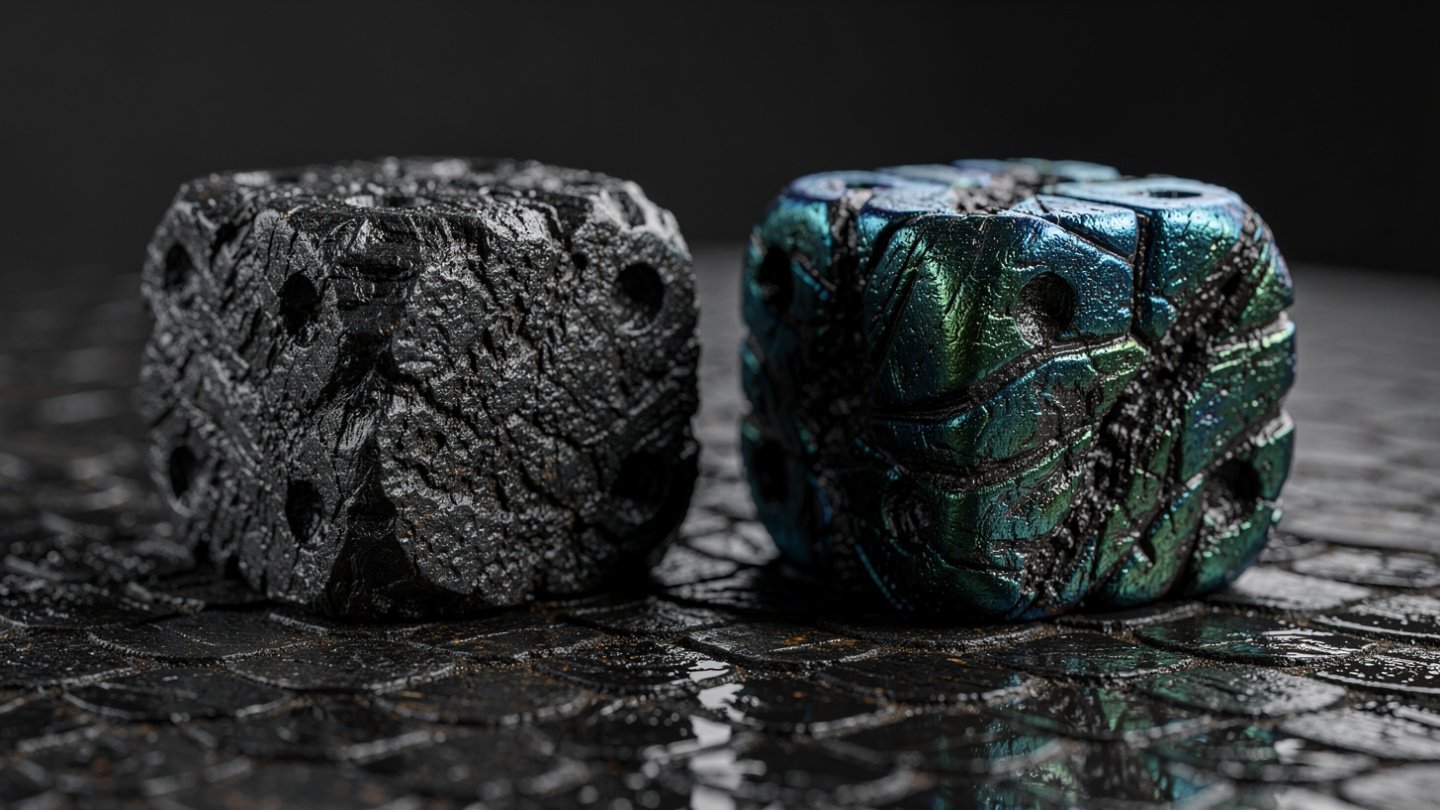
Learning how to calculate dice probability is easier than it looks. You do not need advanced math to understand it. You only need to know two things: how many results you want, and how many total results are possible.
Dice probability is useful for students, teachers, parents, and anyone who enjoys dice games. It helps explain why some rolls are common, why some results are rare, and how chance works in simple games.
This guide explains dice probability step by step. You will learn the basic formula, one-die probability, two-dice probability, doubles, “at least one” calculations, three-dice examples, common mistakes, and practice problems.
Basic Dice Probability Formula
The main probability formula is:
Probability = Favorable Outcomes / Total Possible Outcomes
| Term | Meaning |
|---|---|
| Favorable outcomes | The results you want |
| Total possible outcomes | All results that could happen |
| Probability | The chance of your result happening |
Example:
If you roll one die and want a 6:
| Step | Answer |
|---|---|
| Favorable outcome | 1 |
| Total possible outcomes | 6 |
| Probability | 1/6 |
| Percentage | 16.67% |
So the chance of rolling a 6 on one fair die is 1/6, or about 16.67%.
How to Convert Probability to Percentage
Sometimes probability is written as a fraction. Sometimes it is written as a percentage.
To convert a probability into a percentage:
Probability × 100 = Percentage
Example:
1/6 = 0.1667
0.1667 × 100 = 16.67%
| Fraction | Decimal | Percentage |
|---|---|---|
| 1/6 | 0.1667 | 16.67% |
| 2/6 | 0.3333 | 33.33% |
| 3/6 | 0.5 | 50% |
| 6/6 | 1 | 100% |
How to Calculate Probability With One Die
A standard die has 6 faces:
1, 2, 3, 4, 5, 6
If the die is fair, every number has the same chance.
Example 1: Probability of Rolling a 4
Question: What is the probability of rolling a 4?
Step 1: Count favorable outcomes.
Only one face shows 4.
Step 2: Count total possible outcomes.
A die has 6 faces.
Step 3: Use the formula.
Probability = 1/6 = 16.67%
| Result Wanted | Favorable Outcomes | Total Outcomes | Probability |
|---|---|---|---|
| Roll a 4 | 1 | 6 | 1/6 |
Example 2: Probability of Rolling an Even Number
Even numbers on a die are:
2, 4, 6
There are 3 favorable outcomes.
Probability = 3/6 = 1/2 = 50%
| Event | Favorable Numbers | Probability | Percentage |
|---|---|---|---|
| Roll an even number | 2, 4, 6 | 3/6 | 50% |
| Roll an odd number | 1, 3, 5 | 3/6 | 50% |
Example 3: Probability of Rolling Greater Than 4
Numbers greater than 4 are:
5 and 6
There are 2 favorable outcomes.
Probability = 2/6 = 1/3 = 33.33%
| Event | Favorable Numbers | Probability |
|---|---|---|
| Greater than 4 | 5, 6 | 2/6 |
| Less than 3 | 1, 2 | 2/6 |
| 1 or 6 | 1, 6 | 2/6 |
One-Die Probability Table
| Event | Favorable Outcomes | Probability | Percentage |
|---|---|---|---|
| Roll a specific number | 1 | 1/6 | 16.67% |
| Roll an even number | 3 | 3/6 | 50% |
| Roll an odd number | 3 | 3/6 | 50% |
| Roll greater than 4 | 2 | 2/6 | 33.33% |
| Roll less than 3 | 2 | 2/6 | 33.33% |
| Roll any number from 1 to 6 | 6 | 6/6 | 100% |
How to Calculate Probability With Two Dice
When you roll two dice, each die has 6 possible results.
To find total outcomes:
6 × 6 = 36
So two dice have 36 possible outcomes.
Examples:
| Die 1 | Die 2 | Sum |
|---|---|---|
| 1 | 1 | 2 |
| 1 | 2 | 3 |
| 2 | 1 | 3 |
| 3 | 4 | 7 |
| 6 | 6 | 12 |
With two dice, the smallest possible sum is 2, and the largest possible sum is 12.
Two-Dice Outcome Grid
This table shows all possible sums when rolling two dice.
| Die 1 / Die 2 | 1 | 2 | 3 | 4 | 5 | 6 |
|---|---|---|---|---|---|---|
| 1 | 2 | 3 | 4 | 5 | 6 | 7 |
| 2 | 3 | 4 | 5 | 6 | 7 | 8 |
| 3 | 4 | 5 | 6 | 7 | 8 | 9 |
| 4 | 5 | 6 | 7 | 8 | 9 | 10 |
| 5 | 6 | 7 | 8 | 9 | 10 | 11 |
| 6 | 7 | 8 | 9 | 10 | 11 | 12 |
This grid helps you count how many ways each sum can appear.
Example 4: Probability of Rolling a Sum of 7
Question: What is the probability of rolling a total of 7 with two dice?
Possible ways to roll 7:
| Combination | Sum |
|---|---|
| 1 + 6 | 7 |
| 2 + 5 | 7 |
| 3 + 4 | 7 |
| 4 + 3 | 7 |
| 5 + 2 | 7 |
| 6 + 1 | 7 |
There are 6 favorable outcomes.
Total possible outcomes = 36
Probability = 6/36 = 1/6 = 16.67%
Two-Dice Sum Probability Table
| Sum | Number of Ways | Probability | Percentage |
|---|---|---|---|
| 2 | 1 | 1/36 | 2.78% |
| 3 | 2 | 2/36 | 5.56% |
| 4 | 3 | 3/36 | 8.33% |
| 5 | 4 | 4/36 | 11.11% |
| 6 | 5 | 5/36 | 13.89% |
| 7 | 6 | 6/36 | 16.67% |
| 8 | 5 | 5/36 | 13.89% |
| 9 | 4 | 4/36 | 11.11% |
| 10 | 3 | 3/36 | 8.33% |
| 11 | 2 | 2/36 | 5.56% |
| 12 | 1 | 1/36 | 2.78% |
This table shows that 7 is the most common two-dice sum because it can be made in 6 different ways.
Example 5: Probability of Rolling Doubles
Doubles happen when both dice show the same number.
Examples:
| Double | Result |
|---|---|
| Double 1 | 1 and 1 |
| Double 2 | 2 and 2 |
| Double 3 | 3 and 3 |
| Double 4 | 4 and 4 |
| Double 5 | 5 and 5 |
| Double 6 | 6 and 6 |
There are 6 doubles.
Total possible outcomes = 36
Probability = 6/36 = 1/6 = 16.67%
| Event | Favorable Outcomes | Probability | Percentage |
|---|---|---|---|
| Any double | 6 | 6/36 | 16.67% |
| Double six | 1 | 1/36 | 2.78% |
| No doubles | 30 | 30/36 | 83.33% |
How to Calculate “At Least One” Dice Probability
“At least one” means one or more.
Example:
What is the probability of rolling at least one 6 with two dice?
This can be calculated using the complement method.
The complement means calculating what you do not want first, then subtracting from 1.
Example 6: At Least One 6 With Two Dice
Step 1: Find the chance of not rolling 6 on one die.
There are 5 non-six numbers: 1, 2, 3, 4, 5.
Chance of not rolling 6 = 5/6
Step 2: Find the chance of not rolling 6 on both dice.
5/6 × 5/6 = 25/36
Step 3: Subtract from 1.
1 – 25/36 = 11/36
So:
Probability of at least one 6 = 11/36 = 30.56%
| Step | Calculation |
|---|---|
| Not rolling 6 on one die | 5/6 |
| Not rolling 6 on two dice | 25/36 |
| At least one 6 | 11/36 |
| Percentage | 30.56% |
General Formula for At Least One Result
If you want at least one specific number across multiple dice, use this formula:
P(at least one success) = 1 – P(no success)
For dice:
P(at least one specific number) = 1 – (5/6)^n
Here, n means the number of dice.
| Number of Dice | Chance of At Least One 6 |
|---|---|
| 1 die | 1/6 = 16.67% |
| 2 dice | 11/36 = 30.56% |
| 3 dice | 91/216 = 42.13% |
| 4 dice | 671/1296 = 51.77% |
| 5 dice | 4651/7776 = 59.81% |
How to Calculate Probability With Three Dice
With three dice:
6 × 6 × 6 = 216
So three dice have 216 possible outcomes.
Example 7: Probability of Rolling Three 6s
Only one result gives three 6s:
6, 6, 6
Total possible outcomes = 216
Probability = 1/216 = 0.46%
| Event | Favorable Outcomes | Total Outcomes | Probability |
|---|---|---|---|
| Three 6s | 1 | 216 | 1/216 |
| Three 1s | 1 | 216 | 1/216 |
| Three 4s | 1 | 216 | 1/216 |
Example 8: Probability of At Least One 5 With Three Dice
Use the complement method.
Step 1: Chance of not rolling 5 on one die:
5/6
Step 2: Chance of not rolling 5 on three dice:
5/6 × 5/6 × 5/6 = 125/216
Step 3: Subtract from 1:
1 – 125/216 = 91/216
So:
Probability = 91/216 = 42.13%
| Step | Calculation |
|---|---|
| No 5 on one die | 5/6 |
| No 5 on three dice | 125/216 |
| At least one 5 | 91/216 |
| Percentage | 42.13% |
Independent Events in Dice Probability
Dice rolls are independent events. This means one roll does not affect the next roll.
If you roll a 6 now, the chance of rolling a 6 again is still 1/6.
If you do not roll a 6 for many turns, the chance of rolling a 6 on the next turn is still 1/6.
| Situation | Chance of 6 on Next Roll |
|---|---|
| First roll of the game | 1/6 |
| After rolling 6 once | 1/6 |
| After rolling 6 three times | 1/6 |
| After no 6 for ten rolls | 1/6 |
Dice do not remember previous rolls.
Multiplication Rule for Dice Probability
When you want two independent events to happen together, multiply their probabilities.
Example 9: Rolling a 4, Then Another 4
Chance of rolling 4 on first roll:
1/6
Chance of rolling 4 on second roll:
1/6
Probability of both:
1/6 × 1/6 = 1/36 = 2.78%
| Event | Calculation | Probability |
|---|---|---|
| 4 then 4 | 1/6 × 1/6 | 1/36 |
| 6 then 6 | 1/6 × 1/6 | 1/36 |
| 2 then 5 | 1/6 × 1/6 | 1/36 |
“And” vs “Or” in Dice Probability
This is a common place where beginners make mistakes.
| Word | Meaning | Rule |
|---|---|---|
| And | Both events must happen | Multiply |
| Or | Either result can happen | Add, if results cannot happen together |
Example 10: Rolling 1 or 6 on One Die
A die cannot show 1 and 6 at the same time. So we add:
P(1 or 6) = 1/6 + 1/6 = 2/6 = 1/3
| Event | Probability |
|---|---|
| Roll 1 | 1/6 |
| Roll 6 | 1/6 |
| Roll 1 or 6 | 2/6 = 1/3 |
Example 11: Rolling 1 and 6 on One Die
A single die cannot roll both 1 and 6 at the same time.
So:
P(1 and 6 on one die) = 0
This is impossible.
Expected Value of One Die
Expected value means the average result you expect over many rolls.
For one die:
(1 + 2 + 3 + 4 + 5 + 6) / 6 = 21 / 6 = 3.5
So the expected value of one die is 3.5.
| Dice Values | Sum |
|---|---|
| 1 + 2 + 3 + 4 + 5 + 6 | 21 |
| 21 / 6 | 3.5 |
You cannot roll 3.5, but over many rolls the average gets close to 3.5.
Step-by-Step Method for Any Dice Probability Problem
Use this checklist whenever you calculate dice probability.
| Step | What to Do |
|---|---|
| 1 | Read the question carefully |
| 2 | Identify the result you want |
| 3 | Count total possible outcomes |
| 4 | Count favorable outcomes |
| 5 | Use the formula: favorable / total |
| 6 | Simplify the fraction |
| 7 | Convert to percentage if needed |
| 8 | Check if the answer makes sense |
Worked Example: Probability of Rolling a Sum of 8
Question: What is the probability of rolling 8 with two dice?
Step 1: Total outcomes with two dice:
36
Step 2: Count ways to make 8:
| Combination | Sum |
|---|---|
| 2 + 6 | 8 |
| 3 + 5 | 8 |
| 4 + 4 | 8 |
| 5 + 3 | 8 |
| 6 + 2 | 8 |
There are 5 ways.
Step 3: Use formula:
Probability = 5/36 = 13.89%
Worked Example: Probability of Rolling Less Than 5 With One Die
Numbers less than 5 are:
1, 2, 3, 4
There are 4 favorable outcomes.
Total outcomes = 6
Probability = 4/6 = 2/3 = 66.67%
Worked Example: Probability of No 1s With Three Dice
Chance of not rolling 1 on one die:
5/6
With three dice:
5/6 × 5/6 × 5/6 = 125/216
So the probability of no 1s with three dice is:
125/216 = 57.87%
Practice Problems
Try these yourself:
| Problem | Answer |
|---|---|
| Probability of rolling a 2 on one die | 1/6 = 16.67% |
| Probability of rolling odd on one die | 3/6 = 50% |
| Probability of rolling 10 with two dice | 3/36 = 8.33% |
| Probability of rolling doubles with two dice | 6/36 = 16.67% |
| Probability of at least one 6 with two dice | 11/36 = 30.56% |
| Probability of three 4s with three dice | 1/216 = 0.46% |
Simple Dice Probability Experiment
You can test probability by rolling dice and recording results.
Experiment 1: One Die Test
Goal: Test if each number appears close to 1/6 of the time.
Dice needed: 1 die
Rolls: 60
Expected result: Each number appears about 10 times.
| Number | Expected in 60 Rolls | Actual Example |
|---|---|---|
| 1 | 10 | 8 |
| 2 | 10 | 12 |
| 3 | 10 | 9 |
| 4 | 10 | 11 |
| 5 | 10 | 10 |
| 6 | 10 | 10 |
Small differences are normal. The results usually get closer to the expected values when you roll many more times.
Experiment 2: Two Dice Sum Test
Goal: See which two-dice sums appear most often.
Dice needed: 2 dice
Rolls: 50
| Sum | Example Count |
|---|---|
| 2 | 1 |
| 3 | 3 |
| 4 | 4 |
| 5 | 5 |
| 6 | 7 |
| 7 | 9 |
| 8 | 6 |
| 9 | 5 |
| 10 | 4 |
| 11 | 3 |
| 12 | 3 |
In this example, 7 appears most often. This matches the probability table because 7 has the most combinations.
Common Dice Probability Mistakes
| Mistake | Correct Idea |
|---|---|
| Thinking past rolls affect future rolls | Each roll is independent |
| Counting two-dice sums as equally likely | Some sums have more combinations |
| Forgetting reverse combinations | 2+5 and 5+2 are different outcomes |
| Mixing up “and” and “or” | “And” usually multiplies, “or” usually adds |
| Expecting small tests to match exactly | Small samples naturally vary |
| Thinking rare means impossible | Rare results can still happen |
How Dice Probability Helps in Games
Probability does not let you control dice, but it helps you understand better choices.
| Game Situation | Probability Use |
|---|---|
| Deciding whether to roll again | Estimate risk |
| Choosing a scoring category | Compare likely outcomes |
| Closing numbers in Shut the Box | Think about common sums |
| Teaching kids math | Connect fractions with real examples |
| Tracking results | Compare theory with experiment |
FAQs About Calculating Dice Probability
What is the easiest way to calculate dice probability?
The easiest way is to use the formula: favorable outcomes divided by total possible outcomes. Count the results you want, count all possible results, then divide.
What is the probability of rolling a 6?
With one fair six-sided die, the probability of rolling a 6 is 1/6, or about 16.67%.
What is the probability of rolling a 7 with two dice?
There are 6 ways to roll a 7 with two dice out of 36 possible outcomes. So the probability is 6/36, or 16.67%.
Why is 7 the most common two-dice total?
Seven is the most common because it can be made in 6 different ways: 1+6, 2+5, 3+4, 4+3, 5+2, and 6+1.
What does “at least one” mean in dice probability?
“At least one” means one or more. For example, at least one 6 means one 6, two 6s, or more, depending on how many dice are rolled.
Are dice rolls independent?
Yes. If the dice are fair, each roll is independent. Previous rolls do not affect the next roll.
How do I calculate probability with three dice?
First calculate total outcomes: 6 × 6 × 6 = 216. Then count the favorable outcomes and divide by 216.
Final Thoughts
Calculating dice probability becomes simple when you follow the same steps every time. First, count all possible outcomes. Then count the outcomes you want. Finally, divide favorable outcomes by total outcomes.
Start with one die, then move to two dice, doubles, sums, and “at least one” problems. Once you understand the basic formula and complement method, most dice probability questions become much easier.
Dice probability is useful for learning math, understanding games, and seeing how chance works in real life. Try one experiment with actual dice, record the results, and compare them with the probability tables. This makes the math easier to understand and more interesting to practice.
Note: This article is for educational and entertainment purposes only. It does not promote betting, casino play, or real-money gambling.


