


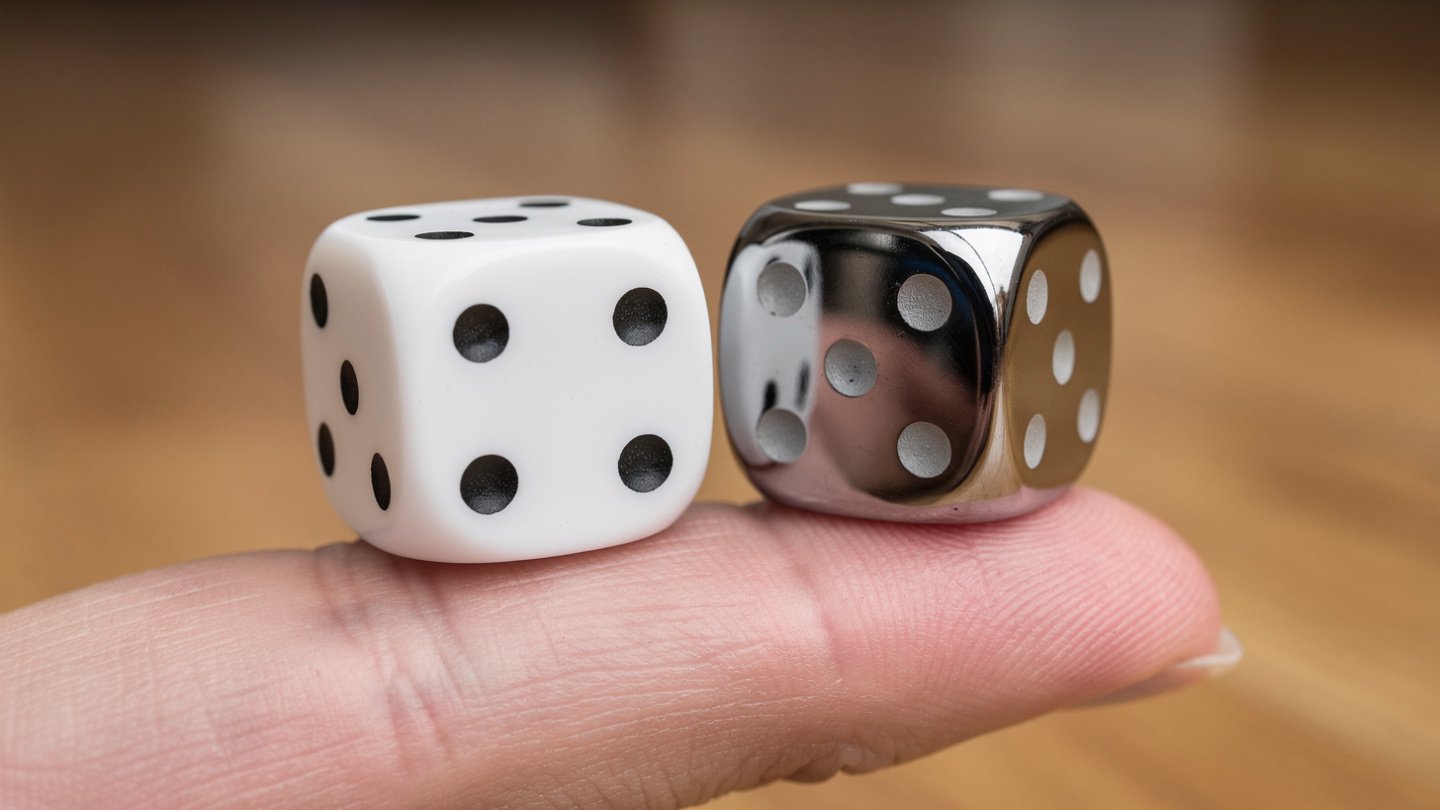
Dice games are one of the simplest ways to make classroom learning more active, engaging, and practical. A small set of dice can turn a normal lesson into a hands-on activity where students count, calculate, write, predict, discuss, and solve problems together. For teachers, dice games are useful because they are low-cost, easy to set up, and flexible for different grade levels.
You can use them for math practice, vocabulary review, creative writing, probability lessons, teamwork activities, and quick classroom warm-ups. The best part is that dice games feel like play, but they still support real learning. Students enjoy the surprise of each roll, while teachers can use that randomness to create meaningful practice and discussion.
This guide shares practical dice games for classroom learning, including activities for early learners, elementary students, and middle school students. You will also find setup tips, learning objectives, classroom management ideas, and simple ways to adjust each game for different skill levels.
Why Dice Games Work Well in the Classroom
Dice games are powerful classroom tools because they combine chance, decision-making, and active participation. Students are not just listening to a lesson. They are rolling, counting, writing, comparing, predicting, and explaining their thinking. Dice games help students practice important classroom skills such as:
| Skill | How Dice Games Help |
|---|---|
| Number recognition | Students identify dots or numbers on dice. |
| Counting | Students count totals, spaces, objects, or points. |
| Addition and subtraction | Dice create quick math problems. |
| Multiplication | Students multiply dice values for fluency practice. |
| Probability | Students observe which outcomes happen more often. |
| Writing | Dice can choose characters, settings, and story problems. |
| Speaking | Students explain answers, rules, and strategies. |
| Teamwork | Students play in pairs or groups and share turns. |
| Focus | Students follow game rules and track scores. |
Dice activities are also useful for mixed-ability classrooms. A teacher can make the same game easier or harder by changing the number of dice, the target score, the time limit, or the type of question students must answer.
Classroom Materials Needed for Dice Games
You do not need expensive classroom supplies to start. Most dice games only require a few basic materials.
| Material | Best Use |
|---|---|
| Standard six-sided dice | Math games, counting, scoring, quick warm-ups |
| Large foam dice | Younger students, movement games, group activities |
| Polyhedral dice | Older students, advanced math, probability |
| Paper and pencils | Scorekeeping, equations, writing activities |
| Mini whiteboards | Quick answers and group practice |
| Dice trays or box lids | Keeping dice quiet and controlled |
| Counters or blocks | Counting, place value, building games |
| Printable score sheets | Structured classroom activities |
A simple classroom tip is to place dice in small containers or trays. This keeps the dice from rolling across the floor and helps reduce noise during group work.
How to Set Up Dice Games in Class
Before starting any dice game, explain the purpose clearly. Students should know whether the game is for math practice, writing practice, teamwork, or review. A simple classroom setup can follow this pattern:
| Step | Teacher Action |
|---|---|
| 1 | Explain the learning goal. |
| 2 | Show the materials students will use. |
| 3 | Demonstrate one sample turn. |
| 4 | Put students into pairs or small groups. |
| 5 | Set a time limit or round limit. |
| 6 | Walk around and check understanding. |
| 7 | End with a short reflection question. |
For example, before an addition dice game, you can say: “Today we are using dice to practice adding quickly and checking our work. The goal is not only to win. The goal is to solve accurately and explain your thinking.” This helps students understand that the game is connected to learning.
Grade-Wise Dice Game Ideas for the Classroom
Different grade levels need different levels of challenge. Younger students need simple counting and matching activities. Older students can handle strategy, probability, equations, and writing prompts.
| Grade Level | Best Dice Activities | Main Learning Goal |
|---|---|---|
| Pre-K to Grade 1 | Counting, matching, movement | Number sense |
| Grades 2 to 3 | Addition, subtraction, word games | Fluency and vocabulary |
| Grades 4 to 5 | Multiplication, place value, writing | Problem-solving |
| Grades 6 to 8 | Probability, data, strategy | Reasoning and analysis |
Dice Games for Early Learners
Early learners need short, visual, and simple games. Use large dice when possible and keep instructions clear.
1. Roll and Count
This is a simple number recognition game for young students. Learning goal: Counting and number recognition
Best for: Pre-K to Grade 1
Materials: One die, counters or blocks
Time: 5 to 10 minutes How to play:
- Give each student or pair one die.
- The student rolls the die.
- The student counts the dots aloud.
- The student takes the same number of counters or blocks.
- Repeat for 5 rounds.
Example: If a student rolls a 4, they count 4 dots and pick up 4 counters. Teacher tip: Ask students to touch each dot while counting. This helps them connect spoken numbers with actual quantities.
2. Build a Tower
This classroom dice game combines counting with fine motor skills. Learning goal: Counting, one-to-one matching, coordination
Best for: Pre-K to Grade 2
Materials: One die and blocks
Time: 10 minutes How to play:
- Students roll one die.
- They add that many blocks to their tower.
- After 5 rounds, students count the total blocks.
- The tallest stable tower wins, or the class can build one shared tower.
Classroom variation: For teamwork, make one class tower. Each student rolls and adds blocks to the same tower. The goal is to build together without knocking it down.
3. Dice Movement Break
This activity is useful when students need a quick movement break. Learning goal: Counting, listening, movement
Best for: Pre-K to Grade 2
Materials: One large die
Time: 3 to 5 minutes
| Dice Roll | Movement |
|---|---|
| 1 | Clap 1 time |
| 2 | Jump 2 times |
| 3 | Stretch 3 times |
| 4 | March 4 steps |
| 5 | Touch toes 5 times |
| 6 | Spin carefully 6 times |
Teacher tip: Use this game between lessons to reset classroom energy without losing structure.
Dice Games for Grades 2 and 3
Students in Grades 2 and 3 can handle simple scoring, basic operations, and partner games.
4. Addition Dice Race
This game builds addition fluency. Learning goal: Addition practice
Best for: Grades 2 to 3
Materials: Two dice, paper, pencil
Time: 10 minutes How to play:
- Students play in pairs.
- Each student rolls two dice.
- They add the numbers.
- The student with the higher total gets 1 point.
- Play 10 rounds.
Example score sheet:
| Round | Player A Total | Player B Total | Winner |
|---|---|---|---|
| 1 | 8 | 5 | A |
| 2 | 4 | 10 | B |
| 3 | 7 | 7 | Tie |
Classroom variation: For subtraction practice, students roll two dice and subtract the smaller number from the larger number.
5. Make Ten Dice Game
This is a useful mental math activity. Learning goal: Number bonds and addition strategy
Best for: Grades 1 to 3
Materials: One or two dice
Time: 5 to 10 minutes How to play:
- A student rolls one die.
- The student says what number is needed to make 10.
- If they roll 6, they answer 4.
- Students can write the number sentence: 6 + 4 = 10.
Harder version: Use two dice. Students add the dice first, then say how much more is needed to reach 20.
6. Roll a Sentence
This game supports early writing and grammar. Learning goal: Sentence building
Best for: Grades 2 to 4
Materials: One die and sentence chart
Time: 10 to 15 minutes
| Roll | Sentence Starter |
|---|---|
| 1 | The little bird |
| 2 | My teacher |
| 3 | A brave explorer |
| 4 | The funny robot |
| 5 | My best friend |
| 6 | A tiny dragon |
How to play:
- Students roll the die.
- They choose the matching sentence starter.
- They complete the sentence.
- They read their sentence to a partner.
Example: Roll: 4
Sentence: “The funny robot danced across the classroom.” Teacher tip: Ask students to add an adjective or a “because” phrase to make the sentence stronger.
Dice Games for Grades 4 and 5
Students in Grades 4 and 5 can use dice games for multiplication, place value, writing, and decision-making.
7. Multiplication Dice Battle
This game helps students practice multiplication facts quickly. Learning goal: Multiplication fluency
Best for: Grades 3 to 5
Materials: Two dice per pair
Time: 10 minutes How to play:
- Students play in pairs.
- Each student rolls two dice.
- They multiply the two numbers.
- The higher product wins the round.
- Play for 10 rounds.
Example: Student A rolls 4 and 5. Product = 20
Student B rolls 3 and 6. Product = 18
Student A wins the round. Harder version: Use three dice and ask students to multiply two numbers, then add the third. Example: 4 × 5 + 2 = 22
8. Place Value Builder
This game helps students understand how digit position changes number value. Learning goal: Place value and number comparison
Best for: Grades 3 to 5
Materials: One die, place value chart
Time: 10 to 15 minutes How to play:
- Each student draws three blanks: _ _ _
- Students roll one die at a time.
- After each roll, they choose where to place the digit.
- Once placed, the digit cannot move.
- The goal is to create the largest possible number.
Example: A student rolls 3, then 6, then 2.
They may create 632 if they place the digits wisely. Variation: Ask students to create the smallest number instead. You can also use decimals for advanced students.
9. Roll to Write a Story
This game helps students create stories without feeling stuck. Learning goal: Creative writing and narrative structure
Best for: Grades 3 to 5
Materials: Three dice or one die rolled three times
Time: 15 to 25 minutes
| Roll | Character | Setting | Problem |
|---|---|---|---|
| 1 | A lost puppy | A forest | Finds a secret map |
| 2 | A young scientist | A school lab | Makes a strange discovery |
| 3 | A clever rabbit | A garden | Needs to solve a puzzle |
| 4 | A space explorer | The moon | Runs out of time |
| 5 | A friendly giant | A village | Must help a friend |
| 6 | A talking pencil | A classroom | Loses its words |
How to play:
- Students roll for a character.
- Students roll for a setting.
- Students roll for a problem.
- They write a short story using all three results.
Example: Rolls: 2, 4, 6
Story idea: A young scientist on the moon meets a talking pencil that has lost its words. Teacher tip: Use this as a warm-up before a larger writing assignment.
Dice Games for Middle School Students
Middle school students need activities that involve reasoning, data, probability, and strategy.
10. Probability Roll Test
This activity helps students understand experimental probability. Learning goal: Probability, data collection, graphing
Best for: Grades 6 to 8
Materials: Two dice, tally sheet, graph paper
Time: 20 to 30 minutes How to play:
- Students work in pairs.
- They roll two dice 50 times.
- They record the sum each time.
- They create a tally chart.
- They make a bar graph of the results.
- The class discusses which sums appeared most often.
Tally chart example:
| Sum | Tally Example | Total |
|---|---|---|
| 2 | || | 2 |
| 3 | ||| | 3 |
| 4 | |||| | 4 |
| 5 | ||||| | 5 |
| 6 | ||||| || | 7 |
| 7 | ||||| |||| | 9 |
| 8 | ||||| | | 6 |
| 9 | |||| | 4 |
| 10 | ||| | 3 |
| 11 | ||| | 3 |
| 12 | || | 2 |
Discussion questions:
- Which sum appeared most often?
- Which sum appeared least often?
- Why is 7 usually more common than 2 or 12?
- Did your results match your prediction?
11. Target Number Challenge
This game supports mental math and flexible thinking. Learning goal: Operations, problem-solving, reasoning
Best for: Grades 5 to 8
Materials: Four dice, paper, pencil
Time: 15 minutes How to play:
- Choose a target number, such as 24.
- Students roll four dice.
- They use the rolled numbers to create an equation.
- They may use addition, subtraction, multiplication, or division.
- The closest answer to the target wins the round.
Example: Target number: 24
Dice rolled: 6, 3, 2, 1
Possible equation: 6 × 3 + 2 + 1 = 21
Another possible equation: 6 × 3 + 2 × 1 = 20 Teacher tip: Ask students to share different equations from the same dice roll. This shows that math problems can have more than one solution path.
12. Coordinate Grid Dice
This activity helps students practice graphing points. Learning goal: Coordinate planes and ordered pairs
Best for: Grades 6 to 8
Materials: Two dice, coordinate grid
Time: 15 to 20 minutes How to play:
- Students roll two dice.
- The first die gives the x-coordinate.
- The second die gives the y-coordinate.
- Students plot the point.
- Continue until students plot 10 points.
Example: Rolls: 4 and 2
Point: (4, 2) Harder version: Use a coin to decide whether each coordinate is positive or negative. Heads means positive and tails means negative.
Classroom Dice Game Lesson Plan Template
Teachers can use this simple template to turn any dice activity into a structured lesson.
| Lesson Detail | Example |
|---|---|
| Activity Name | Addition Dice Race |
| Grade Level | Grade 2 |
| Subject | Math |
| Learning Objective | Students will add two numbers accurately. |
| Materials | Two dice, score sheet, pencil |
| Grouping | Pairs |
| Time Needed | 10 minutes |
| Assessment | Check score sheets and ask students to explain one answer. |
| Extension | Use three dice for higher challenge. |
This template makes dice games more purposeful and helps connect the activity to classroom learning goals.
How to Differentiate Dice Games for Different Students
One benefit of dice games is that they are easy to adjust. In one classroom, students may have different skill levels, so differentiation is important.
| Student Need | Modification |
|---|---|
| Needs easier practice | Use one die instead of two. |
| Needs more challenge | Add more dice or a target number. |
| Struggles with writing | Allow oral answers or partner support. |
| Finishes quickly | Add an extension question. |
| Needs movement | Use action-based dice tasks. |
| Needs visual support | Use dot dice, charts, or counters. |
| Needs teamwork | Play in pairs or small groups. |
For example, in a multiplication dice game, some students can multiply two dice, while advanced students can roll three dice and create a full equation.
Classroom Management Tips for Dice Games
Dice games are fun, but they need structure. Without clear rules, dice can become noisy or distracting. Use these classroom management tips:
- Set a voice level before the game begins.
- Use dice trays, cups, or box lids.
- Demonstrate exactly how to roll the dice.
- Give each group a clear score sheet.
- Use a timer to keep the activity focused.
- Assign roles such as roller, recorder, checker, and speaker.
- Stop the game briefly if students are not following rules.
- End with a short reflection, not just a winner.
A good classroom rule is: “Roll gently, speak kindly, and explain your thinking.”
Assessment Ideas for Dice Games
Dice games can also help teachers check understanding. You do not always need a formal test. You can observe students while they play. Here are simple assessment ideas:
| Assessment Method | What to Check |
|---|---|
| Score sheet review | Accuracy and neatness |
| Exit ticket | One problem solved after the game |
| Student explanation | Reasoning and vocabulary |
| Partner check | Peer correction and collaboration |
| Teacher observation | Focus, participation, and strategy |
| Quick reflection | What students learned |
Example exit ticket: “Roll two dice. Add the numbers. Write the equation and explain how you checked your answer.”
How Dice Games Support Social Skills
Dice games are not only about academic learning. They also help students practice social and emotional skills. Students learn how to:
- Take turns
- Wait patiently
- Follow rules
- Encourage classmates
- Handle winning and losing
- Work with partners
- Speak respectfully
- Solve small disagreements
This makes dice games useful for building a positive classroom environment. Teachers can remind students that a dice roll is random, so the focus should be on effort, thinking, and fair play.
Best Times to Use Dice Games in the Classroom
Dice games can fit into many parts of the school day.
| Classroom Time | Dice Game Use |
|---|---|
| Morning work | Quick math or vocabulary practice |
| Math centers | Addition, multiplication, place value |
| Literacy block | Story prompts or sentence building |
| Brain breaks | Movement dice activities |
| Review time | Quick subject review |
| Early finishers | Independent challenge games |
| Small groups | Targeted skill practice |
| Indoor recess | Fun and structured play |
Using dice games regularly gives students a familiar routine while keeping the activity fresh through different rules and subjects.
Printable Dice Game Score Sheet
Teachers can copy this score sheet for classroom activities.
| Student Name | Round 1 | Round 2 | Round 3 | Round 4 | Round 5 | Total |
|---|---|---|---|---|---|---|
| Sara | 6 | 8 | 5 | 10 | 7 | 36 |
| Adam | 4 | 9 | 6 | 6 | 8 | 33 |
| Lina | 7 | 5 | 9 | 4 | 10 | 35 |
| Omar | 8 | 6 | 4 | 7 | 9 | 34 |
For writing games, use this simple planning sheet:
| Story Element | Dice Roll | Student Idea |
|---|---|---|
| Character | 2 | A young scientist |
| Setting | 4 | The moon |
| Problem | 6 | A talking pencil loses its words |
| Ending | 3 | The scientist builds a word machine |
Common Mistakes to Avoid
When using dice games for classroom learning, avoid these common mistakes:
| Mistake | Better Option |
|---|---|
| Starting without a demonstration | Model one full turn first. |
| Making rules too complex | Use 2 or 3 simple rules. |
| Only focusing on winners | Reward effort and explanation. |
| Allowing loud rolling | Use trays or cups. |
| Giving no learning goal | Connect the game to the lesson. |
| Using the same game too often | Change the skill or rule. |
| Ignoring reflection | Ask students what strategy they used. |
Dice games work best when students know what they are practicing and why it matters.
FAQs About Classroom Dice Games
Are dice games good for classroom learning?
Yes. Dice games are useful for classroom learning because they make practice active and engaging. They can support math, writing, vocabulary, probability, teamwork, and critical thinking.
What subjects can teachers use dice games for?
Teachers can use dice games for math, language arts, writing, science review, social studies review, movement breaks, and social skills practice.
What grade levels are best for dice games?
Dice games can be used from preschool through middle school. The rules should be adjusted based on the age and skill level of the students.
How can I keep dice games quiet in class?
Use dice trays, small containers, foam dice, or box lids. Also teach students to roll gently and keep dice on the desk or tray.
Can dice games help students with math facts?
Yes. Dice games are excellent for practicing addition, subtraction, multiplication, comparison, place value, and mental math.
How can I make dice games harder for advanced students?
Add more dice, use larger target numbers, include multiplication or division, add time limits, or ask students to explain multiple solution methods.
Are dice games useful for group work?
Yes. Dice games work well in pairs or small groups because students can take roles such as roller, recorder, checker, and speaker.
Final Thoughts
Dice games for classroom learning are simple, affordable, and highly flexible. They can turn everyday lessons into hands-on activities that students enjoy. With only a few dice, teachers can create math practice, writing prompts, probability experiments, movement breaks, and teamwork challenges. The key is to use dice games with a clear learning purpose. When students know the goal, follow simple rules, and reflect on their thinking, the activity becomes more than a game. It becomes a meaningful learning experience. Whether you teach early learners, elementary students, or middle school students, dice games can bring more energy, creativity, and participation into the classroom. Start with one simple activity, adjust it for your students, and let the dice make learning more fun.


