


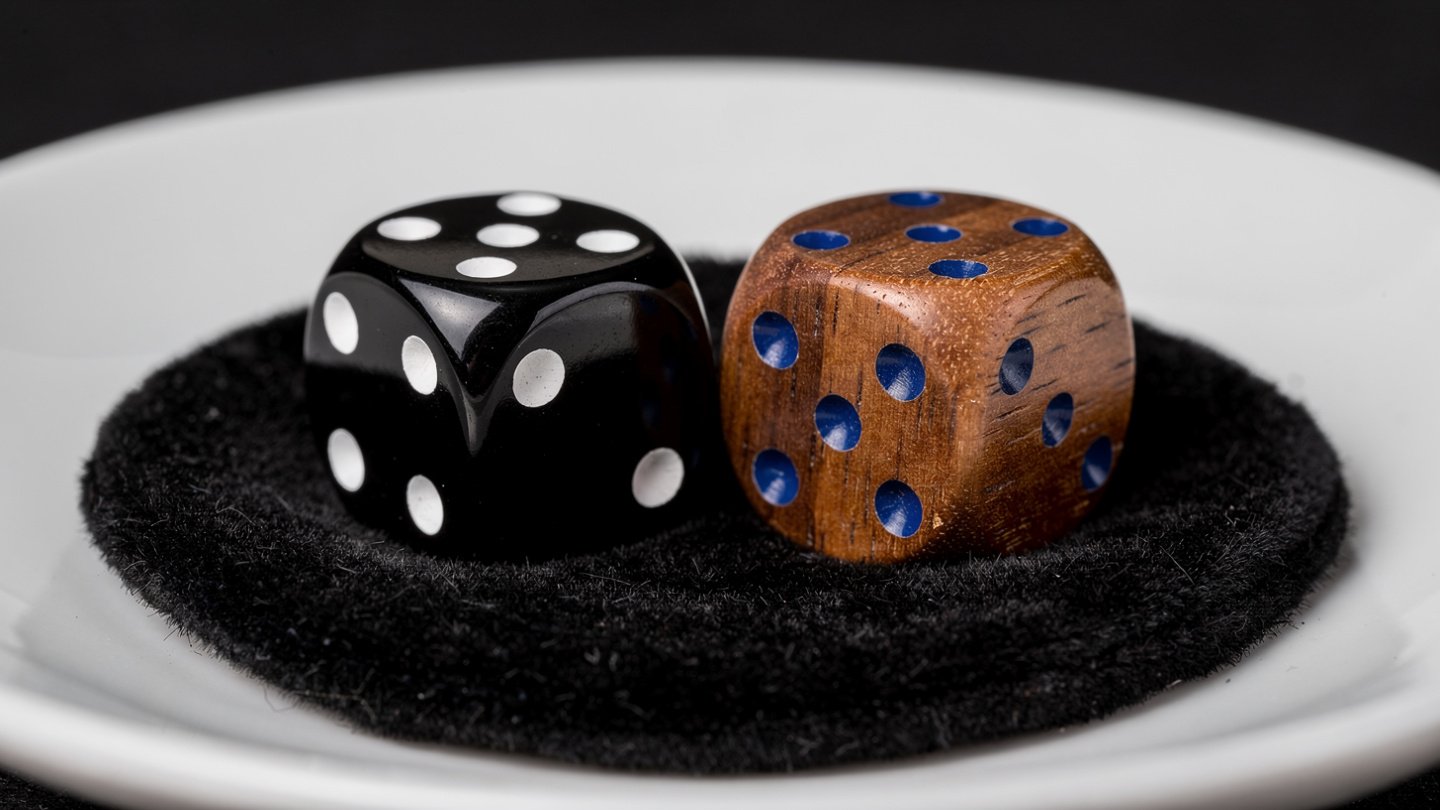
Educational dice games are simple activities that help students learn through hands-on play. A few dice can turn math practice, vocabulary work, storytelling, probability, and problem-solving into something active and enjoyable.
Students often learn better when they can see, touch, count, compare, and test ideas. Dice games make this possible because every roll creates a new question, challenge, or decision. Instead of only reading instructions or solving worksheets, students roll dice, record results, explain answers, and learn from the outcome.
This guide focuses on educational dice games for students. Each activity is designed to support a clear learning skill, such as counting, addition, multiplication, place value, writing, memory, teamwork, probability, and logical thinking. These games can be used at school, during homeschooling, tutoring sessions, or learning time at home.
Why Dice Games Help Students Learn
Dice games are useful because they turn abstract learning into practical activity. A number on a page may feel boring, but a dice roll creates movement, surprise, and quick thinking.
| Learning Benefit | How Dice Games Help Students |
|---|---|
| Active learning | Students roll, count, write, compare, and discuss |
| Math fluency | Dice create repeated practice with numbers |
| Low pressure | Games feel less stressful than worksheets |
| Instant feedback | Students can quickly check totals and outcomes |
| Flexible difficulty | Teachers or parents can add more dice or harder rules |
| Social learning | Students practice turns, teamwork, and communication |
| Critical thinking | Students decide, predict, and adjust strategies |
| Engagement | Random rolls keep practice fresh and interesting |
Educational dice games are especially helpful for students who need repeated practice but lose interest in traditional drills. The game format keeps the activity playful while still supporting real learning goals.
Subject-Wise Dice Game Learning Goals
Dice games can support many subjects, not only math. This table shows how dice activities can be connected to different learning areas.
| Subject | Dice Game Use | Student Learning Outcome |
|---|---|---|
| Math | Counting, adding, multiplying, comparing | Builds number fluency |
| Language Arts | Story prompts, sentence building, vocabulary | Improves speaking and writing |
| Science | Quiz categories, observation tasks | Supports recall and explanation |
| Social Studies | Review questions by category | Builds memory and discussion |
| Art | Roll-and-draw activities | Encourages creativity and following directions |
| SEL | Turn-taking and teamwork games | Builds patience, cooperation, and fair play |
| Probability | Roll tracking and data charts | Teaches chance, patterns, and prediction |
The best educational dice games have a clear purpose. Before starting, decide what students should practice or understand by the end of the activity.
Materials Needed for Educational Dice Games
Most educational dice games need only basic supplies.
| Material | Best Use |
|---|---|
| Standard six-sided dice | Math, scoring, counting, and review games |
| Large foam dice | Younger students or group activities |
| Polyhedral dice | Advanced math and older students |
| Paper and pencils | Scorekeeping, equations, and writing |
| Mini whiteboards | Quick answers and group practice |
| Counters or blocks | Counting and hands-on math |
| Dice tray or box lid | Keeps dice controlled and quiet |
| Graph paper | Probability, grids, and coordinate games |
| Timer | Speed rounds or challenge activities |
For younger students, large dice and visual materials make games easier. For older students, extra dice, timers, and written explanations can add challenge.
Quick Educational Dice Game Planner
Use this table to choose a dice game based on the learning goal.
| Learning Goal | Best Dice Game | Best Grade Level | Time Needed |
|---|---|---|---|
| Counting | Roll and Count | Pre-K to Grade 1 | 5 min |
| Addition | Dice War | Grades 1–3 | 10 min |
| Subtraction | Take Away Roll | Grades 2–4 | 10 min |
| Multiplication | Product Race | Grades 3–5 | 10 min |
| Place Value | Place Value Builder | Grades 3–5 | 10–15 min |
| Writing | Roll to Write | Grades 2–6 | 15–20 min |
| Vocabulary | Word Task Dice | Grades 2–6 | 10 min |
| Probability | Roll and Record | Grades 5–8 | 20–30 min |
| Graphing | Coordinate Dice | Grades 5–8 | 15–20 min |
| Strategy | Target Number Challenge | Grades 4–8 | 15 min |
Educational Dice Games for Early Learners
Early learners need simple games that build number sense. These activities focus on counting, matching, comparing, and recognizing quantities.
1. Roll and Count
Learning goal: Counting and number recognition
Best for: Pre-K to Grade 1
Dice needed: 1 large die
Time: 5 minutes
Materials: Dice, blocks or counters
How to play:
- Student rolls one die.
- Student counts the dots aloud.
- Student takes the same number of counters or blocks.
- Student counts the objects again.
- Repeat for several rounds.
Example:
If the student rolls a 4, they collect 4 blocks and count them one by one.
| Dice Roll | Student Collects |
|---|---|
| 1 | 1 counter |
| 2 | 2 counters |
| 3 | 3 counters |
| 4 | 4 counters |
| 5 | 5 counters |
| 6 | 6 counters |
Learning outcome:
Students connect the dice number with a real quantity.
2. Roll and Build
Learning goal: Counting, one-to-one matching, and fine motor skills
Best for: Pre-K to Grade 2
Dice needed: 1 die
Time: 10 minutes
Materials: Dice and blocks
How to play:
- Each student rolls one die.
- The number rolled tells how many blocks to add to a tower.
- Play for 5 rounds.
- Count the total blocks at the end.
Filled example:
| Student | Round 1 | Round 2 | Round 3 | Total Blocks |
|---|---|---|---|---|
| Sara | 3 | 5 | 2 | 10 |
| Ali | 4 | 1 | 6 | 11 |
| Lina | 2 | 4 | 3 | 9 |
| Omar | 5 | 2 | 4 | 11 |
Learning outcome:
Students practice counting while using hands-on materials.
3. Bigger or Smaller
Learning goal: Number comparison
Best for: Kindergarten to Grade 2
Dice needed: 2 dice
Time: 5–10 minutes
Materials: Dice and paper
How to play:
- Student rolls two dice.
- Student says which number is bigger.
- Student says which number is smaller.
- Student can write the comparison using >, <, or =.
Example:
| Dice Roll | Comparison |
|---|---|
| 5 and 2 | 5 > 2 |
| 3 and 6 | 3 < 6 |
| 4 and 4 | 4 = 4 |
Learning outcome:
Students learn number comparison in a simple visual way.
Math Dice Games for Students
Math is one of the easiest subjects to practice with dice. Students can use dice for addition, subtraction, multiplication, place value, and problem-solving.
4. Dice War
Learning goal: Addition and comparison
Best for: Grades 1 to 3
Dice needed: 2 dice per pair
Time: 10 minutes
Materials: Dice and score sheet
How to play:
- Students play in pairs.
- Each student rolls two dice.
- They add the dice total.
- The higher total wins the round.
- Play 10 rounds.
Example round:
| Student | Dice Roll | Total |
|---|---|---|
| Student A | 3 and 6 | 9 |
| Student B | 4 and 2 | 6 |
Student A wins the round.
Learning outcome:
Students practice addition facts and compare totals quickly.
5. Take Away Roll
Learning goal: Subtraction
Best for: Grades 2 to 4
Dice needed: 2 dice
Time: 10 minutes
Materials: Dice and paper
How to play:
- Student rolls two dice.
- Student subtracts the smaller number from the larger number.
- Student writes the number sentence.
- Play for 10 rounds.
Filled example:
| Round | Dice Roll | Number Sentence | Answer |
|---|---|---|---|
| 1 | 6 and 2 | 6 – 2 | 4 |
| 2 | 5 and 3 | 5 – 3 | 2 |
| 3 | 4 and 4 | 4 – 4 | 0 |
| 4 | 6 and 1 | 6 – 1 | 5 |
Learning outcome:
Students build subtraction fluency with quick repeated practice.
6. Product Race
Learning goal: Multiplication fluency
Best for: Grades 3 to 5
Dice needed: 2 dice
Time: 10 minutes
Materials: Dice, paper, pencil
How to play:
- Student rolls two dice.
- Student multiplies the two numbers.
- The product becomes their score for the round.
- Play 5 or 10 rounds.
- Highest total wins.
Example:
| Round | Dice Roll | Product |
|---|---|---|
| 1 | 4 and 5 | 20 |
| 2 | 6 and 3 | 18 |
| 3 | 2 and 5 | 10 |
| 4 | 6 and 6 | 36 |
Harder version:
Use three dice. Multiply two dice and add the third.
Example: 4 × 5 + 3 = 23
Learning outcome:
Students practice multiplication facts in a quick game format.
7. Place Value Builder
Learning goal: Place value and number comparison
Best for: Grades 3 to 5
Dice needed: 1 die
Time: 10–15 minutes
Materials: Dice and place value chart
How to play:
- Each student draws three blanks: _ _ _
- Student rolls one die at a time.
- After each roll, the student chooses where to place the digit.
- Once a digit is placed, it cannot move.
- The goal is to make the largest possible number.
Filled example:
| Roll Order | Dice Roll | Student Places It In | Final Number |
|---|---|---|---|
| 1 | 4 | Tens place | 4 |
| 2 | 6 | Hundreds place | 64_ |
| 3 | 2 | Ones place | 642 |
Learning outcome:
Students understand that digit position changes number value.
Variation:
Ask students to create the smallest number instead.
8. Target Number Challenge
Learning goal: Problem-solving and operations
Best for: Grades 4 to 8
Dice needed: 3 or 4 dice
Time: 15 minutes
Materials: Dice and paper
How to play:
- Choose a target number, such as 24.
- Students roll 3 or 4 dice.
- They use the dice numbers to create an equation.
- They may use addition, subtraction, multiplication, or division.
- The closest answer to the target wins.
Example:
Target number: 24
Dice rolled: 6, 3, 2, 1
Possible equation:
6 × 3 + 2 + 1 = 21
Another equation:
6 × 3 + 2 × 1 = 20
Better challenge:
Ask students to find at least two different equations from the same roll.
Learning outcome:
Students practice flexible thinking and use multiple operations.
Language and Writing Dice Games
Dice can also help students practice vocabulary, sentence structure, speaking, and creative writing.
9. Roll to Write a Story
Learning goal: Creative writing and narrative structure
Best for: Grades 2 to 6
Dice needed: 1 die rolled three times
Time: 15–20 minutes
Materials: Dice, story chart, paper
How to play:
- Student rolls for a character.
- Student rolls for a setting.
- Student rolls for a problem.
- Student writes a short story using all three results.
| Roll | Character | Setting | Problem |
|---|---|---|---|
| 1 | A lost puppy | A forest | Finds a secret map |
| 2 | A young scientist | A school lab | Makes a strange discovery |
| 3 | A clever rabbit | A garden | Needs to solve a puzzle |
| 4 | A space explorer | The moon | Runs out of time |
| 5 | A friendly giant | A village | Must help a friend |
| 6 | A talking pencil | A classroom | Loses its words |
Filled example:
| Story Element | Dice Roll | Result |
|---|---|---|
| Character | 2 | A young scientist |
| Setting | 4 | The moon |
| Problem | 6 | A talking pencil loses its words |
Example story idea:
A young scientist travels to the moon and meets a talking pencil that has lost its words. Together, they build a word machine to help the pencil speak again.
Learning outcome:
Students practice story structure, imagination, and written expression.
10. Word Task Dice
Learning goal: Vocabulary and sentence building
Best for: Grades 2 to 6
Dice needed: 1 die
Time: 10 minutes
Materials: Dice and word list
How to play:
- Student rolls one die.
- The roll tells which language task to complete.
- Student completes the task orally or in writing.
- Play for several rounds.
| Dice Roll | Language Task |
|---|---|
| 1 | Say a noun |
| 2 | Say a verb |
| 3 | Say an adjective |
| 4 | Make a sentence |
| 5 | Say a rhyming word |
| 6 | Spell a word aloud |
Example:
If a student rolls 3, they say an adjective such as “bright,” “tiny,” or “brave.”
Harder version:
Ask students to use the word in a complete sentence.
Learning outcome:
Students build vocabulary and grammar awareness through quick practice.
11. Sentence Builder Dice
Learning goal: Grammar and sentence structure
Best for: Grades 3 to 6
Dice needed: 3 dice or 1 die rolled three times
Time: 10–15 minutes
| Roll | Subject | Verb | Detail |
|---|---|---|---|
| 1 | The dog | jumped | over the fence |
| 2 | My friend | laughed | during lunch |
| 3 | The teacher | explained | the hard question |
| 4 | A robot | danced | in the hallway |
| 5 | The bird | flew | above the tree |
| 6 | A student | discovered | a hidden note |
How to play:
- Roll once for the subject.
- Roll once for the verb.
- Roll once for the detail.
- Combine them into a sentence.
- Edit the sentence to make it more interesting.
Example:
A robot danced in the hallway.
Extension:
Ask students to add an adjective or because-clause.
Learning outcome:
Students practice complete sentence construction.
Probability and Data Dice Games
These games help older students understand chance, outcomes, data collection, and graphing.
12. Roll and Record
Learning goal: Experimental probability and data collection
Best for: Grades 5 to 8
Dice needed: 2 dice
Time: 20–30 minutes
Materials: Dice, tally chart, graph paper
How to play:
- Students predict which sum from 2 to 12 will appear most often.
- Students roll two dice 50 times.
- They record each total in a tally chart.
- They create a bar graph from the results.
- Students compare predictions with actual results.
Filled sample tally chart:
| Sum | Tally Example | Total |
|---|---|---|
| 2 | ||
| 3 | ||
| 4 | ||
| 5 | ||
| 6 | ||
| 7 | ||
| 8 | ||
| 9 | ||
| 10 | ||
| 11 | ||
| 12 |
Discussion questions:
- Which sum appeared most often?
- Which sum appeared least often?
- Did the results match your prediction?
- Why does 7 often appear more than 2 or 12?
Learning outcome:
Students understand the difference between prediction and actual data.
13. Coordinate Dice
Learning goal: Coordinate grids and graphing
Best for: Grades 5 to 8
Dice needed: 2 dice
Time: 15–20 minutes
Materials: Dice and coordinate grid
How to play:
- Student rolls two dice.
- First die gives the x-coordinate.
- Second die gives the y-coordinate.
- Student plots the point.
- Continue until 10 points are plotted.
Filled example:
| Roll | X Coordinate | Y Coordinate | Point |
|---|---|---|---|
| 1 | 3 | 5 | (3, 5) |
| 2 | 6 | 2 | (6, 2) |
| 3 | 1 | 4 | (1, 4) |
| 4 | 5 | 5 | (5, 5) |
Harder version:
Use a coin to decide whether the coordinate is positive or negative.
Learning outcome:
Students practice ordered pairs and graphing.
Strategy and Thinking Dice Games
These games help students make decisions, explain their thinking, and adjust plans.
14. Strategic Score Keeper
Learning goal: Decision-making and risk awareness
Best for: Grades 5 to 8
Dice needed: 6 dice
Time: 15–25 minutes
Simple scoring:
| Dice Result | Points |
|---|---|
| Single 1 | 100 |
| Single 5 | 50 |
| Three 2s | 200 |
| Three 3s | 300 |
| Three 4s | 400 |
| Three 5s | 500 |
| Three 6s | 600 |
| Three 1s | 1000 |
How to play:
- Student rolls six dice.
- Student sets aside at least one scoring die.
- Student decides to bank points or roll again.
- If the next roll has no scoring dice, the student loses points from that turn.
- First player to reach the target score wins.
Example turn:
A student rolls: 1, 5, 2, 2, 4, 6
They keep the 1 and 5 for 150 points.
They can bank 150 points or roll the remaining four dice.
Learning outcome:
Students learn to compare possible reward with possible risk.
15. Student-Created Dice Game
Learning goal: Creativity, rule design, testing, and revision
Best for: Grades 4 to 8
Dice needed: Any number of dice
Time: 20–40 minutes
How to play:
- Students choose a learning goal, such as math, spelling, or science review.
- Students create 3 to 5 simple rules.
- Students decide how scoring works.
- Students test the game with a partner.
- Students revise unclear rules.
- Students present the game to the class or family.
Game design template:
| Game Detail | Student Plan |
|---|---|
| Game Name | Math Mission Roll |
| Learning Goal | Practice multiplication |
| Dice Needed | 2 dice |
| Players | 2 to 4 |
| How to Score | Product of two dice |
| How to Win | First to 100 points |
| Special Rule | Rolling doubles gives one bonus turn |
Learning outcome:
Students practice planning, creativity, problem-solving, and communication.
How to Use Dice Games in Learning Sessions
Dice games work best when they are connected to a clear learning purpose.
| Step | What to Do |
|---|---|
| 1 | Choose one learning goal |
| 2 | Pick a dice game that matches the goal |
| 3 | Explain the rules briefly |
| 4 | Demonstrate one sample turn |
| 5 | Let students play |
| 6 | Ask students to explain one answer or strategy |
| 7 | End with a short reflection |
Example reflection questions:
- What did you practice today?
- What strategy helped you?
- What was easy?
- What was difficult?
- What would you change next time?
How to Adjust Dice Games for Different Students
Students learn at different speeds. Dice games are easy to modify.
| Student Need | Adjustment |
|---|---|
| Needs easier practice | Use one die |
| Needs more challenge | Add more dice |
| Struggles with writing | Allow oral answers |
| Needs visual support | Use counters or charts |
| Gets distracted quickly | Use short rounds |
| Needs teamwork | Play in pairs |
| Advanced learner | Add time limit or explanation rule |
Assessment Ideas for Educational Dice Games
Teachers and parents can use dice games to check learning without making it feel like a test.
| Assessment Method | What to Check |
|---|---|
| Score sheet | Accuracy and calculation |
| Student explanation | Understanding and reasoning |
| Exit question | One skill after the game |
| Partner check | Peer correction |
| Graph review | Data recording and interpretation |
| Writing sample | Sentence or story quality |
| Observation | Focus, teamwork, and participation |
Example exit question:
“Roll two dice, add the total, and write one sentence explaining how you checked your answer.”
Common Mistakes to Avoid
| Mistake | Better Choice |
|---|---|
| Playing without a learning goal | Choose the skill first |
| Explaining too many rules | Demonstrate one sample turn |
| Using games only as fillers | Connect games to the lesson |
| Making the game too long | Use short rounds |
| Ignoring student explanations | Ask why and how |
| Only rewarding winners | Praise effort and thinking |
| Using the same game repeatedly | Change the skill or rule |
Frequently Asked Questions
What are educational dice games?
Educational dice games are learning activities that use dice to practice skills such as counting, addition, subtraction, multiplication, writing, vocabulary, probability, graphing, and problem-solving.
Are dice games good for students?
Yes. Dice games are good for students because they make learning active, hands-on, and engaging. They can support academic skills as well as teamwork, patience, and communication.
What subjects can be taught with dice games?
Dice games can support math, language arts, science review, social studies review, art, social-emotional learning, and probability lessons.
What dice games are best for math practice?
Roll and Count, Dice War, Take Away Roll, Product Race, Place Value Builder, Target Number Challenge, and Roll and Record are useful for math practice.
Can dice games help with writing?
Yes. Dice can be used to create story prompts, sentence starters, vocabulary tasks, character ideas, settings, and writing challenges.
How can teachers assess students during dice games?
Teachers can assess students by checking score sheets, listening to explanations, reviewing written work, asking exit questions, and observing teamwork.
Can educational dice games be used at home?
Yes. Parents can use educational dice games at home for quick learning practice, homework support, homeschooling, and screen-free activities.
Final Thoughts
Educational dice games for students are simple, flexible, and highly useful for learning. They can turn math, writing, vocabulary, probability, and problem-solving into hands-on activities that students enjoy.
The most effective dice games have a clear learning goal. Use Roll and Count for early number sense, Dice War for addition, Product Race for multiplication, Roll to Write for creative writing, Roll and Record for probability, and Target Number Challenge for problem-solving.
With only a few dice and simple materials, teachers and parents can create learning activities that are active, affordable, and engaging. Dice games help students practice important skills while enjoying the surprise and excitement of each roll.
Note: This article is for educational and entertainment purposes only. It does not promote betting, casino play, or real-money gambling.


