


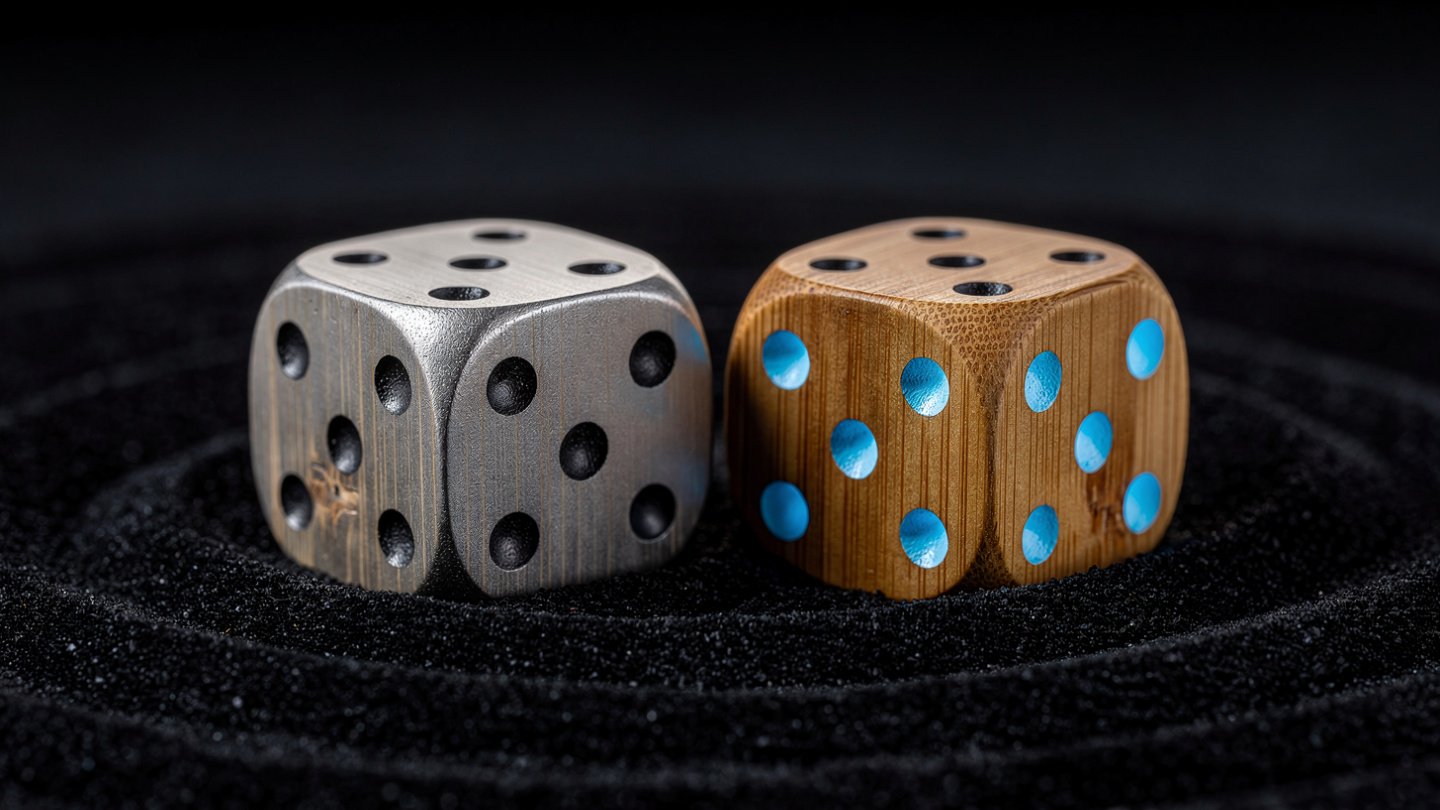
Dice games are one of the easiest ways to keep kids engaged at home. They do not need a big setup, expensive toys, or long instructions. A few dice, paper, crayons, blocks, or small household objects can turn a normal afternoon into a fun learning activity.
For parents, dice games are helpful because they are quick to start and easy to adjust. You can use them when kids are bored, when the weather is bad, during screen-free time, after homework, or when you need a calm family activity. Some dice games help children count and add. Others encourage movement, storytelling, drawing, memory, or problem-solving.
This guide focuses on engaging dice games for kids at home. The activities are simple, safe, and flexible. Each game includes clear instructions, age suggestions, materials, learning benefits, and parent tips to make playtime smoother.
Why Dice Games Are Great for Kids at Home
Dice games work well at home because they are simple and flexible. Children enjoy the surprise of rolling dice, and parents can use that excitement to support learning without making it feel like homework.
| Home Benefit | How Dice Games Help Kids |
|---|---|
| Screen-free fun | Gives children an active break from devices |
| Quick setup | Most games can start in 2 minutes |
| Low cost | Only dice and basic household items are needed |
| Learning through play | Supports counting, adding, speaking, and thinking |
| Flexible difficulty | Rules can be changed based on age |
| Small-space friendly | Games work at a table, floor, or tray |
| Family bonding | Parents and siblings can join easily |
| Reusable activity | The same dice can create many games |
The best part is that dice games can fit into different moods. If kids are energetic, use movement dice. If they need calm time, use story or drawing dice. If they need math practice, use counting or addition games.
Parent Setup: What You Need Before Playing
You do not need many supplies. Keep a small dice activity box at home so games are easy to start.
| Item | Use |
|---|---|
| 1 standard die | Simple counting, movement, and drawing games |
| 2 dice | Addition, target-score games, and comparison games |
| 3 to 5 dice | Memory games and older-kid challenges |
| Large foam dice | Safer for younger children |
| Paper | Score sheets, drawing, and story ideas |
| Crayons or pencils | Writing, drawing, and marking scores |
| Blocks or cups | Building and counting games |
| Tray or bowl | Keeps dice from rolling away |
| Timer | Adds short challenges for older kids |
For toddlers and preschoolers, large foam dice are better than small dice. Small dice can be a choking risk, so young children should always be supervised.
Quick Game Picker for Home
Use this table when you want to choose a game quickly.
| Situation at Home | Best Dice Game | Best Age | Time Needed |
|---|---|---|---|
| Child is bored | Roll and Do | 4+ | 5 minutes |
| Need calm activity | Story Dice | 6+ | 10–15 minutes |
| Need math practice | Add and Build | 5+ | 10 minutes |
| Rainy day indoors | Movement Dice | 4+ | 5–10 minutes |
| After homework | Memory Roll | 6+ | 5–10 minutes |
| Sibling activity | Dice Team Challenge | 6+ | 10–15 minutes |
| Creative play | Roll and Draw | 5+ | 10 minutes |
| Short bedtime activity | Dice Story Time | 6+ | 5–10 minutes |
| Older kids need challenge | Target Number Dice | 8+ | 15 minutes |
| Preschool learning | Roll and Match | 3–5 | 5 minutes |
Dice Games for Preschool Kids at Home
Preschool children need short and visual games. Keep the rules simple and use large dice when possible.
1. Roll and Match
Roll and Match helps young children connect numbers with real objects.
Best for: Ages 3 to 5
Players: 1 or more
Dice needed: 1 large die
Time: 5 minutes
Main skill: Counting and number recognition
How to play:
- Roll one die.
- Count the dots aloud.
- Pick the same number of objects.
- Count the objects again.
- Repeat for a few rounds.
Example:
If the child rolls a 4, they collect 4 blocks, crayons, toy cars, or buttons.
| Dice Roll | Child Collects |
|---|---|
| 1 | 1 object |
| 2 | 2 objects |
| 3 | 3 objects |
| 4 | 4 objects |
| 5 | 5 objects |
| 6 | 6 objects |
Parent tip:
Ask the child to touch each dot while counting. This builds a stronger connection between the number and the quantity.
2. Roll and Do
Roll and Do is a simple home game for children who need movement but cannot go outside.
Best for: Ages 4 to 7
Players: 1 or more
Dice needed: 1 large die
Time: 5 to 10 minutes
Main skill: Listening, movement, and counting
| Dice Roll | Action |
|---|---|
| 1 | Clap 1 time |
| 2 | March 2 steps |
| 3 | Stretch 3 times |
| 4 | Touch toes 4 times |
| 5 | Hop 5 times |
| 6 | Balance for 6 seconds |
How to play:
- Roll the die.
- Do the matching action.
- Count aloud while doing the action.
- Let the child choose a new action for one number.
Safety tip:
Clear a small space first and keep movements gentle.
3. Color Hunt Dice
This game turns dice rolling into a simple home scavenger activity.
Best for: Ages 3 to 6
Players: 1 or more
Dice needed: 1 die
Time: 5 to 10 minutes
Main skill: Color recognition and observation
| Dice Roll | Find Something |
|---|---|
| 1 | Red |
| 2 | Blue |
| 3 | Green |
| 4 | Yellow |
| 5 | Black |
| 6 | White |
How to play:
- Roll the die.
- Look for an object in the room with the matching color.
- Point to it and say its name.
- Take turns until each color has been found.
Example:
If the child rolls 2, they may find a blue toy, blue book, or blue pillow.
Dice Games for Kids Ages 6 to 8
Kids in this age group can enjoy simple scoring, drawing, storytelling, and addition games.
4. Add and Build
Add and Build combines math practice with hands-on play.
Best for: Ages 5 to 8
Players: 1 to 4
Dice needed: 2 dice
Time: 10 minutes
Main skill: Addition and fine motor control
How to play:
- Roll two dice.
- Add the numbers.
- Use that total to add blocks to a tower.
- Play 5 rounds.
- The tallest tower still standing wins.
Filled example:
| Player | Dice Roll | Total | Blocks Added |
|---|---|---|---|
| Sara | 3 and 4 | 7 | 7 |
| Ali | 2 and 5 | 7 | 7 |
| Mom | 6 and 1 | 7 | 7 |
| Dad | 4 and 2 | 6 | 6 |
Easier version:
Use one die instead of two.
Cooperative version:
Build one shared family tower. The family wins if the tower stays standing after 10 rolls.
5. Roll and Draw
Roll and Draw is a calm creative dice game for home.
Best for: Ages 5 and up
Players: 1 or more
Dice needed: 1 die
Time: 10 minutes
Main skill: Creativity and following directions
| Dice Roll | Draw This Part |
|---|---|
| 1 | Head |
| 2 | Eyes |
| 3 | Nose |
| 4 | Mouth |
| 5 | Ears |
| 6 | Hair or hat |
How to play:
- Give each player paper and a crayon.
- Roll the die.
- Draw the matching part.
- Keep rolling until the drawing feels complete.
- Let each child describe the character.
Home variation:
Change the theme to robot, animal, monster, superhero, house, or silly face.
6. Story Dice at Home
Story Dice helps children speak, imagine, and organize ideas.
Best for: Ages 6 and up
Players: 1 or more
Dice needed: 1 die rolled three times
Time: 10 to 15 minutes
Main skill: Storytelling and language
| Roll | Character | Place | Problem |
|---|---|---|---|
| 1 | A lost puppy | A kitchen | Finds a hidden note |
| 2 | A brave child | A forest | Needs to find a key |
| 3 | A funny robot | A bedroom | Loses its memory |
| 4 | A tiny dragon | A garden | Cannot fly |
| 5 | A clever cat | A library | Finds a secret door |
| 6 | A kind giant | A small house | Breaks something by mistake |
How to play:
- Roll once for a character.
- Roll again for a place.
- Roll again for a problem.
- Tell or write a short story using all three results.
Filled example:
| Story Element | Dice Roll | Result |
|---|---|---|
| Character | 4 | A tiny dragon |
| Place | 3 | A bedroom |
| Problem | 1 | Finds a hidden note |
Example story idea:
A tiny dragon wakes up in a bedroom and finds a hidden note under a pillow. The note tells the dragon where to find its missing wings.
7. Number Match Race
Number Match Race is a quick game for children practicing number recognition and addition.
Best for: Ages 6 to 8
Players: 2 or more
Dice needed: 2 dice
Time: 10 minutes
Main skill: Addition and number matching
How to play:
- Write numbers 2 to 12 on paper.
- Roll two dice.
- Add the dice total.
- Cross out the matching number.
- The first player to cross out five numbers wins.
Example round:
| Round | Dice Roll | Total | Number Crossed |
|---|---|---|---|
| 1 | 3 and 5 | 8 | 8 |
| 2 | 1 and 6 | 7 | 7 |
| 3 | 2 and 2 | 4 | 4 |
| 4 | 6 and 5 | 11 | 11 |
Parent tip:
If children are new to addition, let them use counters or fingers to check the total.
Dice Games for Older Kids at Home
Older kids often enjoy challenges with strategy, memory, and decision-making. These games still stay safe and home-friendly.
8. Memory Roll
Memory Roll is a short game that improves focus and recall.
Best for: Ages 6 and up
Players: 1 or more
Dice needed: 3 to 5 dice
Time: 5 to 10 minutes
Main skill: Memory and attention
How to play:
- Roll three dice.
- Let the child look at the dice for 5 seconds.
- Cover the dice with a cup or paper.
- Ask the child to say or write the numbers they remember.
- Add another die when the game becomes easy.
Filled example:
| Round | Dice Shown | Child Answer | Correct? |
|---|---|---|---|
| 1 | 2, 4, 6 | 2, 4, 6 | Yes |
| 2 | 1, 3, 5 | 1, 5, 3 | Yes |
| 3 | 2, 2, 6 | 2, 6, 2 | Yes |
| 4 | 4, 5, 6 | 4, 6, 3 | No |
Harder version:
Ask the child to remember the total, not just the numbers.
9. Target Number Dice
Target Number Dice is good for older children who need a thinking challenge.
Best for: Ages 8 and up
Players: 1 or more
Dice needed: 3 or 4 dice
Time: 10 to 15 minutes
Main skill: Math thinking and problem-solving
How to play:
- Choose a target number, such as 20.
- Roll three or four dice.
- Use the numbers to create an equation close to the target.
- Players may use addition, subtraction, or multiplication.
- The closest answer wins the round.
Example:
Target number: 20
Dice rolled: 3, 5, 6, 2
Possible equation: 3 × 5 + 6 – 2 = 19
Another option: 6 × 2 + 5 + 3 = 20
Parent tip:
Ask the child to explain their equation. This builds reasoning, not just calculation.
10. Dice Team Challenge
Dice Team Challenge works well for siblings or family groups.
Best for: Ages 6 and up
Players: 4 or more
Dice needed: 2 dice
Time: 10 to 15 minutes
Main skill: Teamwork and scorekeeping
How to play:
- Divide players into two teams.
- Each team chooses a scorekeeper.
- Players take turns rolling two dice.
- Add each roll to the team score.
- First team to reach 50 wins.
Filled team score example:
| Round | Team A Score | Team B Score |
|---|---|---|
| 1 | 8 | 7 |
| 2 | 15 | 16 |
| 3 | 26 | 22 |
| 4 | 34 | 31 |
| 5 | 45 | 43 |
Mixed-age rule:
Younger players roll one die and receive 2 bonus points. Older players roll two dice with no bonus.
Quiet Dice Games for Calm Home Time
Sometimes parents need activities that are fun but not loud. These games work well after homework, before bedtime, or during quiet afternoons.
| Quiet Game | Why It Works |
|---|---|
| Story Dice | Encourages calm talking and imagination |
| Roll and Draw | Keeps hands busy without noise |
| Memory Roll | Short and focused |
| Dice Story Time | Works well before bedtime |
| Number Match Race | Uses paper and pencils quietly |
Dice Story Time Before Bed
This is a bedtime-friendly version of Story Dice.
Best for: Ages 6 and up
Players: 1 or more
Dice needed: 1 die
Time: 5 minutes
Main skill: Imagination and language
How to play:
- Roll once for a character.
- Roll once for a place.
- Roll once for a gentle ending.
- Create a short bedtime story.
| Roll | Gentle Ending |
|---|---|
| 1 | Finds a safe home |
| 2 | Makes a new friend |
| 3 | Learns something kind |
| 4 | Falls asleep under the stars |
| 5 | Shares a happy surprise |
| 6 | Returns home smiling |
Parent tip:
Keep the story calm and short so it supports bedtime instead of making children too excited.
Cleanup-Free Dice Games
Some home activities create mess. These dice games need almost no cleanup.
| Game | Cleanup Needed |
|---|---|
| Roll and Do | None |
| Story Dice | None or one paper |
| Memory Roll | Dice only |
| Number Match Race | One paper and pencil |
| Roll and Match | Objects returned to place |
| Dice Team Challenge | One score sheet |
To reduce cleanup, use a small tray for dice and keep all materials in one container.
How to Make Dice Games More Engaging for Kids
Dice games become more exciting when children feel involved. Let them make choices when possible.
Try these ideas:
- Let children choose the target score.
- Let them create new actions for movement dice.
- Let them draw their own story chart.
- Let siblings play as a team.
- Use favorite themes like animals, space, cars, or superheroes.
- Change the game after 10 minutes if attention drops.
- Use stickers or stars for effort, not only winning.
A simple way to keep kids interested is to ask:
“What rule should we add for the next round?”
This makes children feel like game creators, not just players.
Educational Benefits of Home Dice Games
Dice games support learning in many areas without feeling like formal study.
| Learning Area | Dice Game Benefit |
|---|---|
| Math | Counting, addition, subtraction, multiplication |
| Language | Storytelling, vocabulary, sentence building |
| Memory | Remembering rolls and patterns |
| Focus | Following turns and rules |
| Creativity | Drawing, stories, and invented games |
| Social skills | Sharing, teamwork, patience, fair play |
| Problem-solving | Choosing moves and adjusting plans |
Parents can use dice games as short learning activities without calling them homework. This keeps the experience positive and playful.
How to Adjust Dice Games by Age
| Age Group | Best Adjustment |
|---|---|
| Ages 3–5 | Use one large die and real objects |
| Ages 6–8 | Use two dice and simple score sheets |
| Ages 9–12 | Add target numbers, memory, or strategy |
| Mixed ages | Use teams or bonus points for younger kids |
| Advanced kids | Add timers, more dice, or harder equations |
The same game can work for different ages if the rules are adjusted carefully.
Common Problems and Easy Fixes
| Problem | Easy Fix |
|---|---|
| Child loses interest quickly | Use shorter rounds |
| Game feels too easy | Add another die or a target score |
| Game feels too hard | Use one die or remove scoring |
| Dice roll under furniture | Use a tray or bowl |
| Siblings argue over turns | Use a clear turn order |
| Younger child struggles | Let them play on a team |
| Game becomes too loud | Switch to Story Dice or Roll and Draw |
Safety Tips for Dice Games at Home
Dice games are safe when the materials match the child’s age.
Use these safety tips:
- Use large foam dice for young children.
- Keep small dice away from toddlers.
- Supervise children who may put objects in their mouth.
- Use gentle movement rules indoors.
- Clear space before action games.
- Teach children to roll dice on the table or tray.
- Store dice in a container after play.
A helpful home rule is:
“Roll on the tray, not across the room.”
Frequently Asked Questions
What are the most engaging dice games for kids at home?
Engaging dice games for kids at home include Roll and Match, Roll and Do, Add and Build, Story Dice, Roll and Draw, Memory Roll, Target Number Dice, and Dice Team Challenge.
What dice games are best for preschool children?
Preschool children enjoy Roll and Match, Roll and Do, and Color Hunt Dice. These games use simple counting, movement, and observation.
How many dice do kids need for home dice games?
Many home dice games need only one die. Addition games usually use two dice, while memory or older-kid challenge games may use three to five dice.
Are dice games good for learning at home?
Yes. Dice games can help children practice counting, addition, memory, storytelling, vocabulary, problem-solving, teamwork, and patience.
How can I make dice games less messy?
Use cleanup-free games like Story Dice, Roll and Do, Memory Roll, and Number Match Race. Keep dice in a tray or bowl and store all materials in one small box.
What dice game is good before bedtime?
Dice Story Time is a good bedtime dice game because it is calm, quiet, and creative. Keep the story short and gentle.
How can I make dice games harder for older kids?
Add more dice, use target numbers, include multiplication, add a timer, or ask children to explain their strategy.
Final Thoughts
Engaging dice games for kids at home are simple, flexible, and useful for many situations. They can help children stay busy, practice learning skills, use creativity, and enjoy screen-free play. Parents do not need special equipment or long preparation. A few dice and basic household items are enough.
Start with easy activities like Roll and Match, Roll and Do, or Story Dice. For school-age children, try Add and Build, Number Match Race, and Memory Roll. For older kids, use Target Number Dice or Dice Team Challenge to add more thinking and strategy.
The best home dice games are the ones that match your child’s age, mood, and energy level. Keep the rules simple, adjust the challenge when needed, and let children enjoy the surprise of each roll.
Note: This article is for educational and entertainment purposes only. It does not promote betting, casino play, or real-money gambling.


