


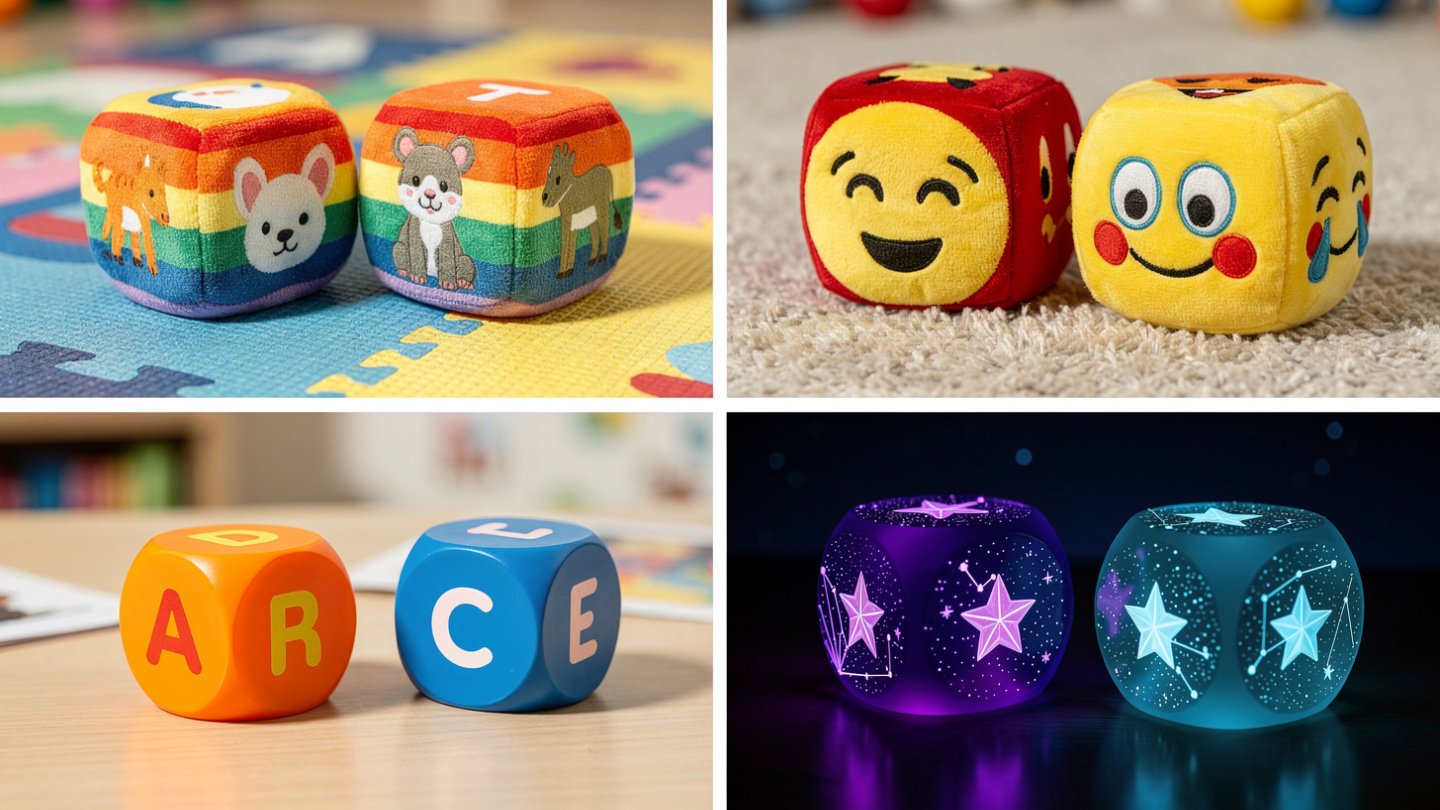
Dice games are one of the easiest ways to keep children active, focused, and learning at the same time. A single die can become a math tool, a storytelling prompt, a movement game, or even a classroom activity. The best part is that dice games are simple to change based on a child’s age, skill level, and attention span. Modified dice games for kids are regular dice games with small rule changes. These changes make the games easier, safer, more creative, or more educational. For example, instead of only rolling numbers, children can roll dice to create stories, build towers, solve math problems, move their bodies, or complete fun challenges. This guide explains how to modify dice games for toddlers, preschoolers, elementary students, and older kids. You will also find age-based ideas, example rules, safety tips, and easy games you can try at home or in the classroom.
What Are Modified Dice Games for Kids?
Modified dice games are dice activities that have been changed to match a child’s learning level or play style. A normal dice game may involve counting points or reaching a score, but a modified version can include movement, drawing, reading, storytelling, teamwork, or problem-solving. For example:
- A basic roll-and-count game can become a number matching game for preschoolers.
- A simple addition game can become a math race for elementary students.
- A regular dice roll can become a story starter for creative writing.
- A competitive game can be changed into a teamwork challenge.
The goal is not only to win. The goal is to make the activity useful, fun, safe, and suitable for the child.
Why Modified Dice Games Are Good for Children
Dice games may look simple, but they support many important skills. When children roll dice, count numbers, follow rules, wait for turns, and make choices, they are learning without feeling like they are doing formal schoolwork. Modified dice games can help children improve:
| Skill Area | How Dice Games Help |
|---|---|
| Counting | Children count dots, totals, objects, or spaces. |
| Math Skills | Dice can teach addition, subtraction, multiplication, and probability. |
| Focus | Children pay attention to rolls, turns, and rules. |
| Social Skills | Kids learn patience, sharing, turn-taking, and fair play. |
| Language | Story dice and word games build vocabulary and speaking skills. |
| Creativity | Children can invent stories, drawings, characters, or game rules. |
| Motor Skills | Rolling dice, stacking blocks, drawing, and moving all support coordination. |
Because dice are small, portable, and affordable, these games are easy to use at home, in school, during travel, or during family game time.
Age-Wise Modified Dice Game Ideas
Different age groups need different types of dice games. Younger children need simple and visual activities. Older children can enjoy games with strategy, scoring, and decision-making.
| Age Group | Best Type of Dice Game | Modification Idea |
|---|---|---|
| 3–4 years | Counting and movement games | Use large foam dice and simple actions. |
| 5–6 years | Matching and number games | Match dice numbers with objects or pictures. |
| 7–9 years | Addition and storytelling games | Use two dice for math or creative stories. |
| 10–12 years | Strategy and challenge games | Add scoring, time limits, or team rules. |
Modified Dice Games for Toddlers and Preschoolers
For very young children, dice games should be short, visual, and active. Avoid complicated scoring. Use large foam dice if possible because small dice can be a choking risk.
1. Roll and Count Objects
This is one of the easiest dice games for young kids. How to play:
- Give the child one large die.
- Ask them to roll it.
- Count the dots together.
- Ask them to pick the same number of objects, such as blocks, crayons, toy cars, or buttons.
- Repeat for a few rounds.
Example:
If the child rolls a 4, they collect 4 blocks. What it teaches:
Counting, number recognition, and one-to-one matching.
2. Dice Movement Game
This game is perfect when kids have extra energy. How to play:
- Roll one die.
- The number tells how many times the child performs an action.
- Choose simple actions like jumping, clapping, spinning, stomping, or stretching.
| Dice Roll | Action |
|---|---|
| 1 | Clap 1 time |
| 2 | Jump 2 times |
| 3 | Stomp 3 times |
| 4 | Spin 4 times |
| 5 | Touch toes 5 times |
| 6 | March 6 steps |
What it teaches:
Counting, body movement, listening, and coordination.
3. Color or Picture Dice Game
Instead of number dice, use picture dice or make your own with stickers. How to play:
- Put pictures of animals, colors, shapes, or objects on a blank die.
- Ask the child to roll the die.
- They name what they see.
- Ask a simple question about it.
Example:
If the die shows a cat, ask: “What sound does a cat make?” What it teaches:
Vocabulary, speaking skills, memory, and object recognition.
Modified Dice Games for Early Elementary Kids
Children around 6 to 9 years old can understand simple rules and enjoy light competition. This is a good age for math dice games, word games, and story games.
4. Add It Up
This game helps children practice addition. How to play:
- Roll two dice.
- Add the two numbers.
- Write the total on paper.
- Play 5 rounds.
- The player with the highest total after 5 rounds wins.
Example Round:
| Round | Die 1 | Die 2 | Total |
|---|---|---|---|
| 1 | 3 | 5 | 8 |
| 2 | 6 | 2 | 8 |
| 3 | 4 | 1 | 5 |
| 4 | 2 | 2 | 4 |
| 5 | 6 | 4 | 10 |
Modification:
For easier play, use one die. For harder play, use three dice.
5. Story Dice Adventure
This game helps children become more creative. How to play:
- Use picture dice or write story categories on paper.
- Roll the dice to choose story elements.
- Ask the child to create a short story using the result.
You can use this table:
| Dice Roll | Character | Place | Problem |
|---|---|---|---|
| 1 | A brave cat | A forest | Lost map |
| 2 | A funny robot | A castle | Broken bridge |
| 3 | A tiny dragon | A school | Missing book |
| 4 | A clever rabbit | A beach | Hidden key |
| 5 | A young explorer | A mountain | Big storm |
| 6 | A talking dog | A garden | Secret door |
Example:
If the child rolls 2, 4, and 6, the story could be about a funny robot at the beach who finds a secret door. What it teaches:
Imagination, sentence building, vocabulary, and confidence in speaking.
6. Number Match Challenge
This is a good game for children learning number bonds. How to play:
- Write numbers from 2 to 12 on paper.
- Roll two dice.
- Add the numbers.
- Cross out the total on the paper.
- Try to cross out all numbers.
Modification:
For subtraction practice, roll two dice and subtract the smaller number from the bigger number.
Modified Dice Games for Older Kids
Older kids can handle more advanced rules. You can add scoring systems, time limits, strategy, and teamwork.
7. Target Number Dice
This game helps children think before choosing numbers. How to play:
- Choose a target number, such as 20.
- Each player rolls two dice per turn.
- The player adds the total to their score.
- The goal is to get close to 20 without going over.
- If a player goes over 20, their score goes back to 10.
Example:
A player has 16 points. They roll a 3 and 2, which makes 5. Their new total is 21, so they go back to 10. What it teaches:
Addition, decision-making, risk awareness, and patience.
8. Dice Equation Builder
This is a great modified dice game for math practice. How to play:
- Roll three dice.
- Use the numbers to create an equation.
- Players can use addition, subtraction, multiplication, or division.
- Award 1 point for each correct equation.
Example:
Dice roll: 2, 4, 6
Possible equation: 2 + 4 = 6 Harder version:
Use four dice and allow multiplication.
9. Team Dice Mission
This game turns dice play into teamwork. How to play:
- Divide children into two teams.
- Give each team a mission, such as reaching 50 points.
- Players take turns rolling two dice.
- Each team adds the total to their score.
- Add a challenge rule: if a team rolls doubles, they get an extra turn.
What it teaches:
Teamwork, fair play, addition, and group decision-making.
Easy Modified Dice Games Table
Here is a quick comparison of modified dice games you can choose based on your child’s age and learning goal.
| Game Name | Best Age | Dice Needed | Main Skill | Time Needed |
|---|---|---|---|---|
| Roll and Count Objects | 3–5 | 1 | Counting | 5 minutes |
| Dice Movement Game | 3–6 | 1 | Movement + counting | 5–10 minutes |
| Add It Up | 6–9 | 2 | Addition | 10 minutes |
| Story Dice Adventure | 6–10 | 1–3 | Creativity | 10–15 minutes |
| Number Match Challenge | 7–10 | 2 | Addition/subtraction | 10 minutes |
| Target Number Dice | 8–12 | 2 | Strategy | 10–15 minutes |
| Dice Equation Builder | 9–12 | 3–4 | Math thinking | 15 minutes |
| Team Dice Mission | 8–12 | 2 | Teamwork | 15 minutes |
How to Make Dice Games More Educational
You can turn almost any dice game into a learning activity by changing the rule or adding a goal.
For Math Learning
Use dice to practice:
- Counting dots
- Adding totals
- Subtracting numbers
- Multiplication facts
- Comparing bigger and smaller numbers
- Understanding chance and probability
Simple example:
Roll two dice. Ask: “Which number is bigger?” Then ask: “What is the total?”
For Reading and Language
Use dice to practice:
- Letter sounds
- Word building
- Storytelling
- Sentence creation
- Vocabulary recall
Simple example:
Roll a die to choose a sentence starter:
| Roll | Sentence Starter |
|---|---|
| 1 | Once upon a time… |
| 2 | I found a strange box… |
| 3 | The little dog ran into… |
| 4 | A bright light appeared… |
| 5 | My best friend said… |
| 6 | Behind the door was… |
For Social Skills
Dice games can teach children to:
- Wait for their turn
- Follow rules
- Accept winning and losing
- Encourage other players
- Work as a team
For children who struggle with losing, use cooperative dice games where everyone works toward one shared goal.
How to Create Your Own Modified Dice Game
You do not always need a ready-made game. You can create your own dice game in a few minutes. Follow this simple method:
Step 1: Choose the Learning Goal
Decide what you want the child to practice. Examples:
- Counting
- Addition
- Reading
- Movement
- Memory
- Creativity
- Teamwork
Step 2: Choose the Dice Type
You can use:
- Standard number dice
- Large foam dice
- Picture dice
- Letter dice
- Color dice
- Blank dice with stickers
Step 3: Create a Simple Rule
Make one easy rule first. Example:
“Roll the die and collect that many blocks.”
Step 4: Add a Challenge
Once the child understands the game, add a small challenge. Example:
“Roll two dice and build a tower using the total number of blocks.”
Step 5: Test and Adjust
If the game is too easy, add another die.
If the game is too hard, remove scoring or reduce the number of rounds.
Printable Game Idea: Dice Activity Card
You can copy this simple activity card and use it for different dice games.
| Activity Detail | Your Game |
|---|---|
| Game Name | |
| Age Group | |
| Dice Needed | |
| Players | |
| Learning Goal | |
| How to Win | |
| Rule 1 | |
| Rule 2 | |
| Rule 3 | |
| Safety Note |
This type of template helps parents and teachers quickly create new activities without starting from zero.
Safety Tips for Kids’ Dice Games
Dice games are usually safe, but young children should always be supervised. Follow these safety tips:
- Use large foam dice for toddlers and preschoolers.
- Avoid small dice for children who still put objects in their mouth.
- Play on a clean, flat surface.
- Keep dice away from babies.
- Avoid sharp or broken dice.
- Do not allow children to throw dice at people.
- Keep the rules simple to avoid frustration.
For classrooms, give each group a small tray or box lid so dice do not roll across the room.
Tips for Parents and Teachers
Modified dice games work best when children feel relaxed and involved. The goal is to make learning feel like play. Here are some helpful tips:
- Keep games short for younger kids.
- Praise effort, not only winning.
- Let children help create rules.
- Use themes they enjoy, such as animals, space, cars, or superheroes.
- Change the difficulty slowly.
- Use teamwork when children are new to the game.
- Stop the game before the child becomes tired or frustrated.
A good dice game should feel simple at the start and slightly challenging as the child continues playing.
Common Mistakes to Avoid
When modifying dice games for kids, avoid making the game too complex. Children may lose interest if there are too many rules.
| Mistake | Better Approach |
|---|---|
| Using too many dice at once | Start with one or two dice. |
| Making the game too long | Use 5 short rounds. |
| Focusing only on winning | Add learning and teamwork goals. |
| Using small dice with toddlers | Use large foam dice. |
| Giving unclear instructions | Explain rules in 3 simple steps. |
| Ignoring age level | Adjust rules based on skill and attention span. |
Best Places to Use Modified Dice Games
Modified dice games can fit into many situations.
| Place | Good Dice Game Idea |
|---|---|
| Home | Family counting or story games |
| Classroom | Math dice stations |
| Travel | Quick roll-and-add games |
| Birthday party | Team dice missions |
| Rainy day | Indoor movement dice |
| Bedtime | Story dice adventure |
| Homeschool | Dice equation builder |
This flexibility is one reason dice games are useful for both parents and teachers.
Frequently Asked Questions
Are modified dice games safe for young kids?
Yes, but young children should use large foam dice or oversized dice. Small dice can be a choking risk for toddlers, so adult supervision is important.
What age is best for dice games?
Children as young as 3 years old can play simple dice games with counting or movement. Older children can play games with addition, strategy, storytelling, and scoring.
Can dice games help with math?
Yes. Dice games are excellent for counting, addition, subtraction, multiplication, number comparison, and early probability. They make math practice more active and enjoyable.
How can I make dice games easier?
Use one die, remove scoring, shorten the game, use pictures instead of numbers, and explain the rules in simple steps.
How can I make dice games harder?
Use more dice, add time limits, include multiplication or division, create target scores, or ask children to explain their choices.
Can modified dice games be used in classrooms?
Yes. Teachers can use dice games for math centers, group activities, vocabulary practice, movement breaks, and quick review sessions.
Final Thoughts
Modified dice games for kids are simple, affordable, and full of learning opportunities. With a few small rule changes, a basic dice activity can become a math game, a story challenge, a movement break, or a teamwork activity. The key is to match the game with the child’s age and ability. Younger children need short and visual games, while older kids can enjoy scoring, strategy, and creative challenges. Whether you are a parent, teacher, or caregiver, dice games can help children learn while having fun. Use the ideas in this guide as a starting point, then adjust the rules based on the child’s interest, mood, and learning level. A simple roll of the dice can turn into a meaningful play experience.


