


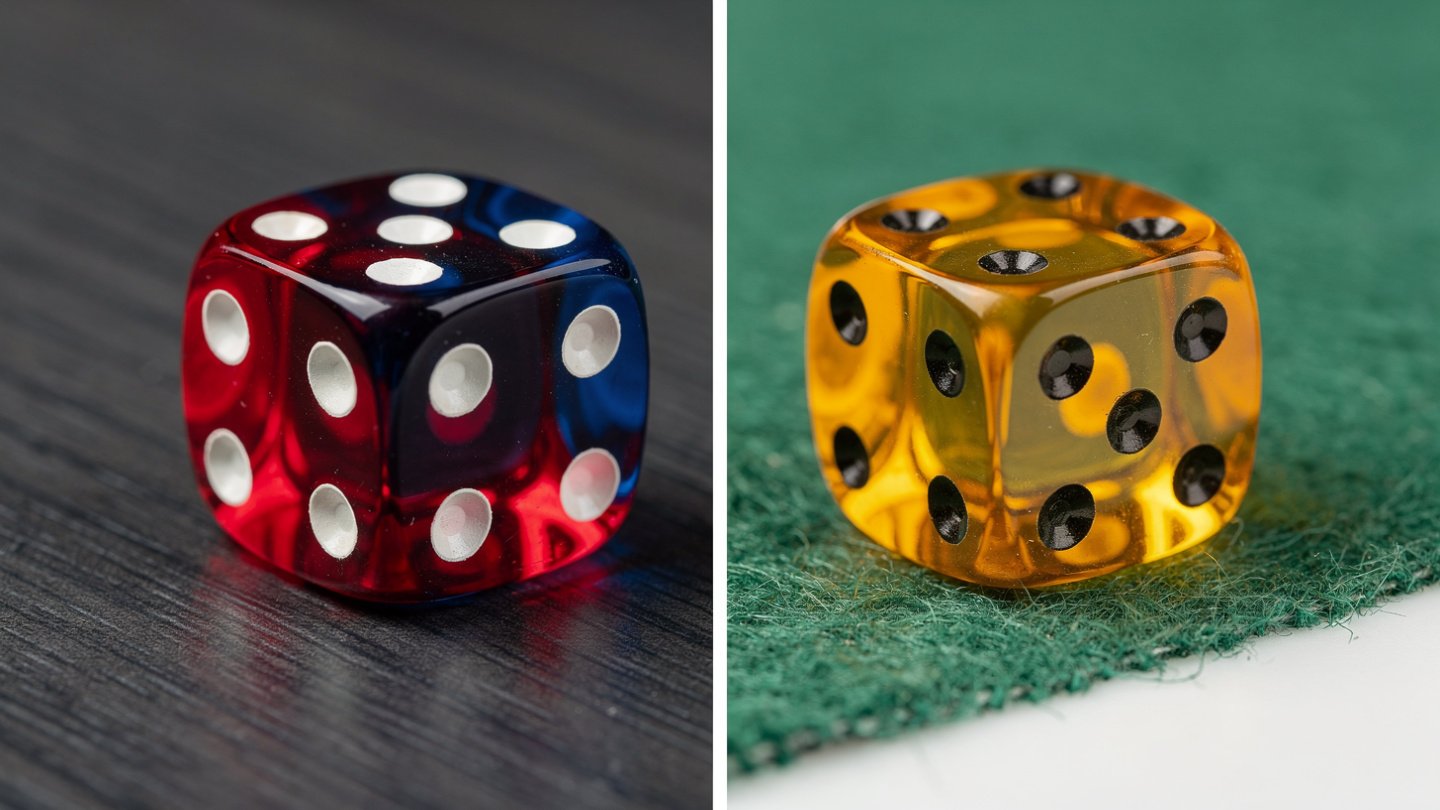
Fun learning with dice games is a simple way to turn ordinary practice into an exciting activity. Dice are small, affordable, and easy to use, but they can create many different learning games for children, students, and families.
A single die can help with counting. Two dice can create addition or subtraction practice. Several dice can become a storytelling tool, memory challenge, probability experiment, or creative thinking activity. Because every roll is different, children stay interested and feel curious about what will happen next.
This guide focuses on fun learning with dice games. The activities are designed to make learning feel playful instead of stressful. You can use them at home, in a classroom, during tutoring, in homeschool lessons, or as quick screen-free learning breaks.
Why Dice Games Make Learning Fun
Dice games work because they add surprise to learning. Children are not just answering questions from a worksheet. They are rolling, predicting, counting, drawing, writing, comparing, and making decisions.
| Why It Feels Fun | Learning Benefit |
|---|---|
| Every roll is different | Keeps students curious |
| Rules are simple | Reduces frustration |
| Games are quick | Good for short attention spans |
| Dice are hands-on | Makes learning active |
| Players can compete or cooperate | Builds social skills |
| Games can be changed easily | Works for different ages |
| Dice create instant tasks | Makes practice less boring |
Dice games are also flexible. The same dice can support math, language, writing, memory, creativity, teamwork, and problem-solving.
What You Need for Dice Learning Activities
You do not need special tools to begin. Most activities use common items.
| Item | How It Helps |
|---|---|
| 1 standard die | Simple counting and action games |
| 2 dice | Addition, subtraction, comparison |
| 3 to 5 dice | Memory and challenge games |
| Large foam dice | Safer for younger children |
| Paper | Score sheets, drawings, story plans |
| Pencil or crayon | Writing answers and recording scores |
| Blocks or counters | Counting and building activities |
| Tray or bowl | Keeps dice from rolling away |
| Timer | Adds challenge for older students |
For young children, use large dice and keep the game short. For older students, add more dice, written explanations, or time limits.
Quick Dice Learning Activity Picker
Use this table when you need a quick learning idea.
| Learning Need | Best Dice Game | Best Age | Time |
|---|---|---|---|
| Counting practice | Roll and Count | 3–5 | 5 min |
| Addition practice | Add the Roll | 5+ | 5–10 min |
| Subtraction practice | Take Away Dice | 6+ | 10 min |
| Multiplication practice | Product Roll | 8+ | 10 min |
| Vocabulary practice | Word Dice | 7+ | 10 min |
| Storytelling | Roll a Story | 6+ | 10–15 min |
| Memory practice | Remember the Roll | 6+ | 5–10 min |
| Creative drawing | Roll and Create | 5+ | 10 min |
| Probability | Roll and Record | 10+ | 20 min |
| Teamwork | Team Dice Challenge | 6+ | 10–15 min |
Fun Math Learning With Dice Games
Math is one of the easiest subjects to practice with dice. Dice naturally create numbers, so students can count, add, subtract, multiply, compare, and record results.
1. Roll and Count
Roll and Count is the easiest dice learning activity for young children.
Best for: Ages 3 to 5
Dice needed: 1 large die
Time: 5 minutes
Learning skill: Counting and number recognition
How to play:
- Roll one die.
- Count the dots aloud.
- Pick the same number of objects.
- Count the objects again.
Example:
If the child rolls a 4, they pick 4 blocks or crayons.
| Dice Roll | Learning Task |
|---|---|
| 1 | Count 1 object |
| 2 | Count 2 objects |
| 3 | Count 3 objects |
| 4 | Count 4 objects |
| 5 | Count 5 objects |
| 6 | Count 6 objects |
Fun twist:
Let the child choose the objects. They can count toy cars, blocks, buttons, crayons, or snacks.
2. Add the Roll
Add the Roll is a quick way to practice addition.
Best for: Ages 5 and up
Dice needed: 2 dice
Time: 5 to 10 minutes
Learning skill: Addition fluency
How to play:
- Roll two dice.
- Add the numbers.
- Say the total aloud.
- Write the number sentence.
- Play 10 rounds.
Filled example:
| Round | Dice Roll | Number Sentence | Answer |
|---|---|---|---|
| 1 | 3 and 5 | 3 + 5 | 8 |
| 2 | 6 and 2 | 6 + 2 | 8 |
| 3 | 4 and 1 | 4 + 1 | 5 |
| 4 | 2 and 2 | 2 + 2 | 4 |
| 5 | 6 and 4 | 6 + 4 | 10 |
Fun twist:
Give 1 bonus point when the child can explain how they checked the answer.
3. Take Away Dice
Take Away Dice helps children practice subtraction without using boring drills.
Best for: Ages 6 and up
Dice needed: 2 dice
Time: 10 minutes
Learning skill: Subtraction
How to play:
- Roll two dice.
- Find the bigger number.
- Subtract the smaller number from the bigger number.
- Write the subtraction sentence.
- Play for 10 rounds.
Example:
| Dice Roll | Number Sentence | Answer |
|---|---|---|
| 6 and 2 | 6 – 2 | 4 |
| 5 and 3 | 5 – 3 | 2 |
| 4 and 4 | 4 – 4 | 0 |
| 6 and 1 | 6 – 1 | 5 |
Fun twist:
Use counters or blocks so children can physically remove the smaller number.
4. Product Roll
Product Roll is a simple multiplication dice game for older children.
Best for: Ages 8 and up
Dice needed: 2 dice
Time: 10 minutes
Learning skill: Multiplication fluency
How to play:
- Roll two dice.
- Multiply the two numbers.
- Write the product.
- Add the product to your score.
- Highest score after 5 rounds wins.
Filled example:
| Player | Round 1 | Round 2 | Round 3 | Round 4 | Round 5 | Total |
|---|---|---|---|---|---|---|
| Sara | 12 | 18 | 20 | 9 | 24 | 83 |
| Ali | 10 | 15 | 30 | 8 | 18 | 81 |
| Lina | 16 | 12 | 25 | 6 | 20 | 79 |
| Omar | 18 | 24 | 12 | 10 | 15 | 79 |
Harder version:
Roll three dice. Multiply two dice and add the third.
Example: 4 × 5 + 3 = 23
Fun Language Learning With Dice Games
Dice are not only for numbers. They can also help children build vocabulary, sentences, stories, and speaking confidence.
5. Word Dice
Word Dice turns vocabulary practice into a quick game.
Best for: Ages 7 and up
Dice needed: 1 die
Time: 10 minutes
Learning skill: Vocabulary and grammar
| Dice Roll | Word Task |
|---|---|
| 1 | Say a noun |
| 2 | Say a verb |
| 3 | Say an adjective |
| 4 | Say a rhyming word |
| 5 | Make a short sentence |
| 6 | Spell a word aloud |
How to play:
- Roll one die.
- Complete the matching word task.
- Give 1 point for each correct answer.
- Play for 10 rounds.
Example:
If a child rolls 3, they say an adjective like “bright,” “small,” “funny,” or “brave.”
Fun twist:
Ask the child to use the word in a silly sentence.
6. Roll a Story
Roll a Story helps children create stories without feeling stuck.
Best for: Ages 6 and up
Dice needed: 1 die rolled three times
Time: 10 to 15 minutes
Learning skill: Storytelling and creative writing
| Roll | Character | Place | Problem |
|---|---|---|---|
| 1 | A lost puppy | A kitchen | Finds a secret note |
| 2 | A brave child | A forest | Needs to find a key |
| 3 | A funny robot | A school | Loses its memory |
| 4 | A tiny dragon | A garden | Cannot fly |
| 5 | A clever cat | A library | Finds a hidden door |
| 6 | A kind giant | A village | Breaks something by mistake |
How to play:
- Roll once for a character.
- Roll once for a place.
- Roll once for a problem.
- Tell or write a short story using all three results.
Filled example:
| Story Element | Dice Roll | Result |
|---|---|---|
| Character | 4 | A tiny dragon |
| Place | 3 | A school |
| Problem | 1 | Finds a secret note |
Example story idea:
A tiny dragon visits a school and finds a secret note inside a desk. The note tells the dragon where to find a missing book of magic words.
Fun twist:
Let each player add one sentence to the same story.
7. Sentence Dice
Sentence Dice helps students practice sentence structure.
Best for: Ages 7 and up
Dice needed: 1 die rolled three times
Time: 10 minutes
Learning skill: Sentence building
| Roll | Subject | Action | Detail |
|---|---|---|---|
| 1 | The dog | jumped | over the fence |
| 2 | My friend | laughed | during lunch |
| 3 | The teacher | explained | the hard question |
| 4 | A robot | danced | in the hallway |
| 5 | The bird | flew | above the tree |
| 6 | A student | discovered | a hidden note |
How to play:
- Roll once for the subject.
- Roll once for the action.
- Roll once for the detail.
- Combine the results into a sentence.
- Improve the sentence by adding an adjective.
Example:
A robot danced in the hallway.
Improved sentence: A shiny robot danced happily in the hallway.
Fun Creative Learning With Dice Games
Creative dice games help children draw, imagine, describe, and accept unexpected results.
8. Roll and Create
Roll and Create is a drawing game where dice decide what to add.
Best for: Ages 5 and up
Dice needed: 1 die
Time: 10 minutes
Learning skill: Creativity and following directions
| Dice Roll | Draw This |
|---|---|
| 1 | Head |
| 2 | Eyes |
| 3 | Nose |
| 4 | Mouth |
| 5 | Ears |
| 6 | Hair or hat |
How to play:
- Give each player paper and crayons.
- Roll the die.
- Draw the matching feature.
- Continue until the drawing is complete.
- Let each player describe their character.
Fun twist:
Change the theme to robot, monster, animal, house, superhero, or alien.
9. Build and Learn
Build and Learn combines dice rolling with blocks or cups.
Best for: Ages 4 and up
Dice needed: 1 or 2 dice
Time: 10 minutes
Learning skill: Counting, balance, and patience
How to play:
- Roll one die.
- Add that many blocks to your tower.
- Continue for 5 rounds.
- Count the total blocks.
- The tallest tower still standing wins.
Filled example:
| Player | Round 1 | Round 2 | Round 3 | Total Blocks |
|---|---|---|---|---|
| Sara | 4 | 3 | 5 | 12 |
| Ali | 2 | 6 | 1 | 9 |
| Mom | 5 | 2 | 4 | 11 |
| Dad | 3 | 4 | 6 | 13 |
Cooperative version:
Build one shared tower. The group wins if the tower stays standing after 10 rolls.
Fun Memory and Focus Dice Games
These games help children pay attention, remember details, and improve focus.
10. Remember the Roll
Remember the Roll is a short memory game using dice.
Best for: Ages 6 and up
Dice needed: 3 to 5 dice
Time: 5 to 10 minutes
Learning skill: Memory and attention
How to play:
- Roll three dice.
- Let the child look for 5 seconds.
- Cover the dice with a cup or paper.
- Ask the child to say or write the numbers.
- Add more dice when the game becomes easy.
Filled example:
| Round | Dice Shown | Child Answer | Correct? |
|---|---|---|---|
| 1 | 2, 4, 6 | 2, 4, 6 | Yes |
| 2 | 1, 3, 5 | 1, 5, 3 | Yes |
| 3 | 2, 2, 6 | 2, 6, 2 | Yes |
| 4 | 4, 5, 6 | 4, 6, 3 | No |
Harder version:
Ask the child to remember the total, not just the numbers.
11. Pattern Roll
Pattern Roll helps children notice number patterns.
Best for: Ages 6 and up
Dice needed: 1 die
Time: 5 to 10 minutes
Learning skill: Pattern recognition
How to play:
- Roll one die five times.
- Write the numbers in order.
- Look for patterns.
- Ask what number appeared most often.
- Repeat with a new set of rolls.
Filled example:
| Roll Order | Number Rolled |
|---|---|
| 1 | 2 |
| 2 | 5 |
| 3 | 2 |
| 4 | 6 |
| 5 | 2 |
Question:
Which number appeared most often?
Answer: 2 appeared three times.
Fun Probability Learning With Dice Games
Probability can feel difficult when explained only with formulas. Dice make it easier because students can see outcomes happen.
12. Roll and Record
Roll and Record teaches students how to collect and compare results.
Best for: Ages 10 and up
Dice needed: 2 dice
Time: 20 minutes
Learning skill: Probability and data
How to play:
- Predict which sum from 2 to 12 will appear most often.
- Roll two dice 50 times.
- Record each total in a tally chart.
- Compare the result with the prediction.
- Discuss why some sums appear more often.
Filled sample tally chart:
| Sum | Tally Example | Total |
|---|---|---|
| 2 | ||
| 3 | ||
| 4 | ||
| 5 | ||
| 6 | ||
| 7 | ||
| 8 | ||
| 9 | ||
| 10 | ||
| 11 | ||
| 12 |
Fun discussion questions:
- Which sum appeared most often?
- Which sum appeared least often?
- Did the result match your prediction?
- Why can 7 appear more often than 2?
Fun Team Learning With Dice Games
Team games help students practice cooperation, communication, and shared problem-solving.
13. Team Dice Challenge
Team Dice Challenge is simple and works well for siblings, small groups, or classroom teams.
Best for: Ages 6 and up
Dice needed: 2 dice
Time: 10 to 15 minutes
Learning skill: Teamwork and addition
How to play:
- Divide players into two teams.
- Each team chooses a scorekeeper.
- Players take turns rolling two dice.
- Add the roll to the team score.
- First team to reach 50 wins.
Filled example:
| Round | Team A Score | Team B Score |
|---|---|---|
| 1 | 8 | 7 |
| 2 | 15 | 16 |
| 3 | 26 | 22 |
| 4 | 34 | 31 |
| 5 | 45 | 43 |
Fun twist:
Before rolling, each team must predict whether their total will be higher or lower than 7.
How to Make Dice Learning More Fun
The difference between boring practice and fun learning often comes from small changes.
Try these ideas:
- Let children choose the target score.
- Use favorite themes like animals, space, cars, or superheroes.
- Let students create their own dice charts.
- Use teams instead of individual winners.
- Add short challenges instead of long games.
- Give points for explanations, not only correct answers.
- Let children invent one new rule.
- Use colorful dice when available.
- Stop before the game becomes tiring.
A simple question can make children more engaged:
“What should happen if someone rolls a 6?”
This lets children become part of the game design.
How to Adjust Dice Games by Age
| Age Group | Best Adjustment |
|---|---|
| Ages 3–5 | Use one large die and real objects |
| Ages 6–8 | Use two dice and simple score sheets |
| Ages 9–12 | Add target numbers, memory, or strategy |
| Teens | Add timers, equations, or design challenges |
| Mixed ages | Use teams or bonus points for younger players |
Fun Learning Ideas by Subject
| Subject | Dice Activity Idea |
|---|---|
| Math | Roll and add, subtract, multiply, or compare |
| Language | Roll for nouns, verbs, adjectives, or sentences |
| Writing | Roll for character, setting, and problem |
| Art | Roll to draw a face, creature, or robot |
| Science | Roll for quiz categories or observation prompts |
| Social Studies | Roll for review topics or discussion questions |
| SEL | Roll for kindness challenges or teamwork tasks |
| Memory | Roll, cover, and recall dice numbers |
Common Problems and Easy Fixes
| Problem | Easy Fix |
|---|---|
| Game feels too hard | Use one die |
| Game feels too easy | Add more dice |
| Child loses interest | Use shorter rounds |
| Dice roll away | Use a tray or bowl |
| Players argue over points | Choose one scorekeeper |
| Younger child struggles | Let them join a team |
| Too much noise | Use foam dice or quiet games |
| Not enough learning | Add an explanation question |
Safety Tips for Dice Games
Dice games are safe when the materials match the child’s age.
Use these tips:
- Use large foam dice for young children.
- Keep small dice away from toddlers.
- Supervise children who put objects in their mouth.
- Roll dice on a table, tray, or bowl.
- Avoid throwing dice across the room.
- Clear space before movement games.
- Store dice in a container after play.
A helpful rule is:
“Roll gently, learn happily.”
Frequently Asked Questions
How can dice games make learning fun?
Dice games make learning fun by adding surprise, movement, choice, and play. Children practice skills like counting, addition, writing, and memory without feeling like they are doing boring drills.
What subjects can be learned with dice games?
Dice games can support math, writing, vocabulary, art, memory, probability, science review, social studies review, and teamwork activities.
What is the easiest learning dice game?
Roll and Count is the easiest learning dice game for young children. They roll one die, count the dots, and collect the same number of objects.
Are dice games good for math practice?
Yes. Dice games are very useful for math practice because they naturally create numbers for counting, addition, subtraction, multiplication, comparison, and probability.
Can dice games help with writing?
Yes. Dice can create story prompts, sentence starters, character ideas, settings, and problems. This helps children begin writing without feeling stuck.
How many dice do I need for learning games?
Many learning dice games need only one or two dice. Older students may use three to five dice for memory, equations, or probability activities.
Can dice games be used at home and in class?
Yes. Dice games work well at home, in classrooms, during tutoring, in homeschool lessons, and for quick learning breaks.
Final Thoughts
Fun learning with dice games is an easy way to make practice more active, playful, and meaningful. Dice can help children count, add, subtract, multiply, write stories, build sentences, remember patterns, collect data, and work as a team.
Start with simple games like Roll and Count, Add the Roll, or Roll a Story. Then try creative games like Roll and Create, Build and Learn, and Remember the Roll. For older students, use Product Roll, Roll and Record, or Team Dice Challenge.
The best part is that dice games are flexible. You can change the rules, shorten the rounds, add themes, or make the activity easier or harder based on the learner’s age. With just a few dice, learning can become more fun, social, and memorable.
Note: This article is for educational and entertainment purposes only. It does not promote betting, casino play, or real-money gambling.


