


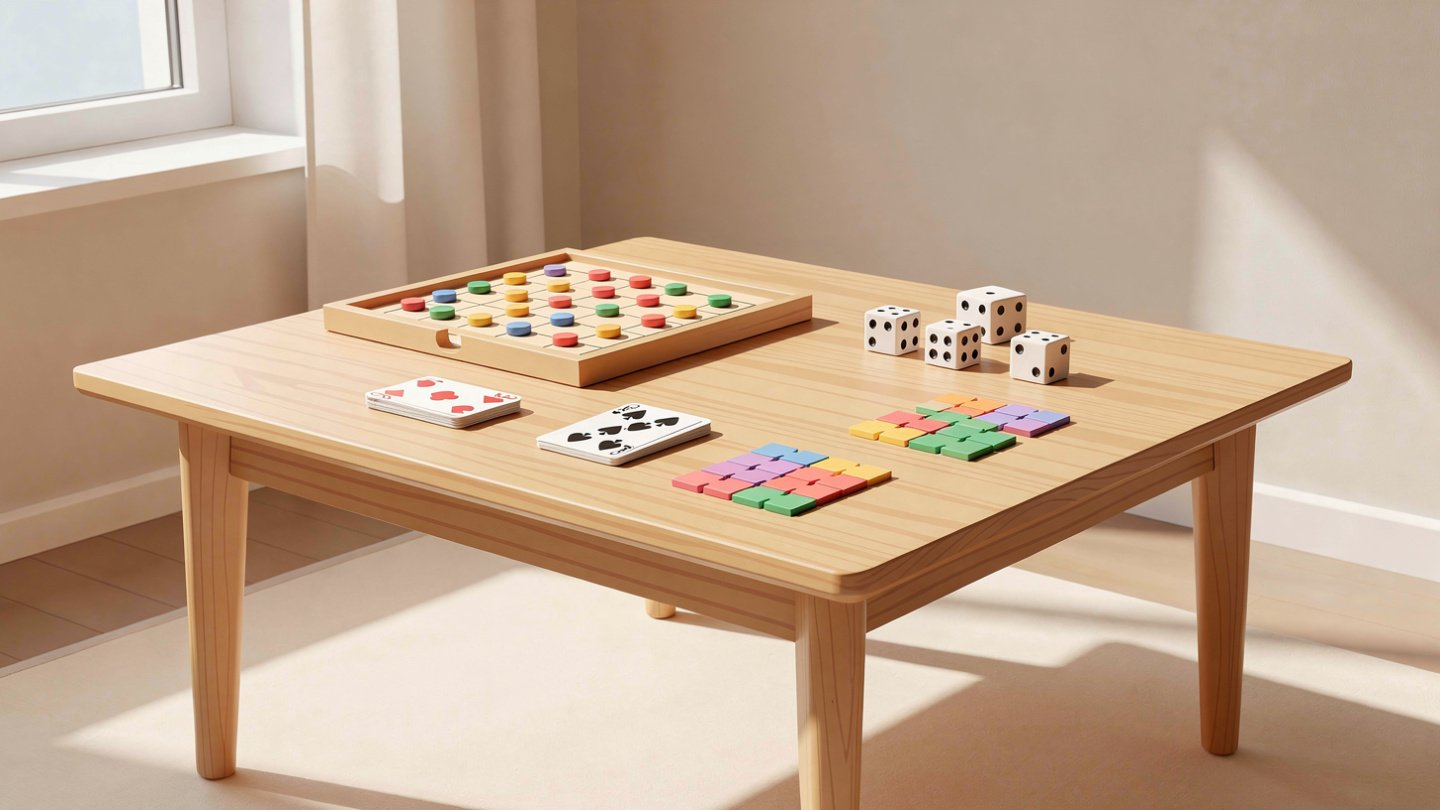
Indoor family games create connection without requiring special equipment, outdoor space, or complicated planning. Whether your family enjoys dice, cards, charades, or simple activities using household items, easy indoor family games for all ages bring people together for genuine fun and shared laughter.
These games work on rainy days, during winter months, for birthday parties, or just because Tuesday needs something better than scrolling through screens. They fit different age groups, energy levels, and time constraints. Most importantly, they create moments when families actually interact with each other.
In this guide, you will find practical indoor games that work at home, clear instructions for each game, and reasons why these activities matter beyond simple entertainment. You will also learn tips for keeping game time smooth, inclusive, and genuinely enjoyable for everyone.
Why Easy Indoor Games Matter for Families
Easy indoor family games for all ages serve an important purpose beyond entertainment. According to the American Academy of Pediatrics, play supports healthy development and helps children build social, emotional, and cognitive skills. NAEYC also emphasizes that playful, hands-on activities help people stay engaged and learn together.
Games encourage real interaction. Family members talk, listen, laugh, and solve problems together. Those moments strengthen relationships in ways that passive activities cannot match.
Indoor games also adapt easily to different situations. A game that works on a Saturday afternoon can also fill time during a school break, entertain during a family gathering, or provide a quick brain break before homework. That flexibility makes them practical for real family life.
Types of Easy Indoor Games for Families
Indoor family games fall into several categories. Understanding the types helps you choose games that fit your group and your mood.
Dice and number games
These games use dice to create chance-based gameplay that often involves math, strategy, or speed. They work well for families who enjoy number challenges.
Word and storytelling games
These games focus on language, creativity, and imagination. They work for families who enjoy talking, creating stories, and playful competition.
Movement and action games
These games require physical activity and work well for families with energetic members or when everyone needs a break from sitting.
Card and paper games
These games use standard playing cards or simple paper materials. They work for families who enjoy visual games and quick rounds.
Guessing and mystery games
These games involve predicting outcomes, asking questions, or figuring out answers. They build critical thinking and observation skills.
Creative and building games
These games encourage artistic expression or construction using household items. They work for families who enjoy hands-on creativity.
Game One Roll and Add Racing
This is one of the easiest games for mixed ages to play together.
How to play
- Give each player one standard die and a sheet of paper.
- Roll your die on each turn.
- Add the number to your running total.
- The first player to reach a target number like 20 or 50 wins the round.
Materials needed
- One die per player
- Paper and pencil
- Optional flat surface for rolling
Why families enjoy it
The rules are simple, the pace is quick, and everyone gets frequent turns. Younger children practice basic addition while older family members enjoy mental math.
Best for
Ages 5 and up
Skills it teaches
Number recognition, addition, score tracking, patience
Game Two Story Building Adventure
This game works perfectly for creative families.
How to play
- One family member starts a story with one or two sentences.
- The next person adds one or two sentences.
- Continue around the group for several rounds.
- Read the complete story aloud at the end.
- Everyone enjoys how the story changed and grew.
Materials needed
- Nothing required
- Optional paper to write the story down
Why families enjoy it
Stories become unpredictable and hilarious as they pass between people. It shows how listening affects what we create together.
Best for
Ages 5 and up
Skills it teaches
Listening, creativity, collaboration, quick thinking
Game Three Charades Acting Game
This classic game never loses its appeal across generations.
How to play
- Write down objects, animals, movies, or activities on small pieces of paper.
- One player draws a paper and acts out the answer without speaking.
- Other players try to guess what it is.
- The person who guesses correctly goes next.
- Keep playing for a set number of rounds or time.
Materials needed
- Paper and pencil
- Small container or hat
- Enough space to act without furniture
Why families enjoy it
It is hilarious watching people act out their best impressions. It works for all ages because you can create easy or hard clues.
Best for
Ages 6 and up
Skills it teaches
Creative expression, nonverbal communication, observation, humor
Game Four Twenty Questions Mystery
This is an excellent game for developing critical thinking.
How to play
- One player thinks of an animal, person, or object.
- Other players ask up to 20 yes or no questions.
- If the group guesses correctly within 20 questions, they score a point.
- If not, the original player scores a point.
- Take turns being the person who thinks of the answer.
Materials needed
- Nothing required
- Optional paper to track questions
Why families enjoy it
It teaches people how to ask strategic questions and think logically. It works for any age and requires zero materials.
Best for
Ages 6 and up
Skills it teaches
Logic, critical thinking, questioning, patience, analysis
Game Five Dice Movement Challenge
This game combines physical activity with number recognition.
How to play
- Assign a movement to each number on the die.
- Example movements:
- 1 jump once
- 2 clap twice
- 3 spin around
- 4 touch your toes
- 5 march in place
- 6 wave your arms
- Roll the die and perform the matching action.
- Play for several rounds or set a time limit.
Materials needed
- One die
- Open floor space
- Optional space without furniture obstacles
Why families enjoy it
It gets everyone moving and laughing. It works especially well when someone needs an energy break.
Best for
Ages 3 and up
Skills it teaches
Listening, coordination, following instructions, gross motor skills
Game Six Word Association Speed Game
This game is fast paced and fun for language lovers.
How to play
- One player says a word.
- The next player says a word that connects to it.
- Continue going around quickly.
- If someone hesitates too long or repeats a word, they sit out.
- Continue until only one player remains.
Materials needed
- Nothing required
- Optional timer if you want timed rounds
Why families enjoy it
It is quick, exciting, and encourages fast thinking. People often discover surprising connections between words.
Best for
Ages 6 and up
Skills it teaches
Vocabulary, quick thinking, connections between concepts
Game Seven Building Tower Challenge
This game mixes counting with suspense and balance.
How to play
- Give each player blocks, plastic cups, playing cards, or other stackable items.
- Roll one die.
- Add that number of pieces to your tower.
- Play for a set number of rounds.
- The tallest tower still standing scores the point.
Materials needed
- Blocks, cups, cards, or other safe stackable items
- One die
- Flat surface for building
Why families enjoy it
It is exciting to watch towers grow taller and wobble. The balance challenge adds fun unpredictability.
Best for
Ages 4 and up
Skills it teaches
Counting, fine motor skills, patience, balance, risk assessment
Game Eight Alphabet Game Adventure
This game works well for developing vocabulary.
How to play
- Choose a category like animals, foods, or places.
- Players take turns naming something in that category starting with each letter of the alphabet.
- Go in order from A to Z.
- If someone gets stuck, others can help or move to the next letter.
- Try different categories in each round.
Materials needed
- Nothing required
- Optional paper to write answers
Why families enjoy it
It is cooperative and encouraging rather than competitive. Everyone helps each other reach Z.
Best for
Ages 4 and up
Skills it teaches
Vocabulary, categories, alphabetical order, memory
Game Nine Prediction Question Game
This game builds prediction skills in a fun way.
How to play
- One player asks a question with two possible answers.
- Example: “Would you rather eat pizza or tacos?”
- Other players predict what the person will answer.
- The person reveals their actual choice.
- Anyone who predicted correctly scores a point.
- Take turns asking questions.
Materials needed
- Nothing required
- Optional paper to track scores
Why families enjoy it
It is fun learning what other family members prefer. It also teaches people about prediction and observation.
Best for
Ages 5 and up
Skills it teaches
Prediction, observation, knowledge of family members, critical thinking
Game Ten Even or Odd Sorting
This game teaches number concepts through simple play.
How to play
- Divide a paper into two sections. Label one Even and one Odd.
- Roll one die.
- Mark the correct section based on the number.
- After ten rounds, count how many even and odd numbers appeared.
- Talk about what you notice.
Materials needed
- One die
- Paper and pencil
- Flat surface for rolling
Why families enjoy it
It is simple enough for young learners but interesting enough for everyone to enjoy the conversation about patterns.
Best for
Ages 4 and up
Skills it teaches
Number recognition, sorting, pattern observation, early probability concepts
Tips for Better Indoor Game Time
A few practical choices make indoor game sessions smoother and more enjoyable.
Set a time frame
Families enjoy games more when they know approximately when the activity will end. This helps everyone relax and participate fully.
Choose games that fit your group
Pick games everyone can understand quickly. If someone feels confused, they often sit out instead of joining.
Adjust rules as needed
Change difficulty levels to include different ages. Younger children might use one die while older ones use two.
Keep the mood positive
Focus on fun and participation more than winning. The goal is time together, not perfect scores or fierce competition.
Prepare materials in advance
Have dice, paper, pencils, and any other items ready before you start. This prevents delays that break the game momentum.
Include everyone
Make sure people of different ages and abilities can participate meaningfully. Adapt games so nobody sits out unless they choose to.
Celebrate good sportsmanship
Praise kind comments, helpful hints, and supportive behavior more than just winning moves.
Keep it short
Short games often work better than long ones, especially with younger children. You can always play another round if everyone wants more.
Why These Games Work for Families
Easy indoor family games for all ages share important qualities that make them effective.
They require minimal materials. Most use items already in your home like dice, paper, pencils, or household objects.
They are easy to learn. Games usually need just one explanation or one example round before people understand the basics.
They work for different ages and abilities. Younger family members can participate at their level while older ones enjoy appropriate challenges.
They encourage real interaction. Most games require talking, listening, and responding to each other.
They create lasting memories. Years later, family members still remember funny moments, surprising answers, or hilarious performances.
They fit different situations. Games that work for birthday parties also work for rainy afternoons or quick evening activities.
Trusted Sources Supporting Family Play
These ideas align with guidance from respected organizations:
- American Academy of Pediatrics for the developmental benefits of play
- NAEYC for playful learning and hands-on engagement
- The British Museum for the history of games and entertainment
- The Metropolitan Museum of Art for cultural examples of play across history
These sources support the value of playful family activities in building connection and supporting healthy development.
Creating a Game Night Routine
Easy indoor family games work best when they become a regular routine.
Choose a specific night each week for games. Friday evening, Sunday afternoon, or Wednesday night all work well. Consistency helps families plan around game time.
Store games in one easy-to-reach place. A basket, drawer, or shelf makes it simple to suggest game time without extensive searching.
Let family members help choose which game to play. Families often enjoy activities more when everyone has input.
Keep the atmosphere relaxed and fun. Game time should feel like a break from stress, not another scheduled obligation.
Invite family members to create new games together. Families that design their own games often enjoy them most.
Final Thoughts
Easy indoor family games for all ages prove that entertainment does not require expensive equipment, lengthy explanations, or perfect conditions. It requires people, basic materials, and willingness to spend time together.
Whether you choose Roll and Add for quick math, Charades for laughter, Story Building for creativity, or Twenty Questions for thinking, these games create value beyond the game itself. They create moments when families genuinely enjoy each other.
That is the real power of indoor games. They transform ordinary evenings into times families remember and talk about for years.
If this article helped you find games for your family, share it with other parents or caregivers who might benefit. You can also comment with your favorite indoor family game or which of these 10 games your family plans to try first.
Note: This article is for informational and entertainment purposes only. It does not promote or encourage real-money gambling.


