


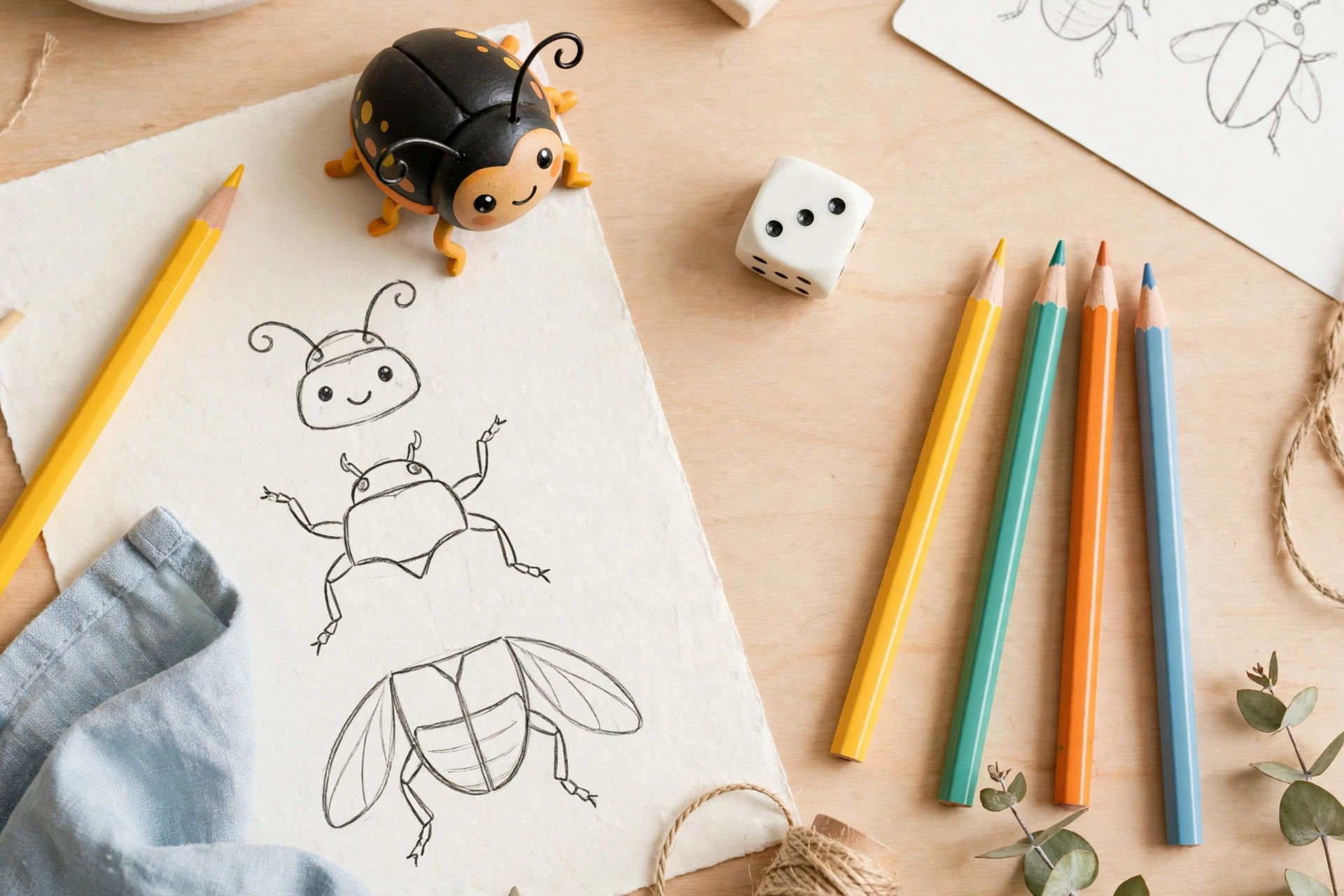
The Beetle dice game is a delightful classic that combines simple dice rolling mechanics with creative drawing elements. This entertaining game has brought joy to families and friends for decades. Whether you’re new to this fun activity or looking to refresh your memory on the rules, this comprehensive guide covers everything you need to know about playing Beetle.
Dice games have remained popular throughout history because they offer accessible entertainment that requires minimal setup. Beetle stands out among traditional games because it adds a creative twist by combining chance-based dice rolling with artistic drawing. Let’s explore how this unique game works and why it continues to captivate players of all ages.
What Is the Beetle Dice Game
Beetle is a turn-based dice game where players roll a single die to earn the right to draw different body parts of a beetle on their paper. The objective is to complete a full beetle drawing by rolling specific numbers on the die. The first player to complete their beetle illustration wins the game.
This game brilliantly merges luck with creativity. You need fortunate dice rolls to progress, but you also need to draw your beetle. The combination of these two elements creates engaging gameplay that keeps players entertained throughout.
Beetle requires minimal materials. You need one die, paper, and pencils or crayons for each player. The game works with any number of participants, making it perfect for family gatherings, classroom activities, or casual game nights.
The History of Beetle Game
The Beetle dice game emerged in the early 20th century and has remained a beloved classic ever since. Its exact origins are somewhat unclear, but the game became particularly popular in Britain and gradually spread throughout the world. The game’s simplicity and appeal made it an ideal choice for children’s entertainment and family activities.
The genius of Beetle lies in its design. It combines the unpredictability of dice rolling with the joy of creative expression. Players can’t rush their beetle into existence. They must wait for fortunate rolls and earn each body part through chance-based gameplay. This structure keeps everyone engaged and entertained.
Throughout the decades, Beetle has remained largely unchanged, which speaks to how well the game was originally designed. While variations have emerged, the core rules and gameplay have proven timeless. Parents who played Beetle as children often teach the game to their own children, creating a multigenerational tradition.
Essential Rules for Playing Beetle
Understanding the basic rules is the first step to enjoying this game. Let’s break down everything you need to know to start playing.
Required Equipment
Each player needs a piece of paper and a drawing implement like a pencil, pen, or crayon. One standard six-sided die serves the entire game. Some players prefer using multiple dice sets to speed up the game, but one die is the traditional standard.
The Beetle Body Parts
A complete beetle consists of six essential parts. Each number on the die corresponds to a specific body part that players can draw:
Number 1 equals the body. This is typically the first part players draw, forming the central oval shape.
Number 2 represents the head. Players draw this as a circle connected to the body.
Number 3 symbolizes the left leg. A simple line extending from the body works perfectly.
Number 4 means the right leg. Another line on the opposite side of the body.
Number 5 represents the left antenna. A small curved or straight line extending from the head.
Number 6 means the right antenna. A matching antenna on the other side of the head.
Players need to roll each number at least once to draw the corresponding body part and complete their beetle.
Basic Gameplay Flow
Players take turns rolling the die in clockwise order. When a player rolls a number that corresponds to an unbuild body part, they draw that part on their beetle. If they roll a number for a part they’ve already drawn, nothing happens, and play passes to the next player.
The game continues with players taking turns rolling and drawing. Once a player has drawn all six body parts and created a complete beetle, they win the game. This typically takes between five to twenty minutes depending on luck and the number of players involved.
Step-by-Step Guide to Playing Your First Game
Starting a game of Beetle is straightforward. Follow these steps to begin your first round.
Setting Up the Game
Have each player sit comfortably at a table or play area. Distribute paper and drawing materials to every participant. Determine who goes first using any fair method like drawing straws or simply going around the group in order.
Place the die in the center of the play area where everyone can see and access it easily. Make sure the playing surface is flat and stable so die rolls are fair and visible to all players.
Starting Your Turn
When it’s your turn, pick up the die and roll it. Look at the number that lands face up. Check your beetle drawing to see if you’ve already drawn the body part that number represents.
If you haven’t drawn that part yet, add it to your beetle. Take your time and draw clearly. Your drawing doesn’t need to be artistic or perfectly accurate, just recognizable and complete enough to indicate the body part.
Handling Duplicate Rolls
If the die shows a number for a body part you’ve already drawn, simply pass the die to the next player. No drawing happens on your turn, but play continues. This is a normal part of the game and happens frequently.
Completing Your Beetle
Keep drawing as you roll the appropriate numbers. Once all six body parts are complete, you’ve finished your beetle and won the game. Announce your victory, and the game ends.
Strategic Tips for Playing Beetle
While Beetle relies heavily on chance-based dice outcomes, some subtle strategies can enhance your experience.
Focus on Your Own Beetle
Don’t get distracted by other players’ progress. Focus on drawing your own beetle carefully and completely. Taking time to draw properly ensures you have a complete beetle when you finish rolling.
Stay Patient and Enjoy the Process
Rolling the same number repeatedly happens. Rather than feeling frustrated, enjoy watching other players draw their beetles. The social interaction and shared laughter often matter more than winning.
Organize Your Drawings
Draw your beetle body parts in a logical arrangement. Place the body in the center, attach the head above or beside it, add legs extending downward, and position antennae on the head. This organization makes your beetle look complete and recognizable.
Encourage Other Players
Create a fun atmosphere by celebrating other players’ progress. When someone finally rolls that elusive six for their second antenna, cheer for them. This positive energy makes the game enjoyable for everyone.
Variations and House Rules
Many groups modify standard Beetle rules to add interest or adjust gameplay to their preferences.
Multiple Dice Variation
Some players roll two or three dice simultaneously instead of one. This speeds up the game significantly since players draw more often. However, traditional single-die gameplay maintains the original experience.
Body Part Requirements
Certain groups require specific body parts before others can be drawn. For example, players might need to draw the body first before drawing the head. This adds sequencing strategy to the game.
Timed Rounds
Adding time limits to each turn creates excitement and keeps the game moving quickly. Players must draw their body parts within thirty seconds, for example.
Extra Body Parts
Some versions include additional beetle features like wings, spots, or facial features. Rolling a seven or higher on two dice might allow drawing these extra parts, extending gameplay.
Scoring System
Instead of first-to-complete winning, some groups score points based on how many body parts each player drew after a set number of rounds. The highest score wins.
Penalty Rolls
Certain numbers might carry special rules. Rolling a one might reset a player’s progress, or rolling doubles might allow an extra turn. These variations add unpredictability.
Why Beetle Remains Popular
This game has survived for over a century because it offers numerous benefits and appeals to different types of players.
Simplicity and Accessibility
Anyone can learn Beetle in under five minutes. Children as young as four can participate with minimal guidance. Adults find the straightforward rules allow them to focus on the social experience rather than complex rule explanations.
Perfect for All Ages
Toddlers enjoy the drawing element even if they don’t fully understand the rolling mechanics. Teenagers and adults appreciate the game’s elegance and quick gameplay. Families spanning multiple generations can play together comfortably.
Minimal Setup and Equipment
You literally only need one die, paper, and pencils. This makes Beetle perfect for playing anywhere. No board to set up, cards to shuffle, or expensive components to purchase.
Creative Expression Combined with Chance
The game uniquely blends randomness with creativity. Players can’t control the dice, but they can express themselves through their beetle drawings. This combination appeals to both analytical and creative minds.
Quick Gameplay Keeps Energy High
Games typically last fifteen to twenty minutes. This brevity means players stay engaged throughout, and groups can play multiple rounds in succession without becoming tired.
Social Connection
Beetle naturally encourages interaction. Players watch each other draw, comment on creative beetles, and share the excitement of rolling needed numbers. The game facilitates genuine connection and laughter.
Educational Benefits for Children
Beyond entertainment, Beetle offers several learning advantages for young players.
Number Recognition
Children practice identifying die numbers through repeated rolling. This reinforces basic numerical skills in a fun, practical context.
Fine Motor Skills Development
Drawing body parts develops hand-eye coordination and control. Players practice holding drawing tools and creating intentional marks on paper.
Patience and Turn-Taking
Beetle teaches children to wait for their turn and accept when their roll doesn’t help them progress. These valuable social skills transfer to other areas of life.
Following Rules and Instructions
Learning game rules and applying them consistently helps children understand structure and fairness in play.
Probability Understanding
Through repeated play, children naturally begin grasping basic probability concepts. They notice that each number has an equal chance of appearing and that some rolls help while others don’t.
Creative Thinking
Players express themselves through beetle illustrations. There’s no single correct way to draw a beetle, so children learn that creative solutions vary and all are valid.
Playing Beetle at Different Skill Levels
Adapting the game to different players ensures everyone has fun.
Preschoolers and Young Children
Ages three to five need simple explanations and might benefit from having an adult help them draw. Shorter games with fewer body parts keep attention spans satisfied.
Early Elementary Students
Ages six to eight understand the complete rules and can play independently. They enjoy the challenge of completing their beetle and appreciate simple competitions.
Older Children and Tweens
Ages nine and up appreciate standard Beetle and enjoy creating variations. This age group often develops creative modifications to the basic rules.
Teenagers and Adults
Older players can enjoy Beetle straight as designed or with more complex variations. They often appreciate the game’s elegant simplicity and use it as a framework for socializing.
Setting Up a Successful Game Night
Creating the right environment enhances everyone’s Beetle experience.
Choosing Your Space
Select a flat surface where everyone can see the die clearly. A table works perfectly. Ensure adequate lighting so players can draw comfortably.
Gathering Materials
Assemble one die, enough paper for each player, and drawing supplies. Having extra pencils and paper on hand prevents interruptions.
Explaining Rules Clearly
Take five minutes to walk players through the basic rules. Demonstrate by rolling the die and explaining which body part corresponds to each number. Most people understand immediately.
Creating a Relaxed Atmosphere
Keep the mood light and fun. Encourage creative beetle drawings rather than perfect artistic renderings. Celebrate funny-looking beetles and enjoy shared laughter.
Keeping Score If Desired
You can track how many rounds each player wins, but don’t let competition overshadow the fun. The goal is enjoyment first, winning second.
Comparing Beetle to Similar Games
Understanding how Beetle fits within the broader world of dice games helps appreciate its unique appeal.
Similar Games
Other dice games like Pig Dice, Ship Captain Crew, and Farkle share Beetle’s accessible rules and social nature. Each game has different mechanics but similar appeal.
What Makes Beetle Unique
Beetle stands out because it combines dice rolling with creative drawing. Most other dice games focus purely on rolling and scoring, while Beetle adds an artistic element that appeals to creative players.
Troubleshooting Common Issues
You might encounter situations that require clarity. Here’s how to handle them.
What If Someone Already Drew a Body Part
They simply pass the die to the next player. This happens regularly and is a normal part of gameplay. No special penalty or reward applies.
What If the Die Falls Off the Table
Simply pick it up and roll again. Most groups consider off-table rolls invalid and ask the player to roll once more.
What If Someone Accidentally Draws the Wrong Part
Have them simply correct it or draw the correct part elsewhere on their paper. Keep the game flowing rather than dwelling on minor mistakes.
What If Two Players Finish Simultaneously
In extremely rare cases, both players might complete their beetles on the same turn. Most groups call this a tie and celebrate both players’ victories.
Frequently Asked Questions
How Many Players Can Play Beetle
Technically, unlimited players can participate. However, games run more smoothly with two to six players. Larger groups mean longer waits between turns, which might test patience.
How Long Does a Game Last
Most games take ten to twenty minutes. Faster games might finish in five minutes with lucky rolls. Longer games might stretch to thirty minutes if rolls are unlucky.
Can You Play Beetle Alone
Absolutely. Solo players can race against themselves to see how quickly they complete their beetle. This makes Beetle perfect for quiet entertainment or developing game familiarity before playing with others.
What Age Is Appropriate to Start Playing
Children as young as three can participate with adult help. Children five and older can typically play independently with guidance.
Do You Need Fancy Art Supplies
No. Any paper and any writing or drawing implement work perfectly. Pencils, pens, crayons, or markers all serve equally well.
The Enduring Magic of Beetle
Beetle has remained popular for generations because it perfectly balances simplicity with engagement. The game requires no complex strategy, extensive rule explanations, or expensive components. Yet it creates memorable experiences and genuine entertainment.
The combination of chance-based dice rolling with creative expression makes Beetle appealing across age groups and skill levels. Young children enjoy the drawing element while older players appreciate the game’s elegant design. Adults value the quick gameplay and social connection it facilitates.
In an age of complex digital entertainment, Beetle reminds us that some of the best experiences come from simple games that bring people together. The game’s timelessness speaks to how well it addresses fundamental human desires for play, creativity, and connection.
Getting Started With Beetle Today
You have everything you need to start playing Beetle right now. Find a die, grab some paper and pencils, and gather willing players. In just a few minutes, you’ll experience why this game has delighted people for over a century.
Beetle works perfectly for family game nights, classroom activities, parties, or casual gatherings. The minimal setup and quick gameplay make it an ideal choice when you want entertainment without complexity.
Share this article with friends and family who love classic games. Comment below to tell us your favorite Beetle memories or creative beetle drawings you’ve created. We’d love to hear how this timeless game has brought joy to your life and created special moments with people you care about.
Note: This article is for informational and entertainment purposes only. It does not promote or encourage real-money gambling.


